





















































































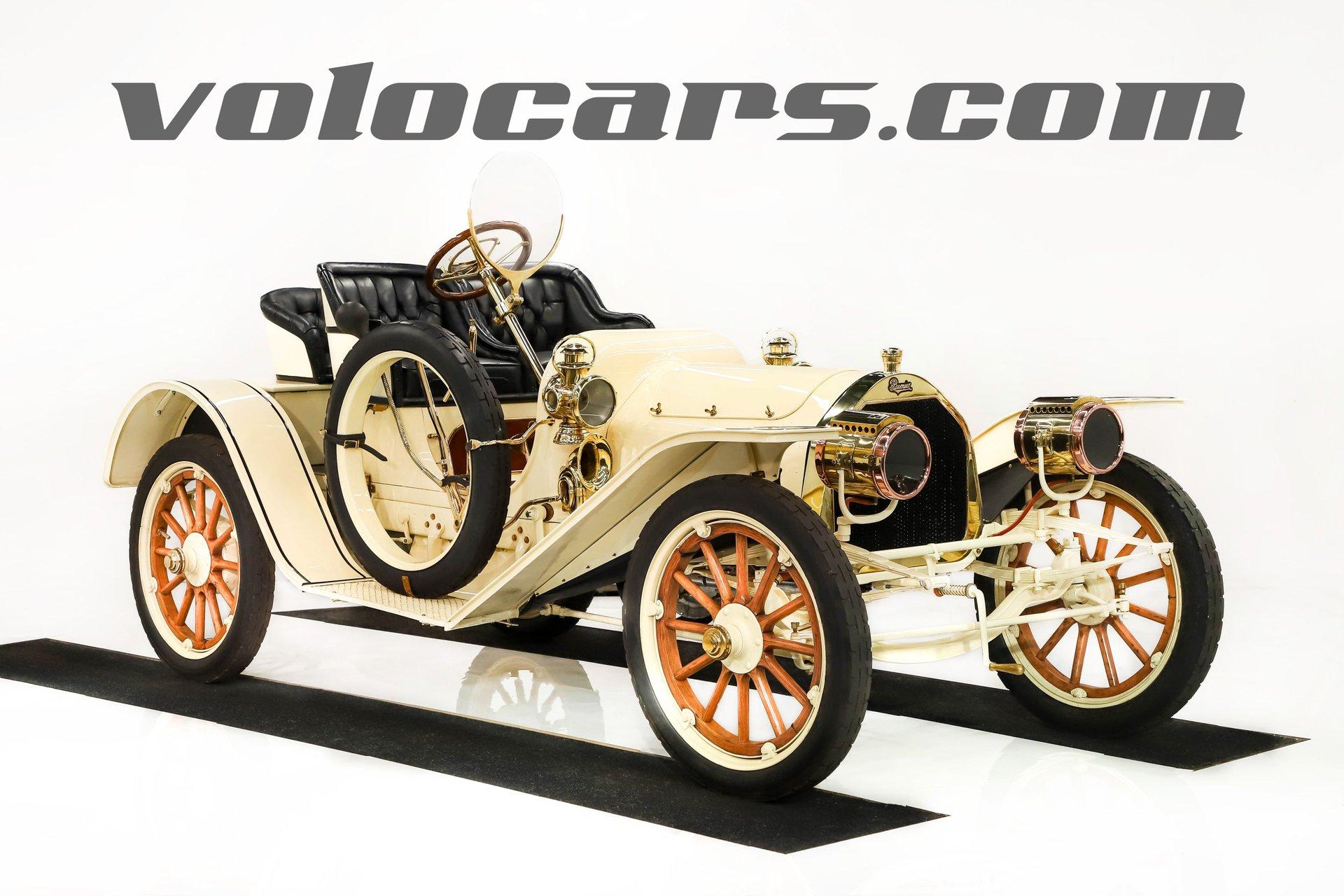
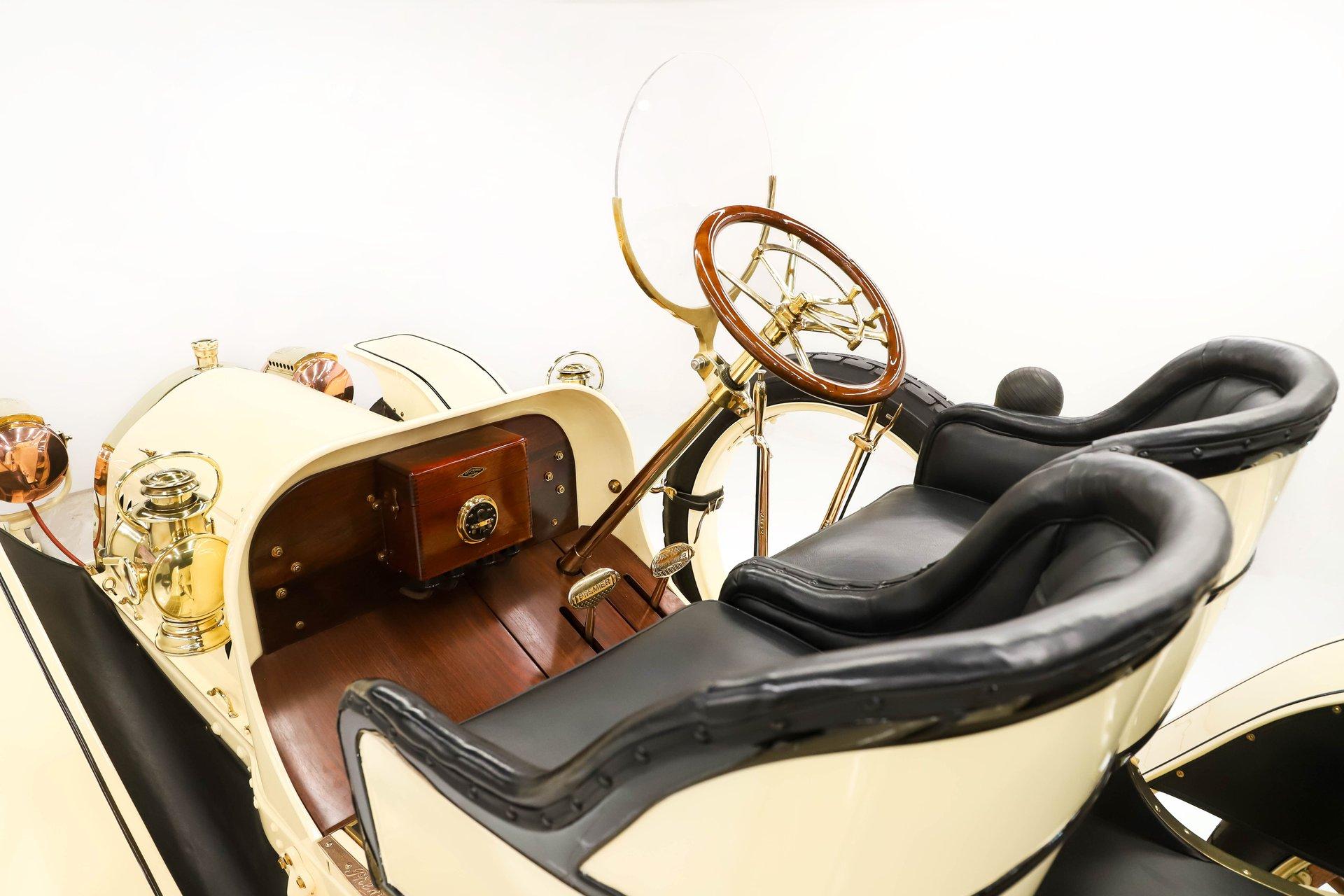
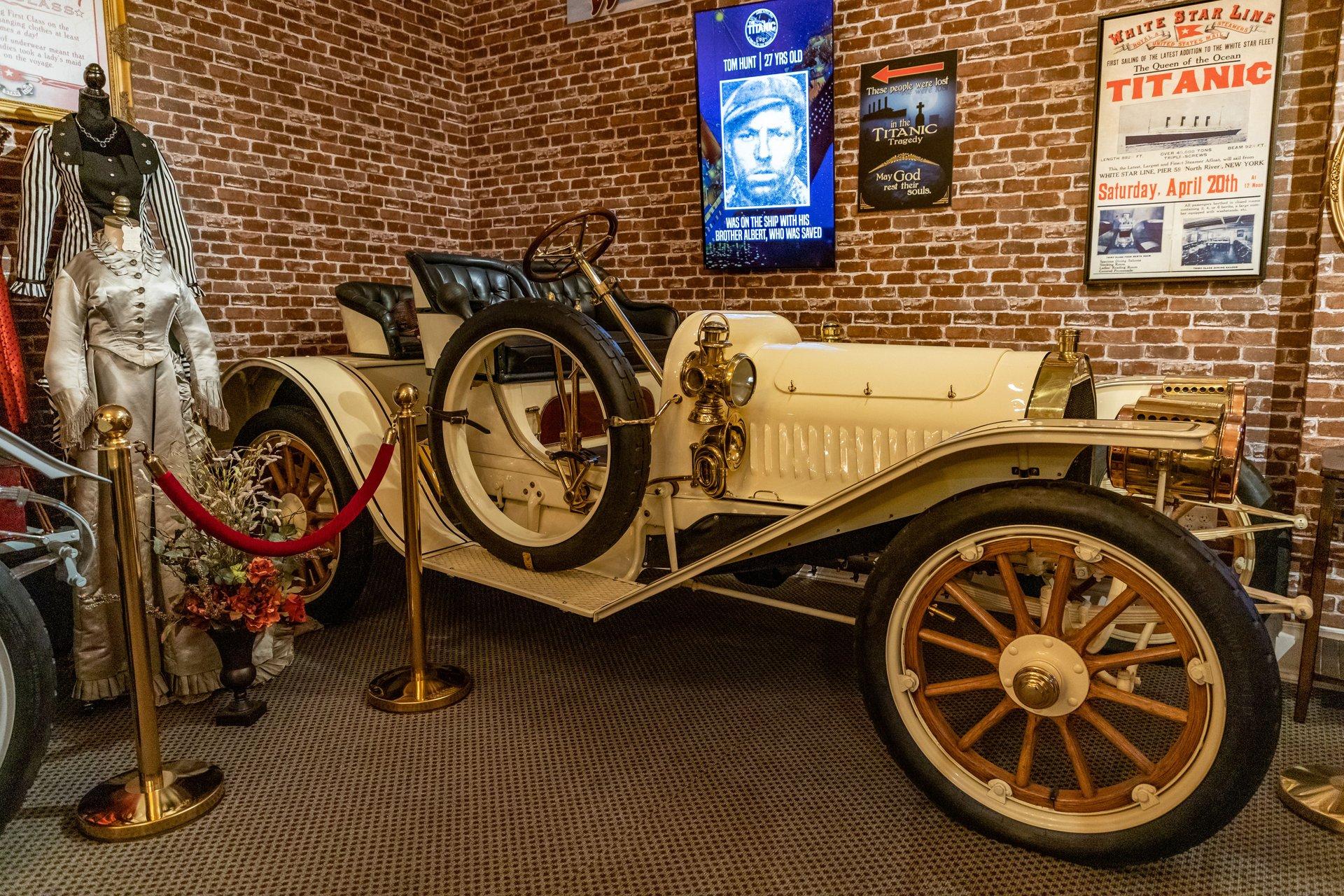
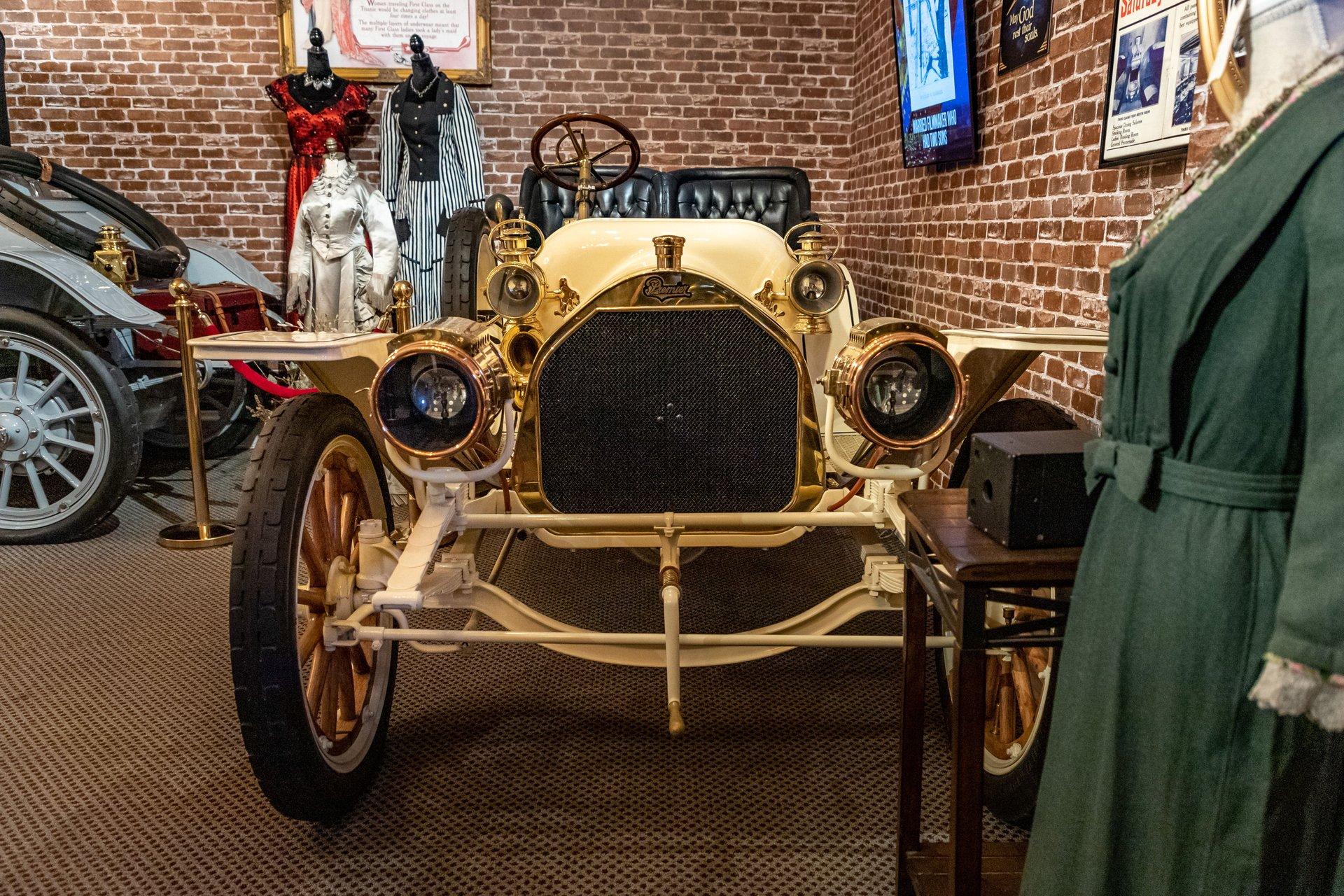
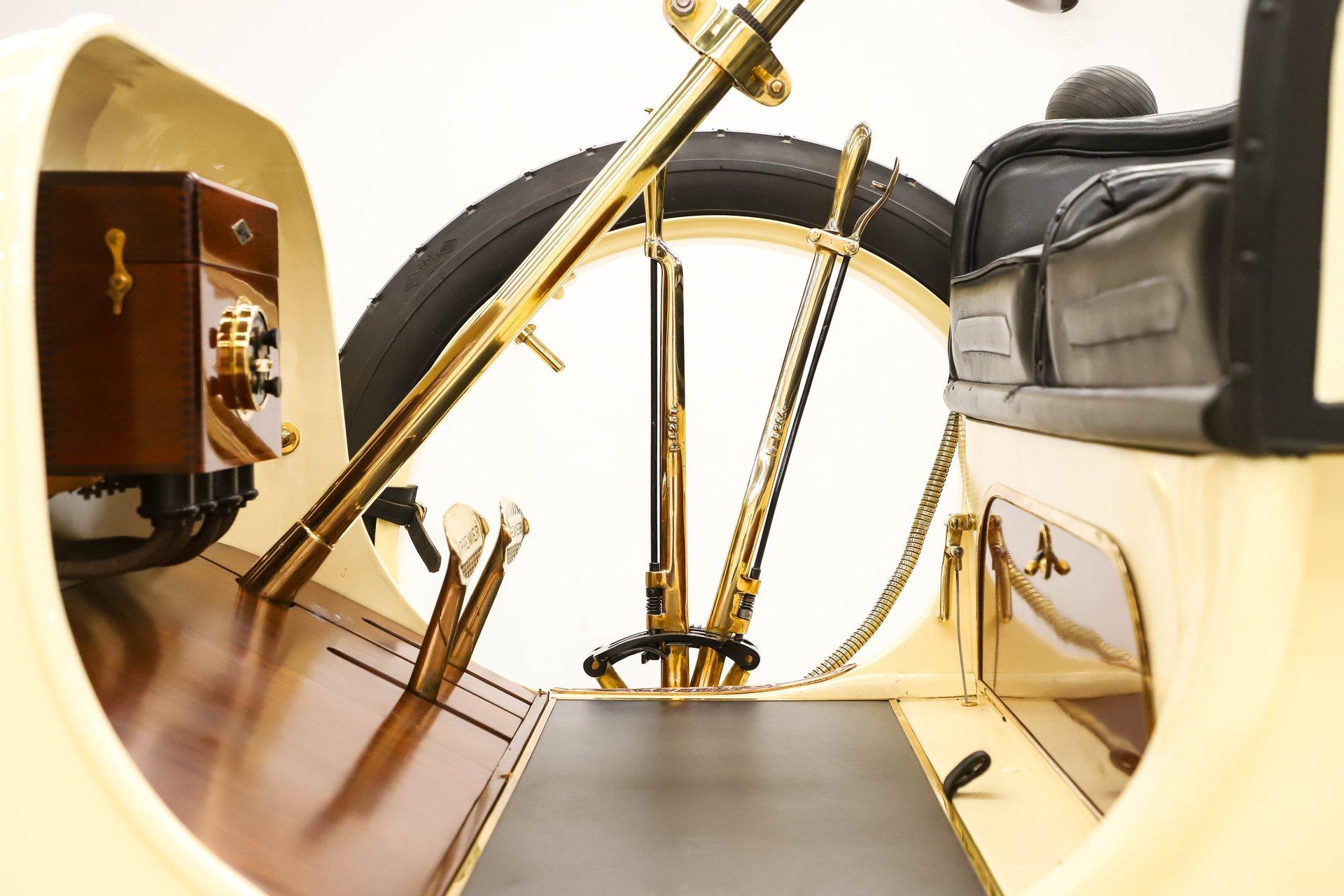
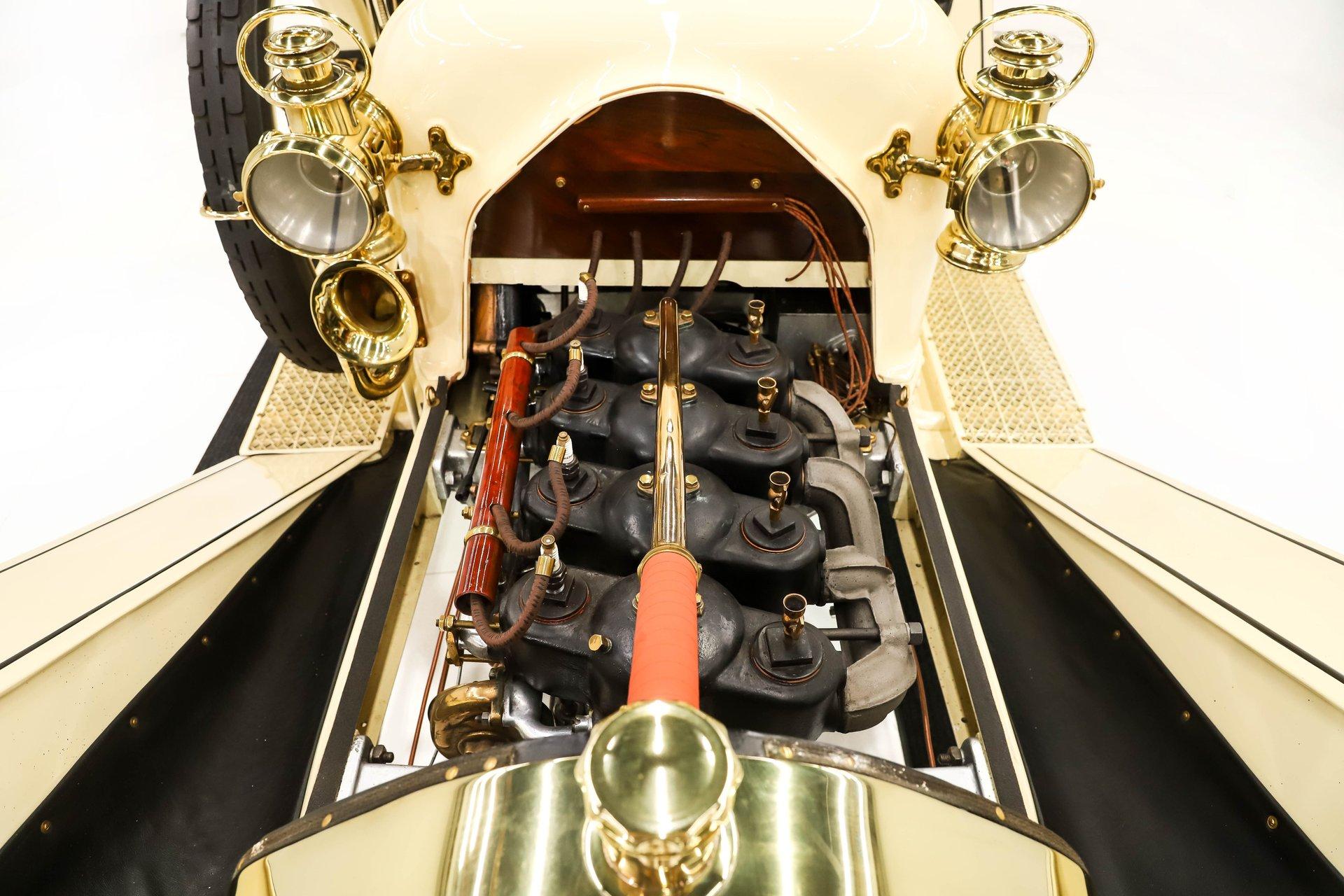
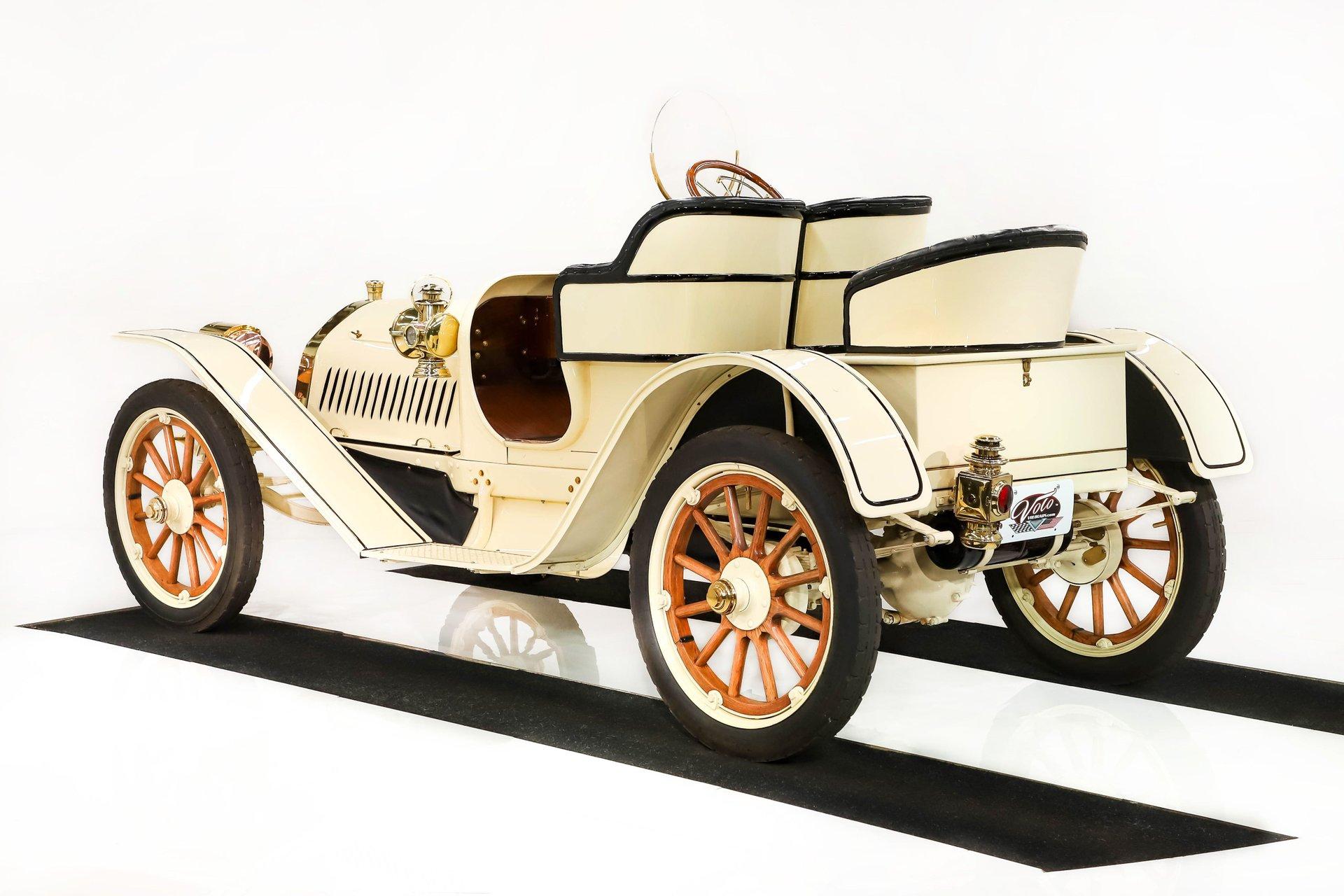
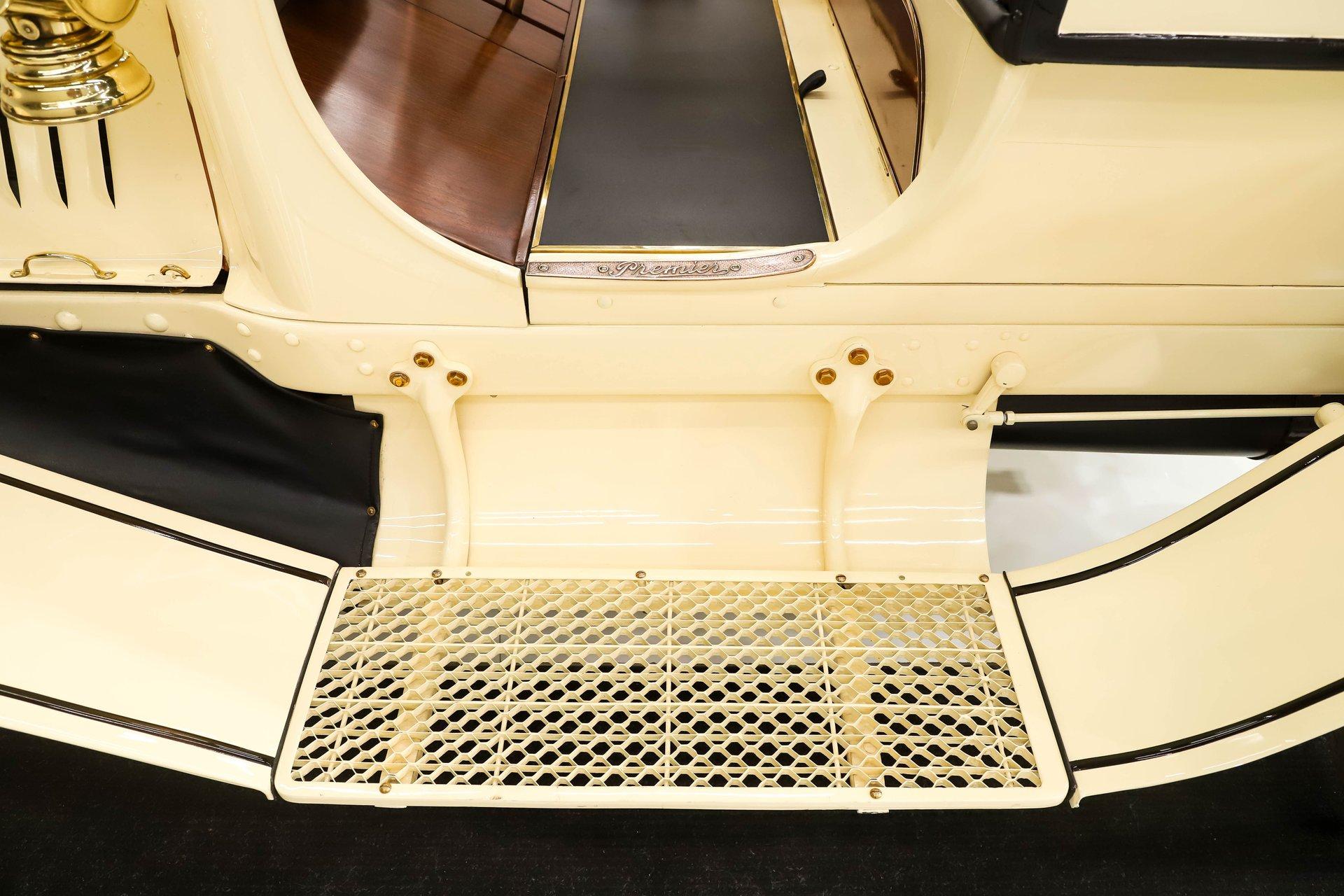
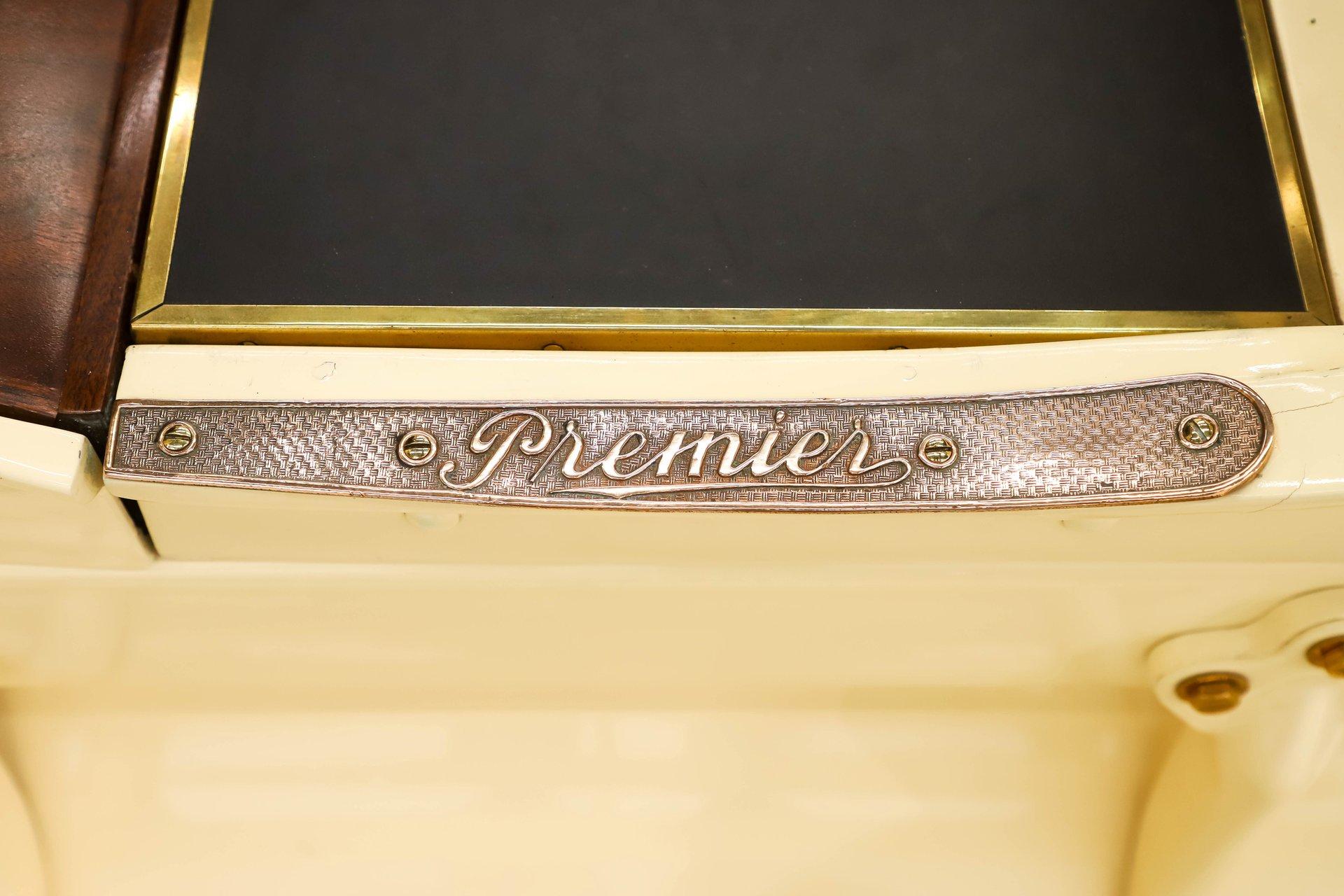
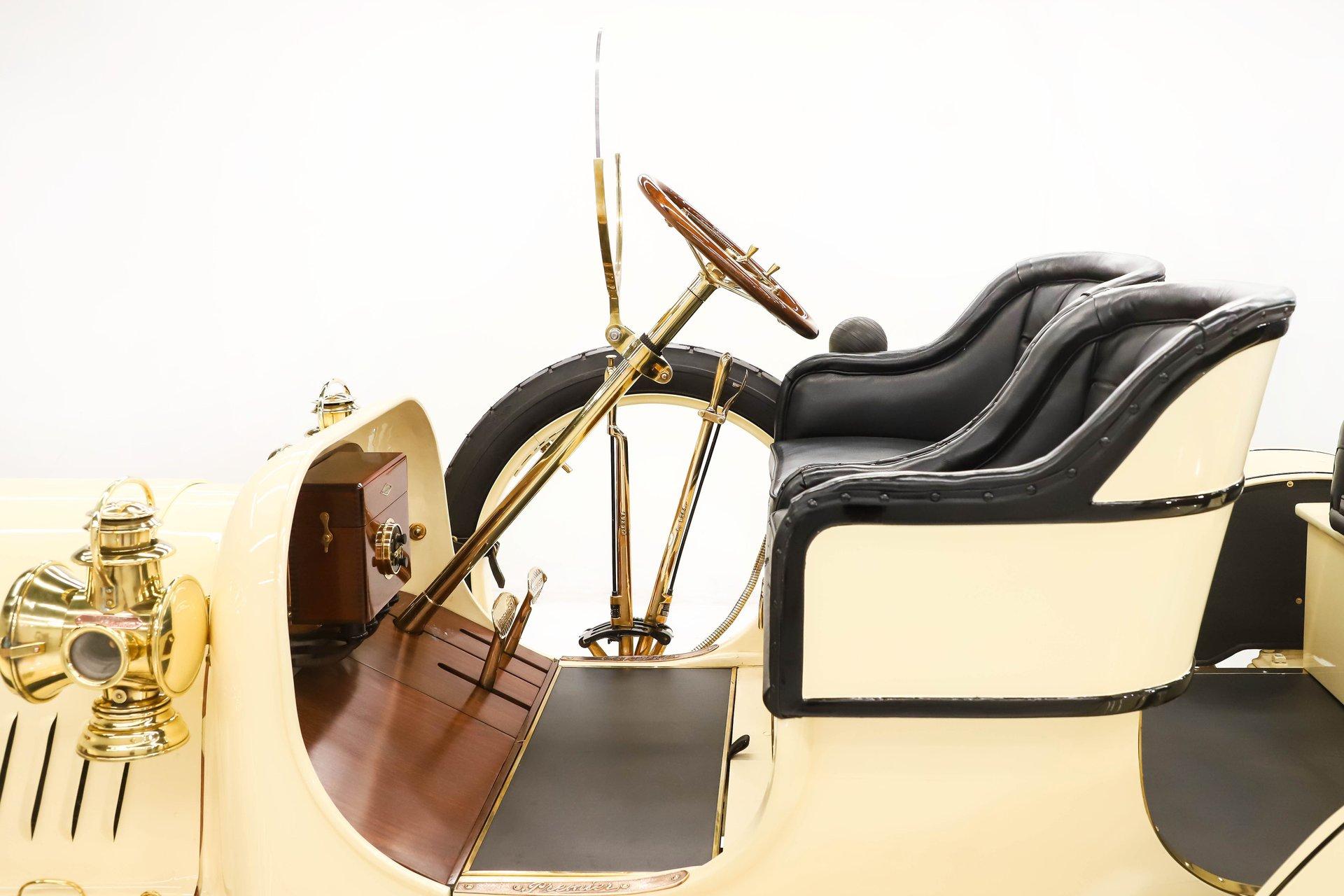
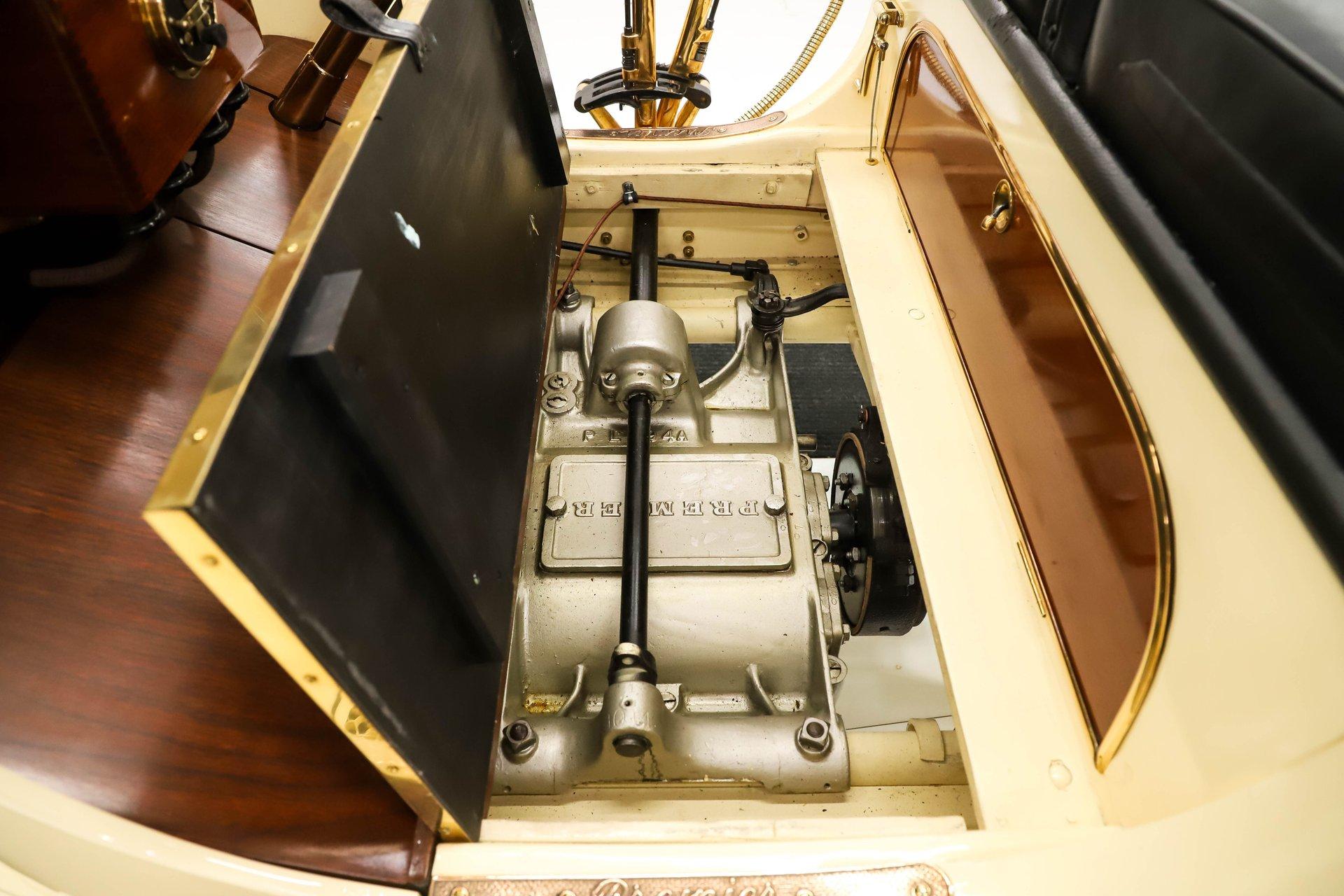
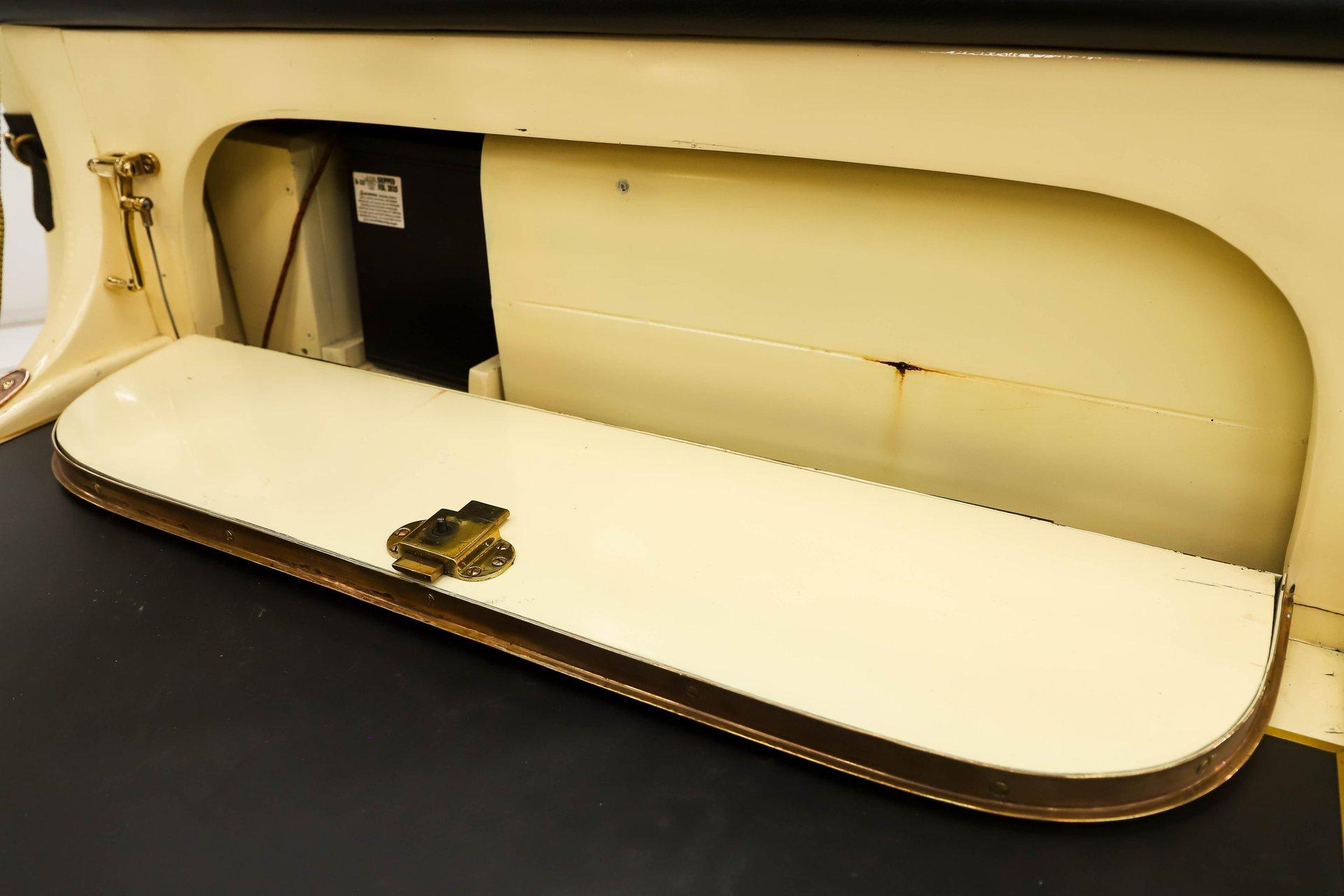
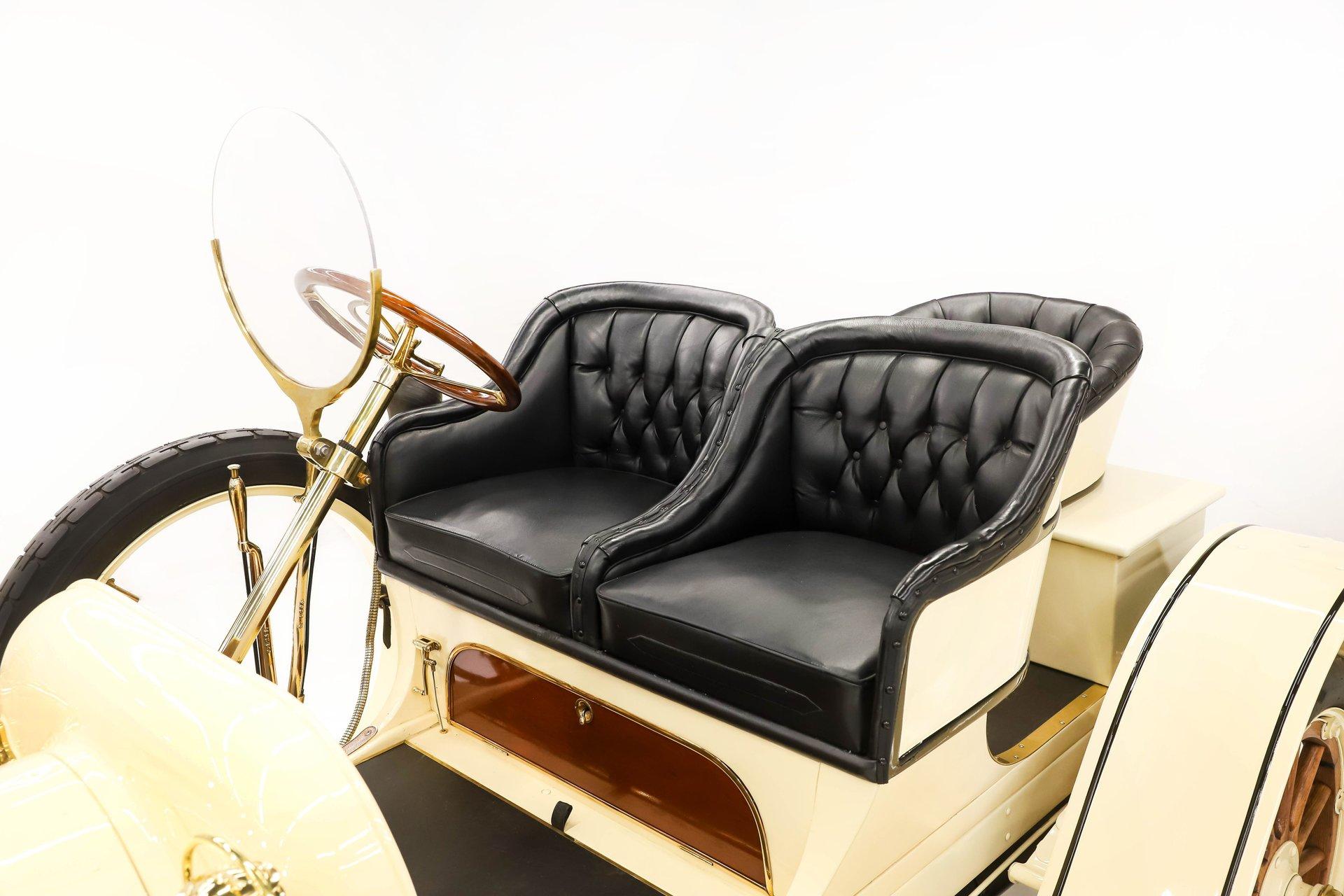
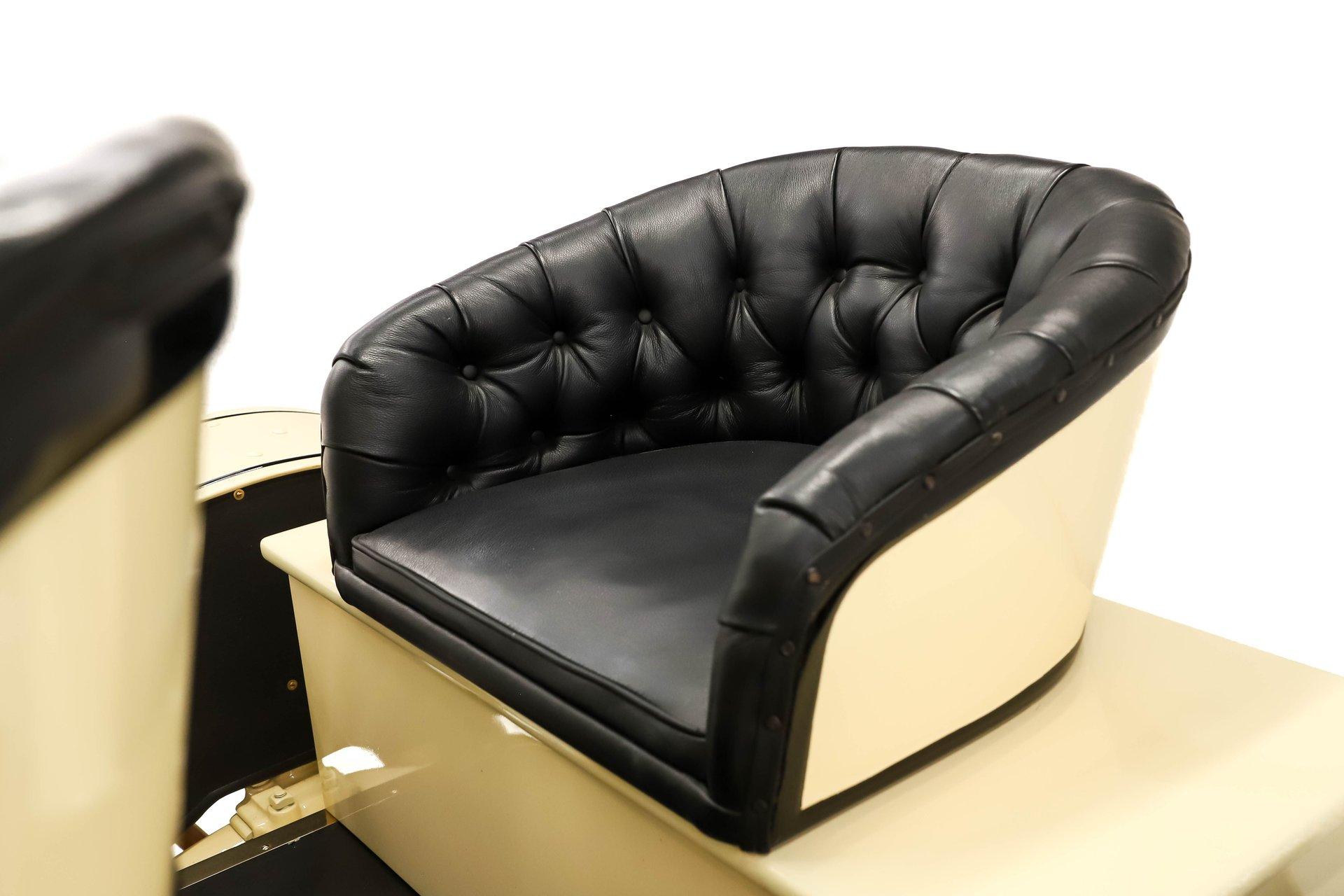
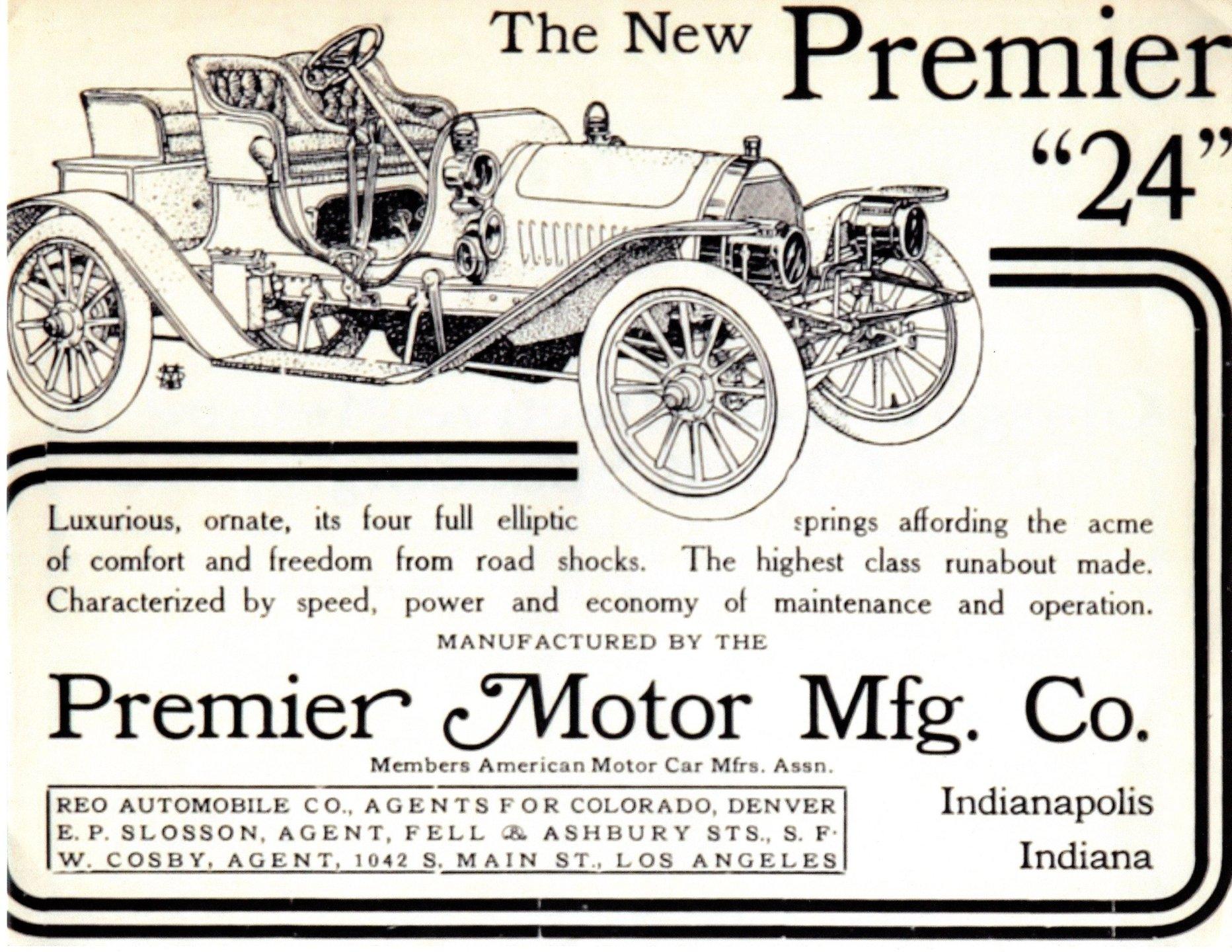
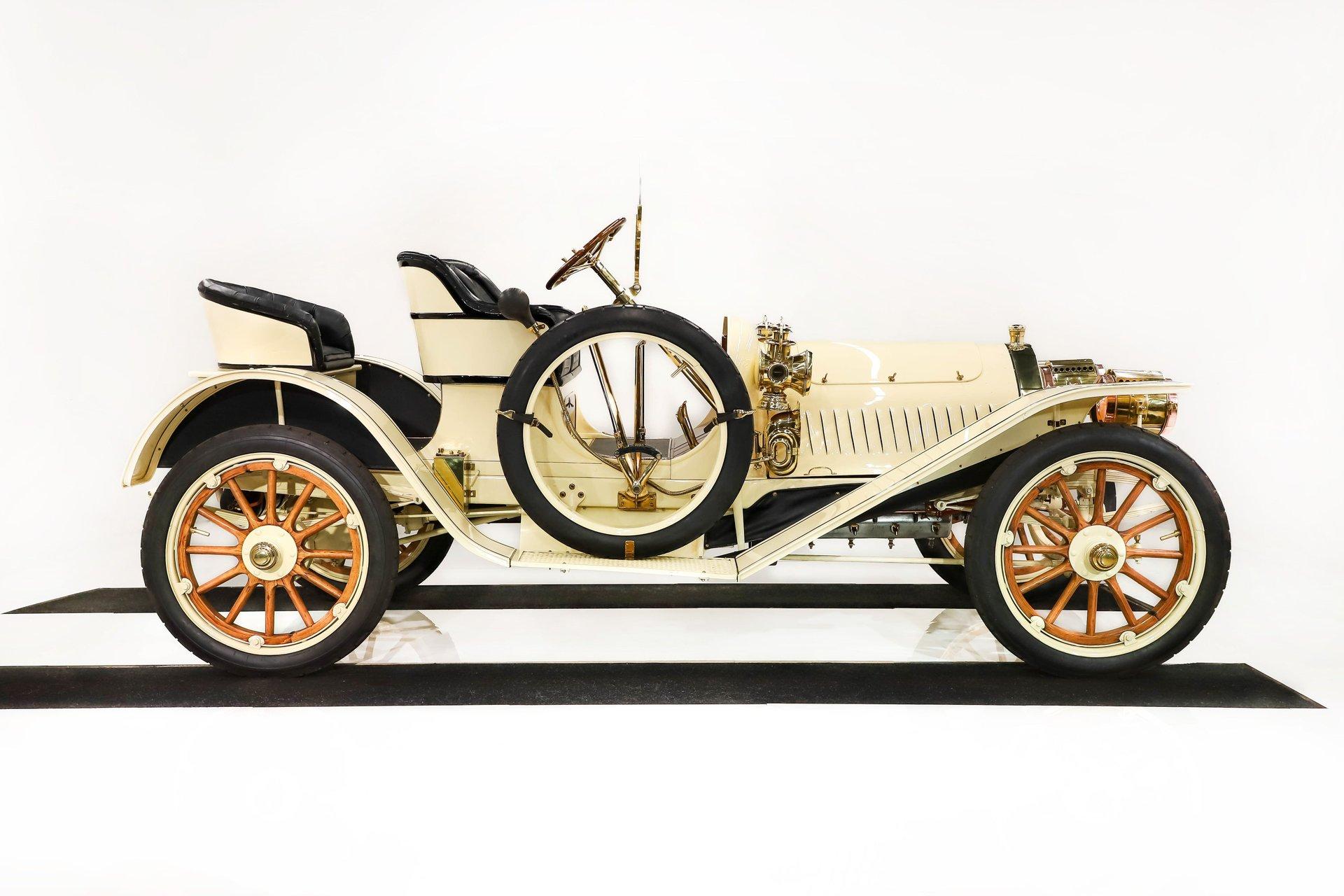
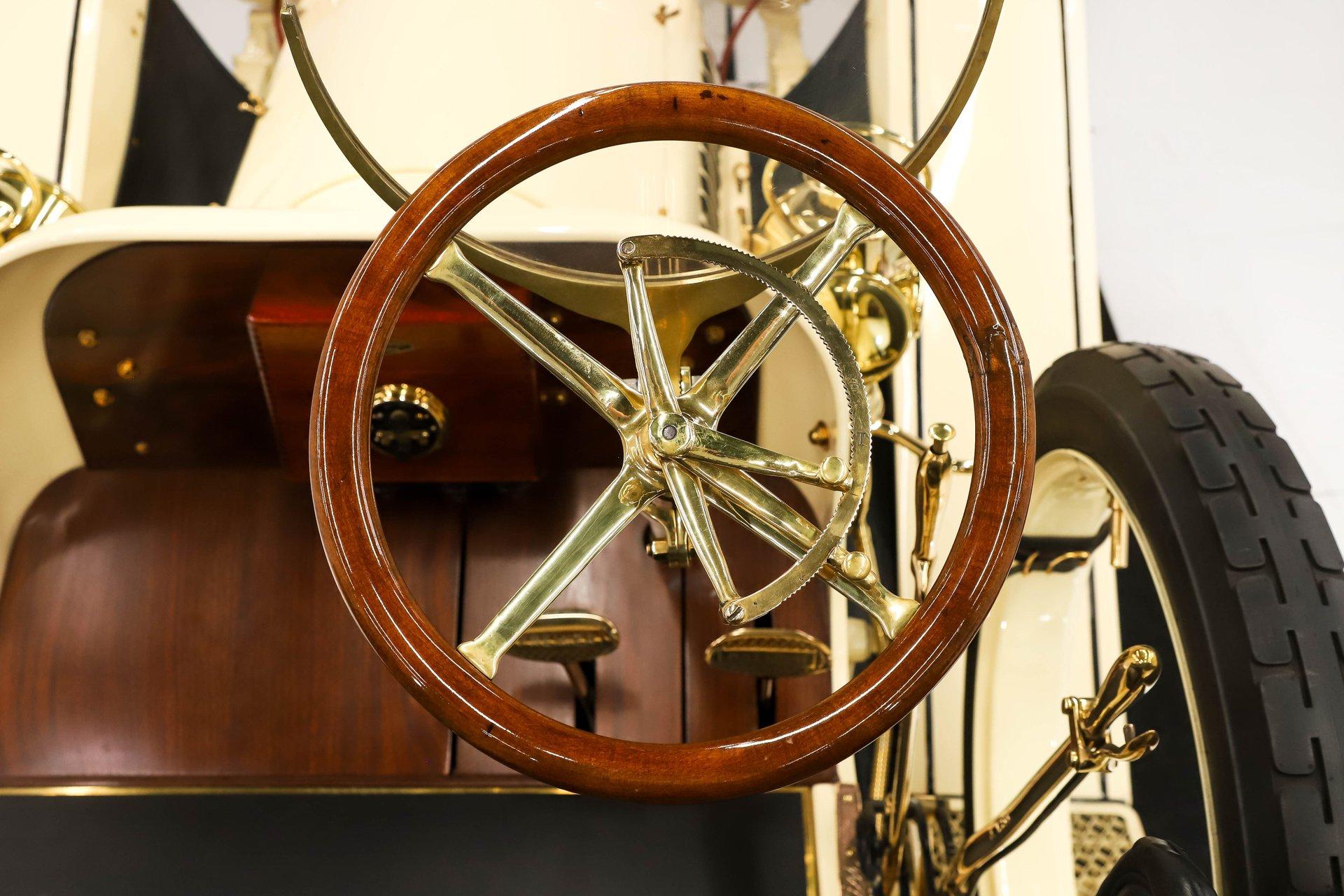
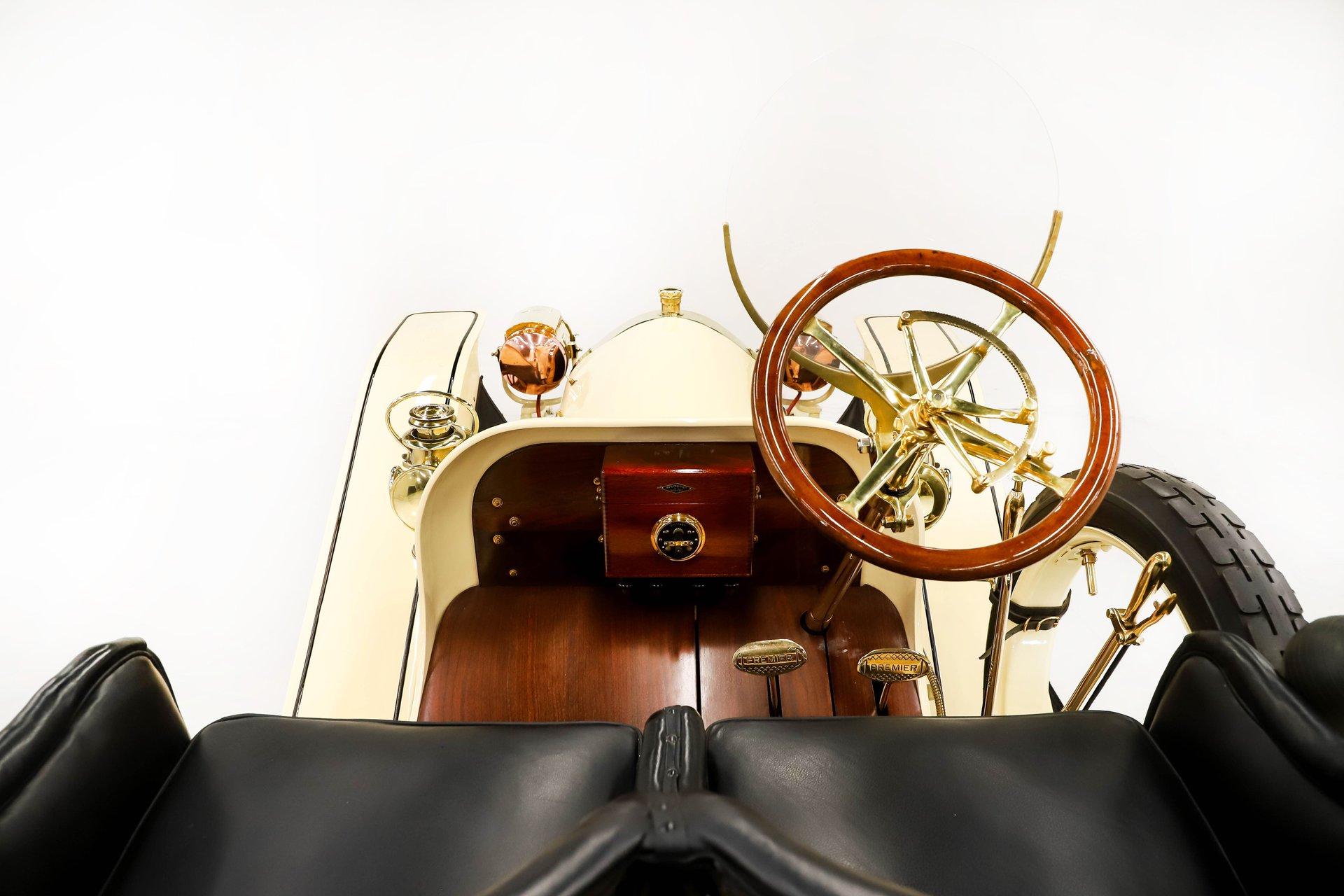
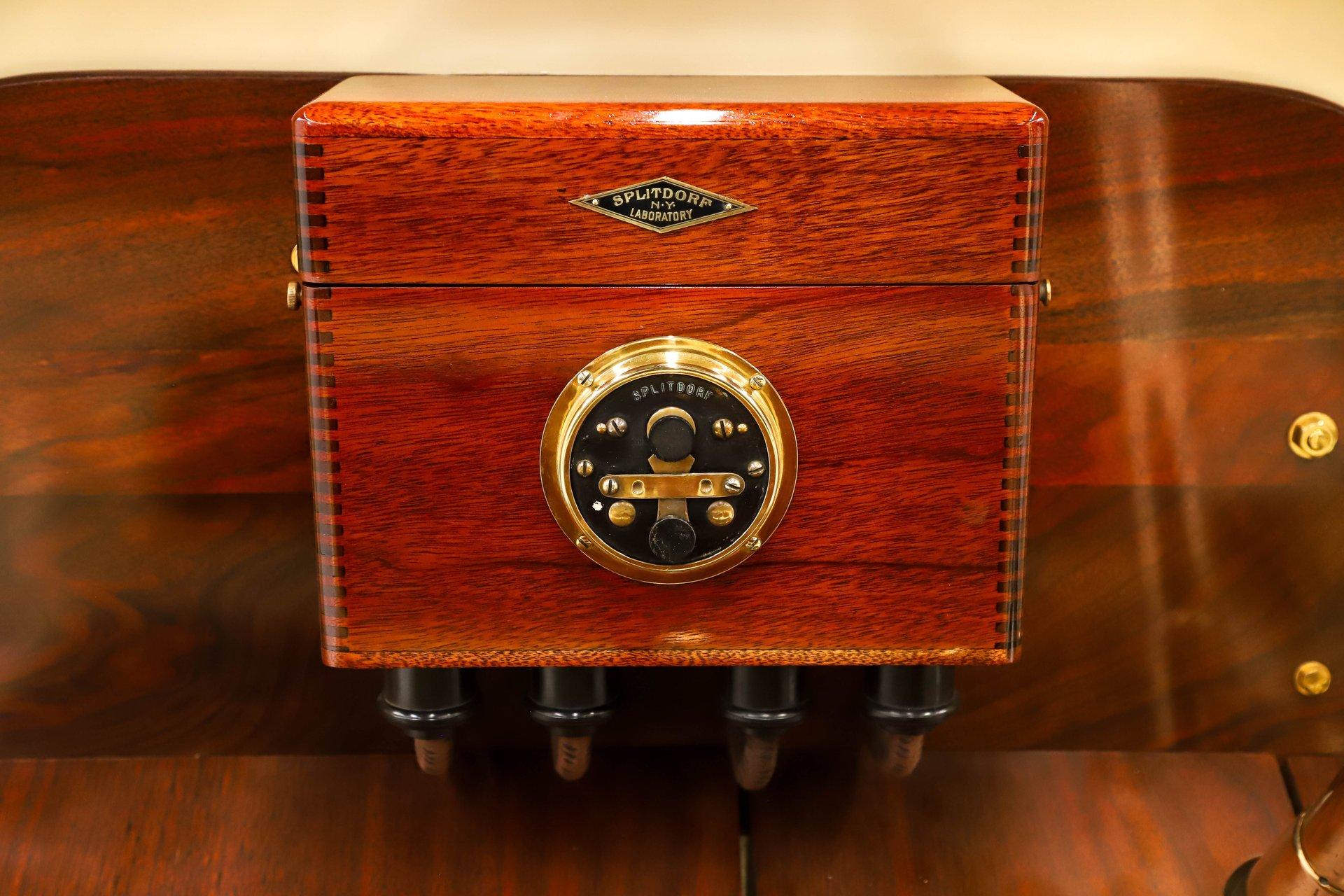
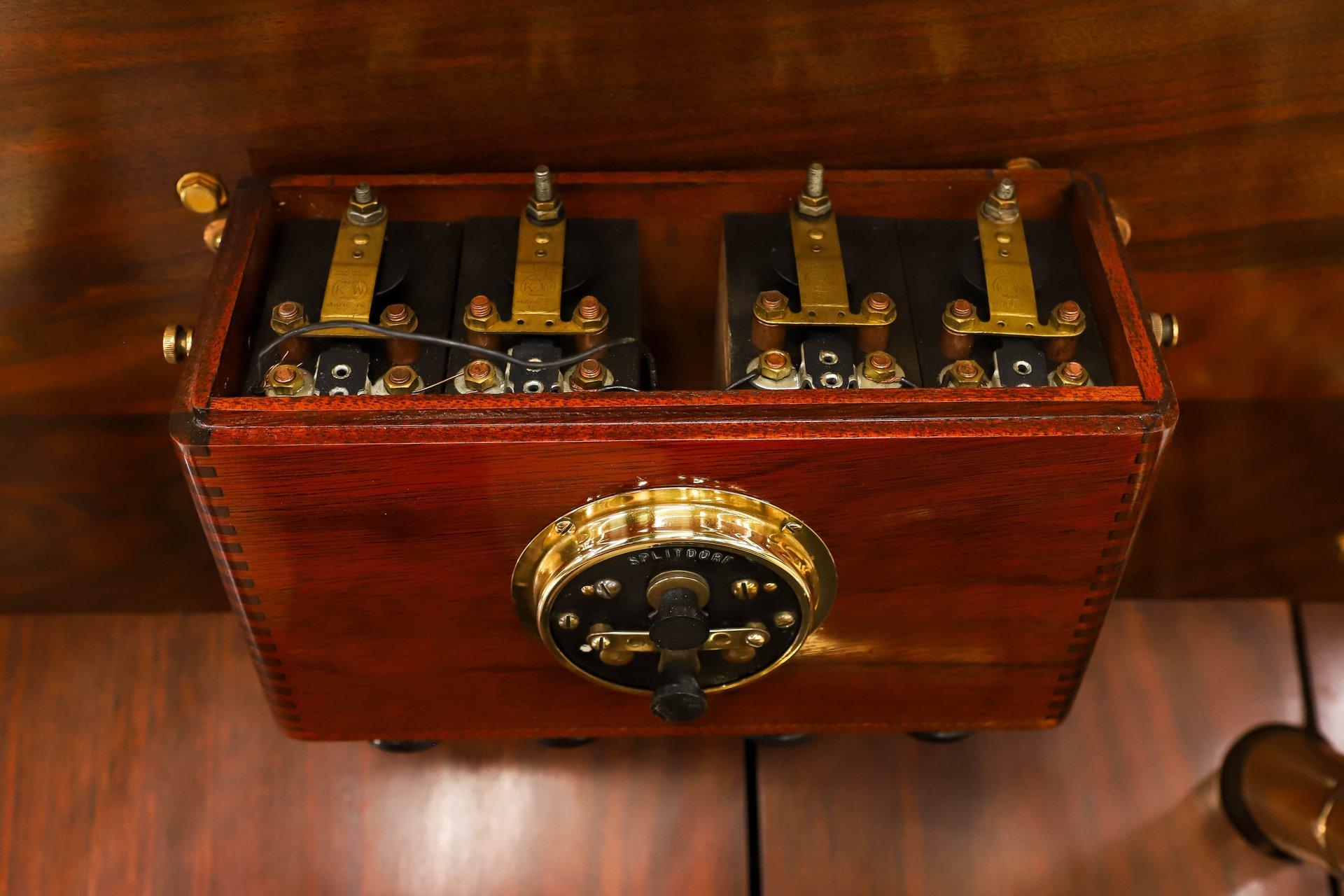
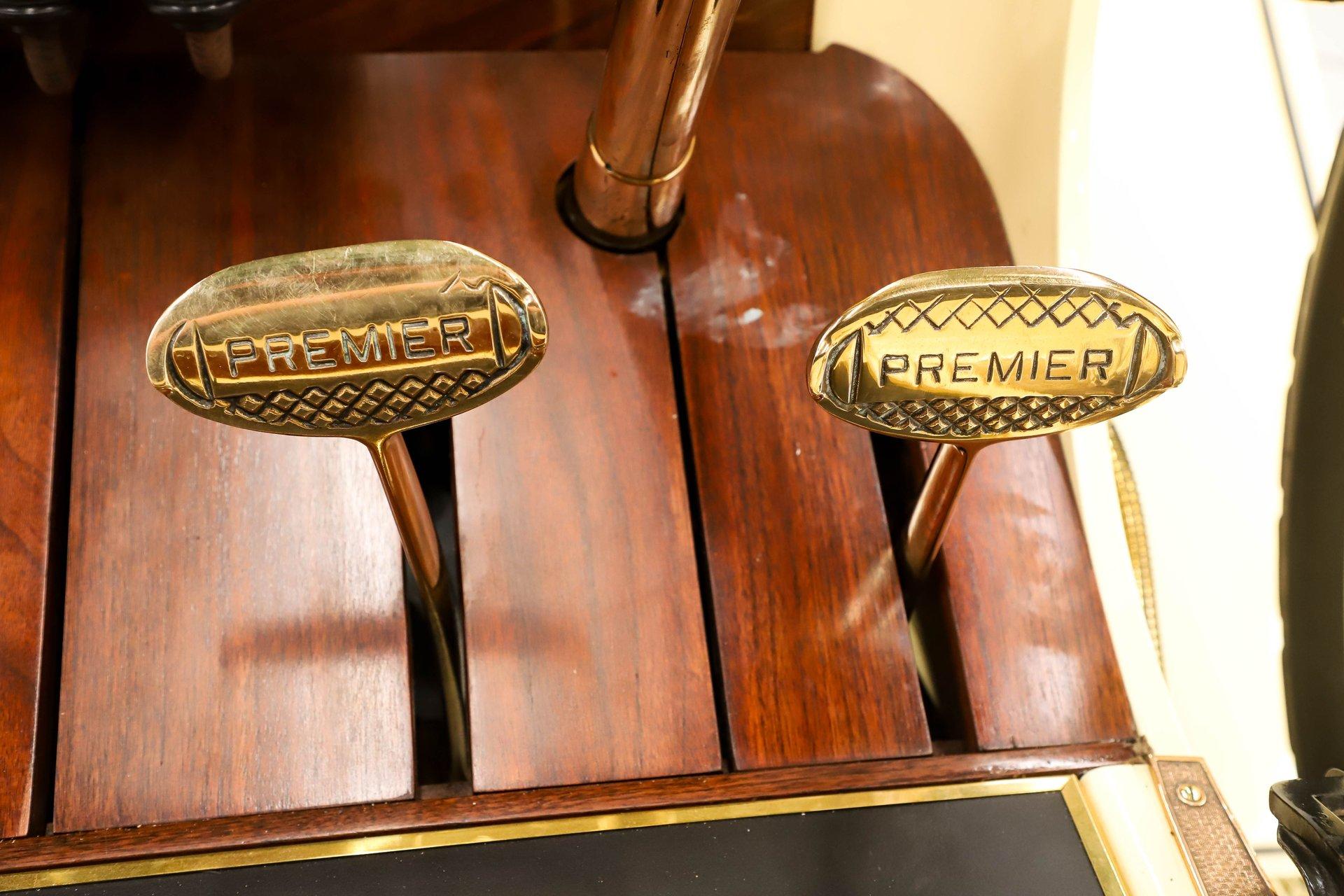
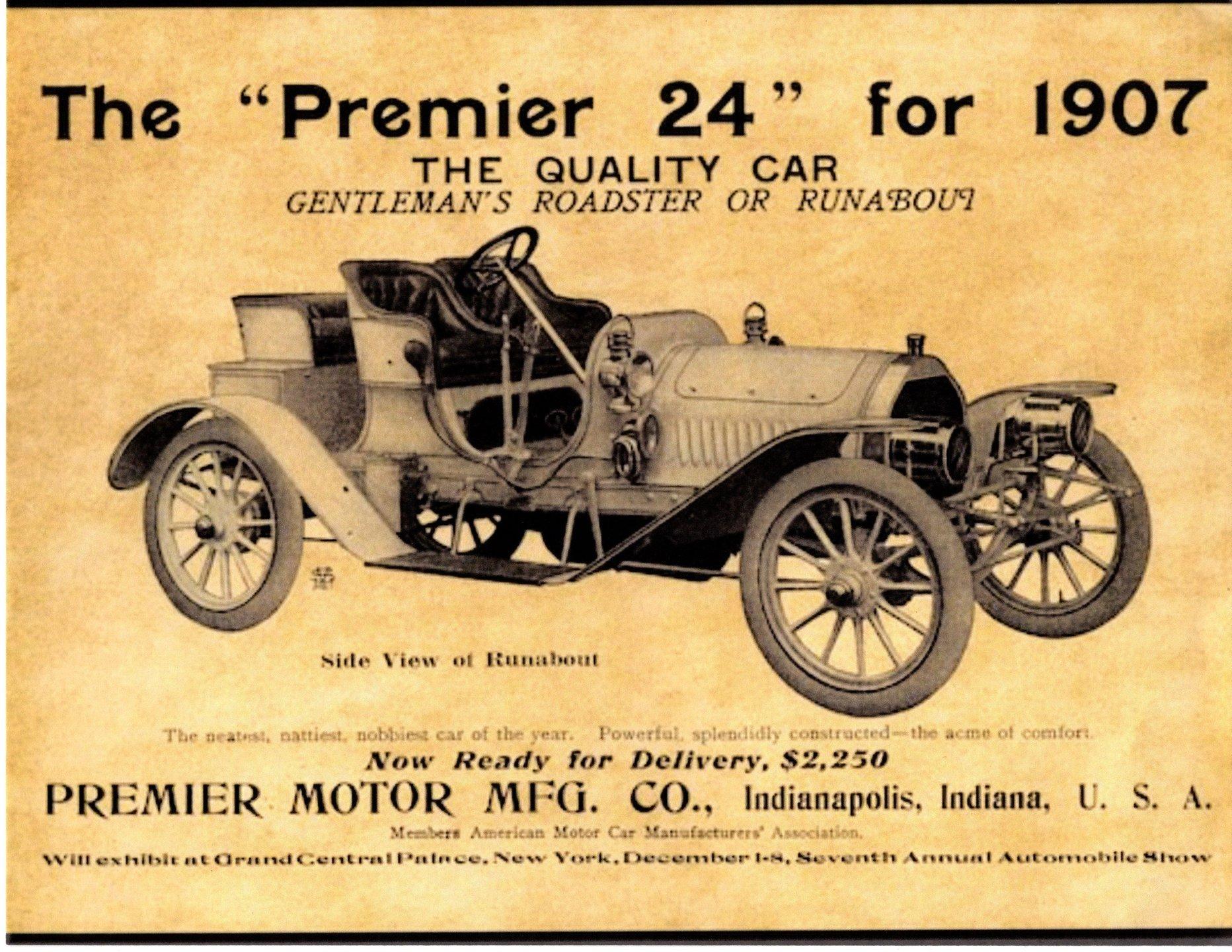
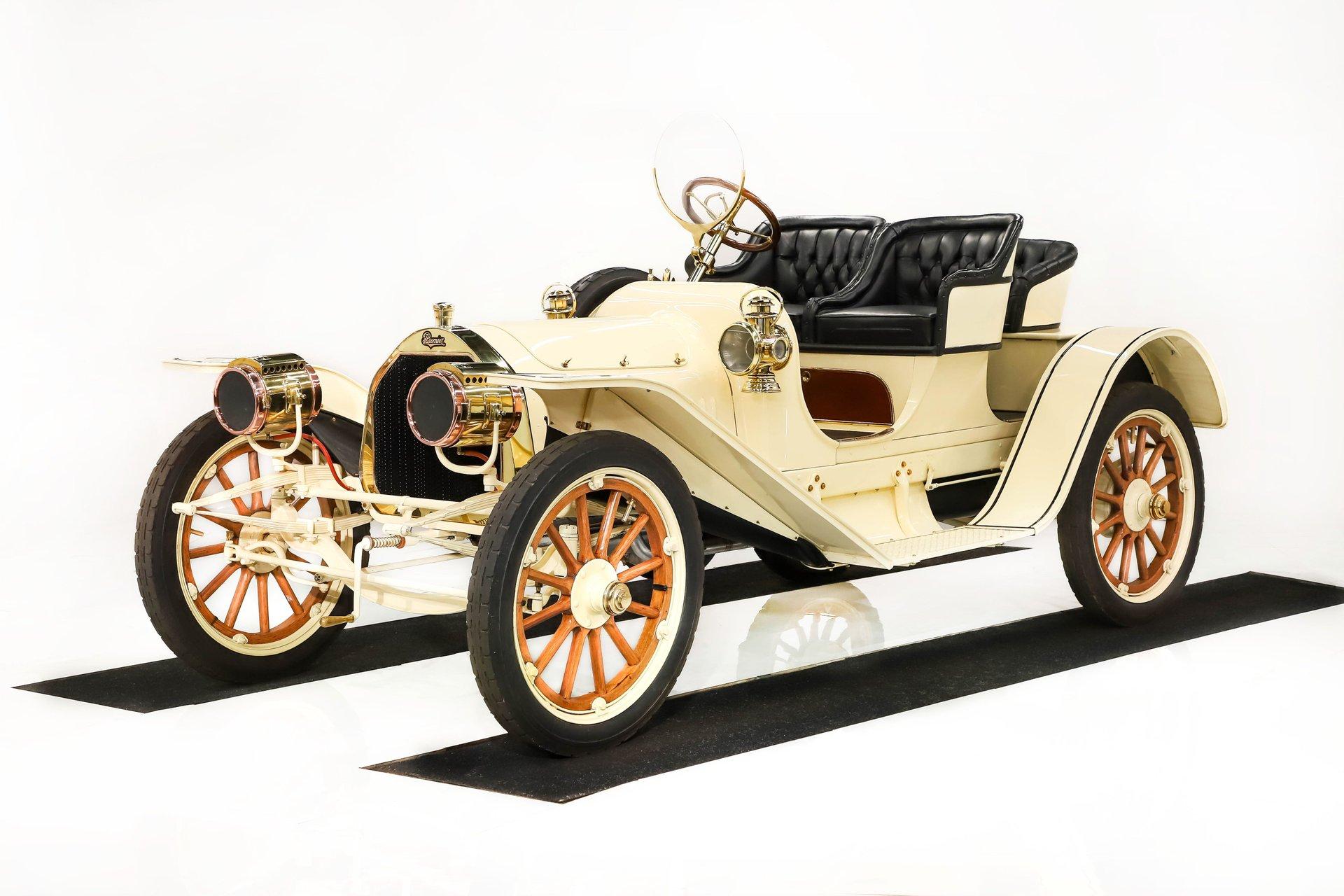
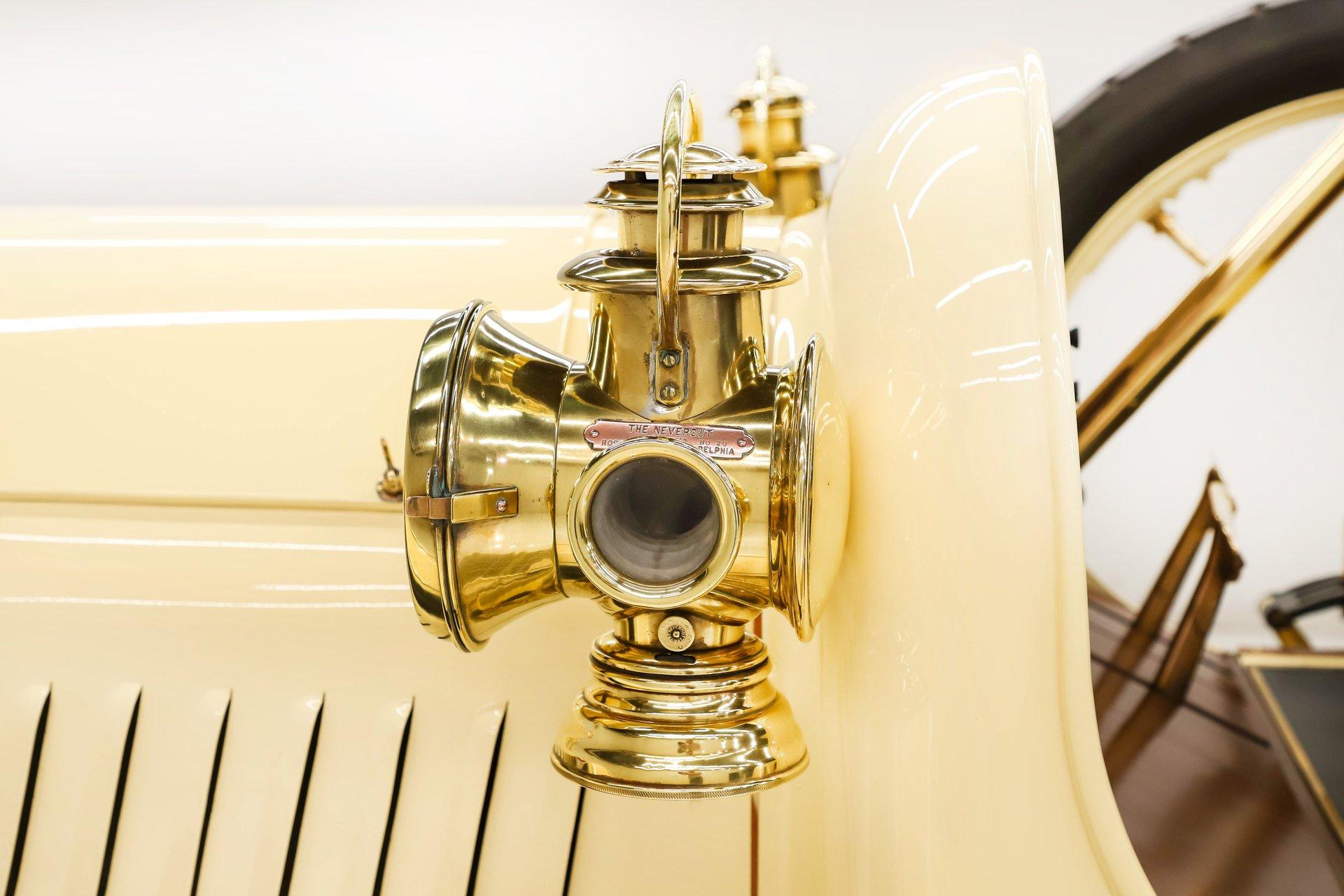
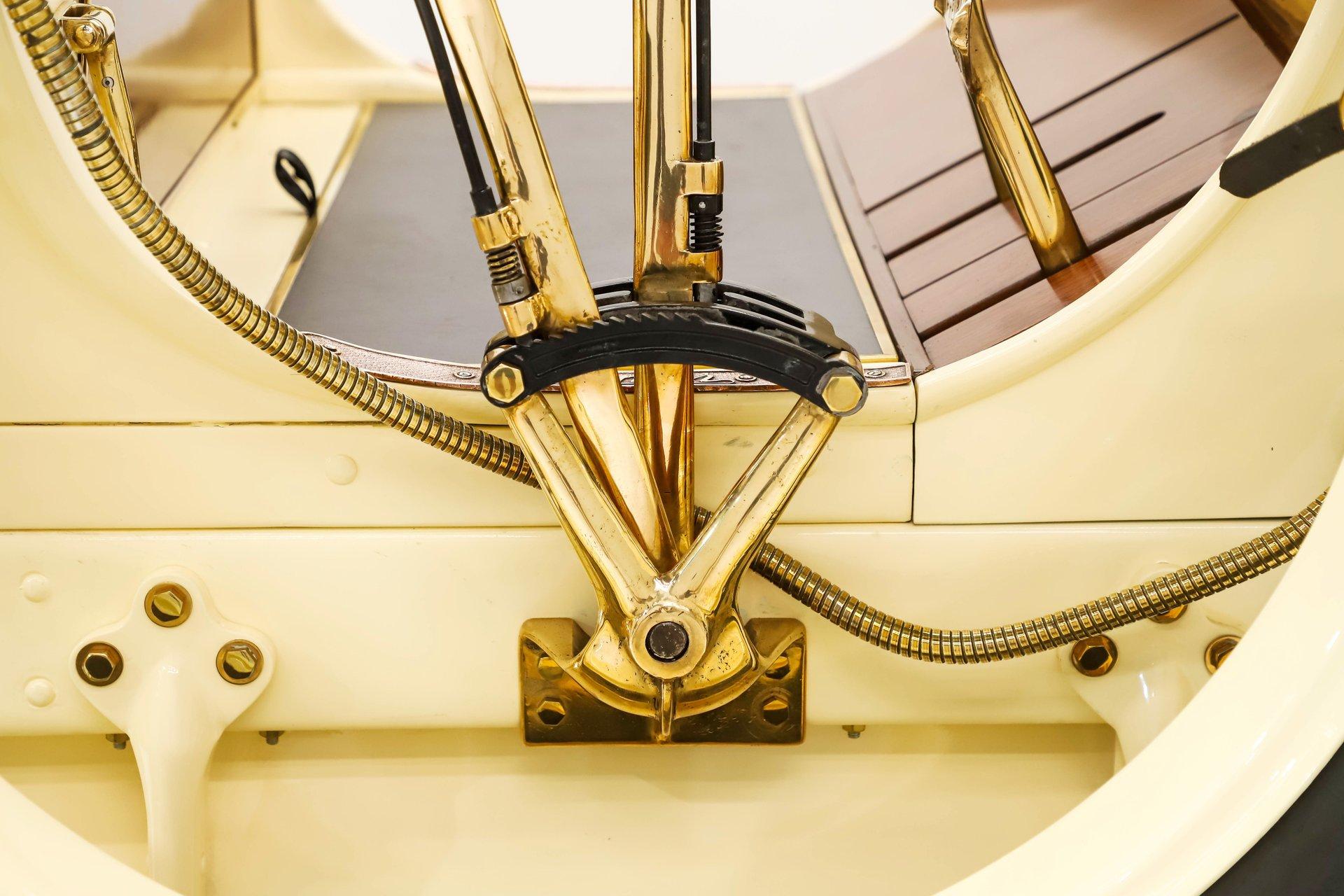
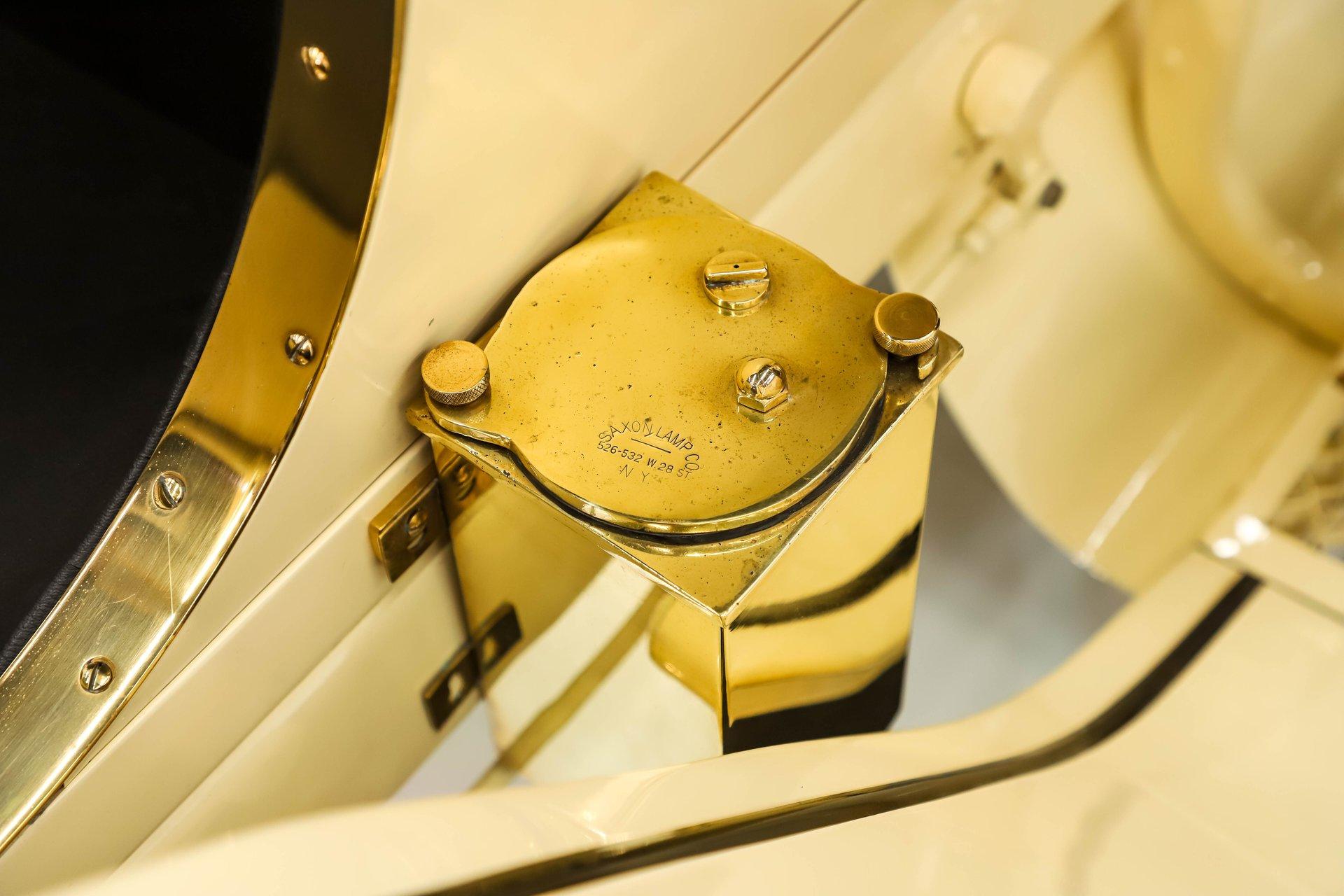
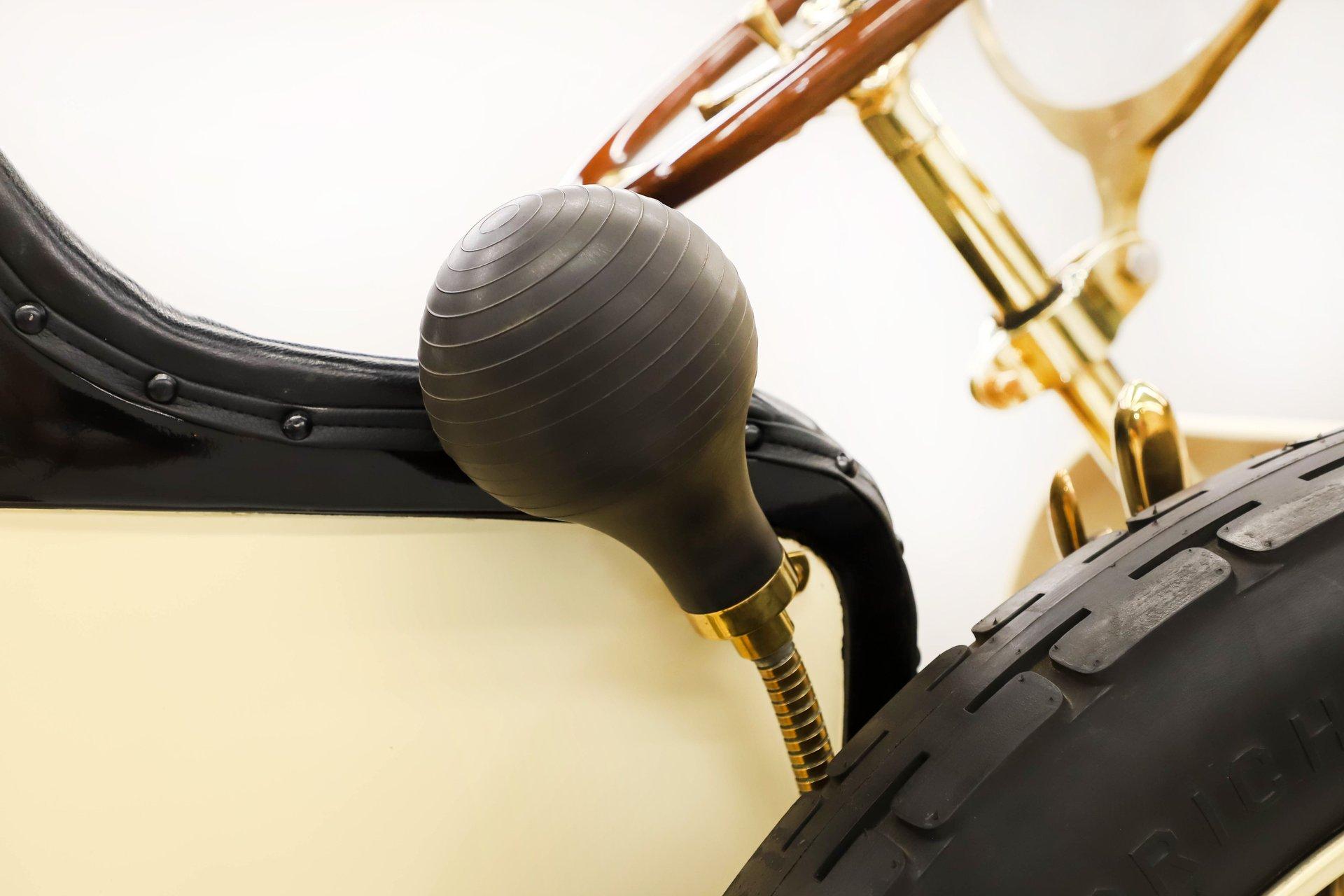
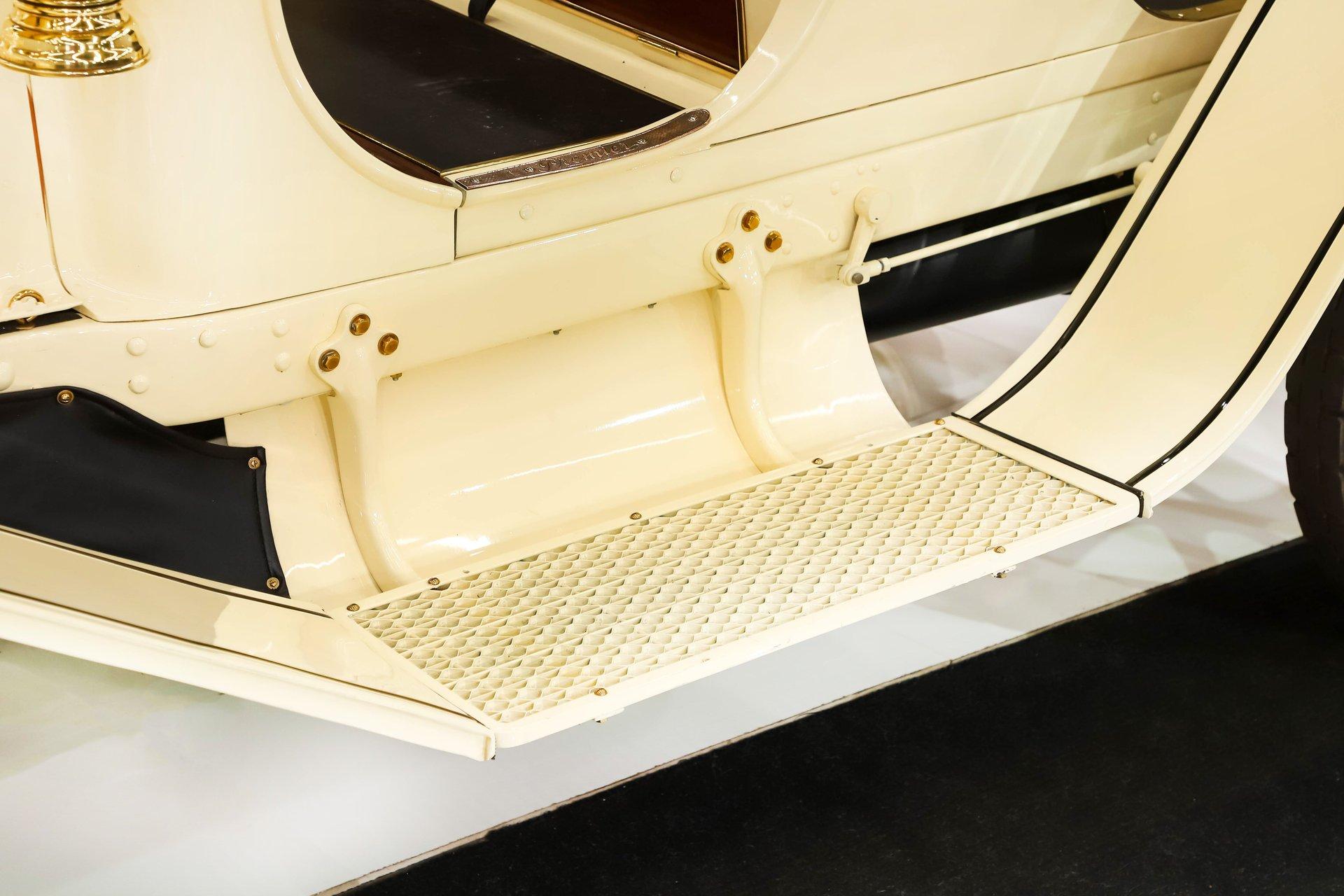
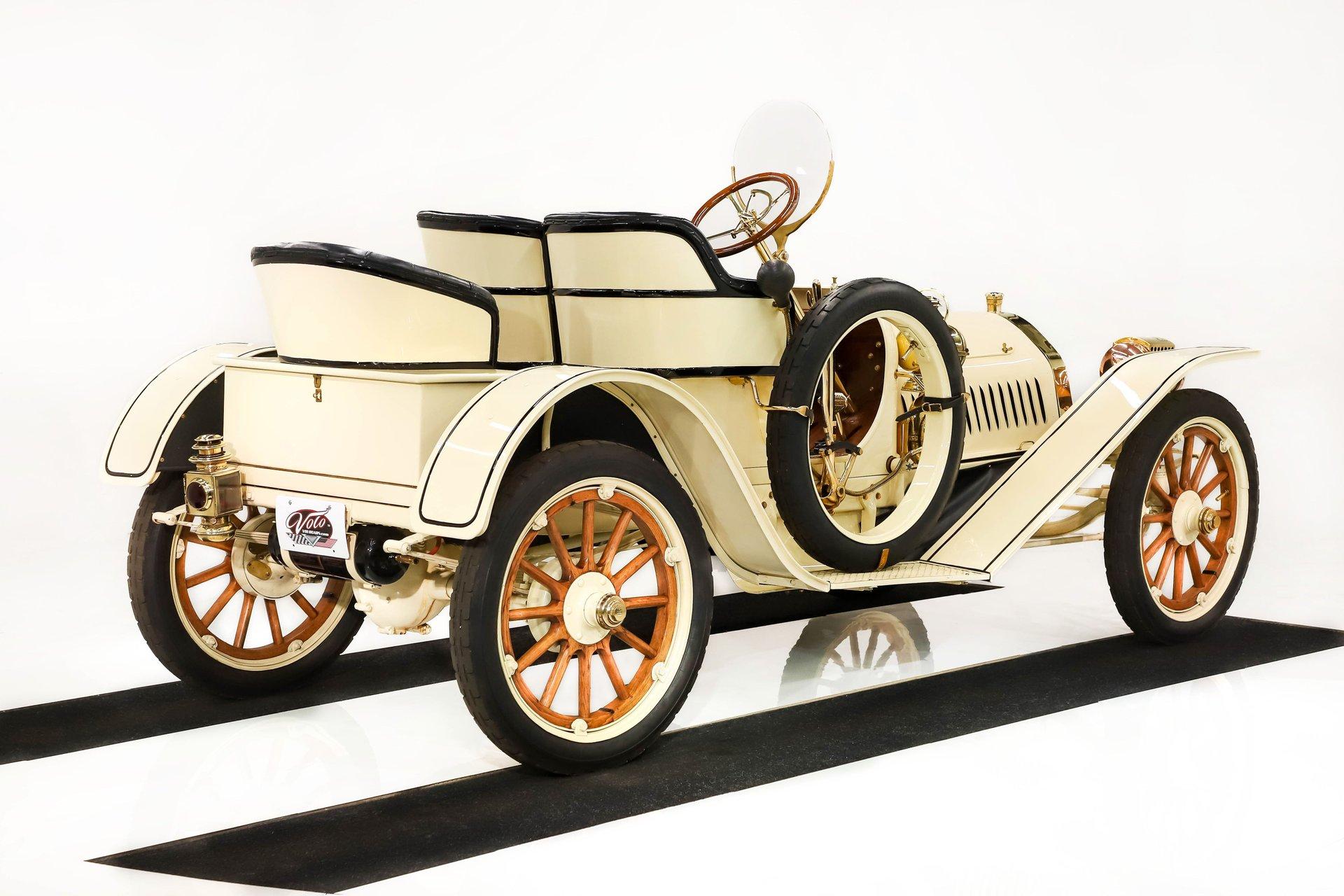
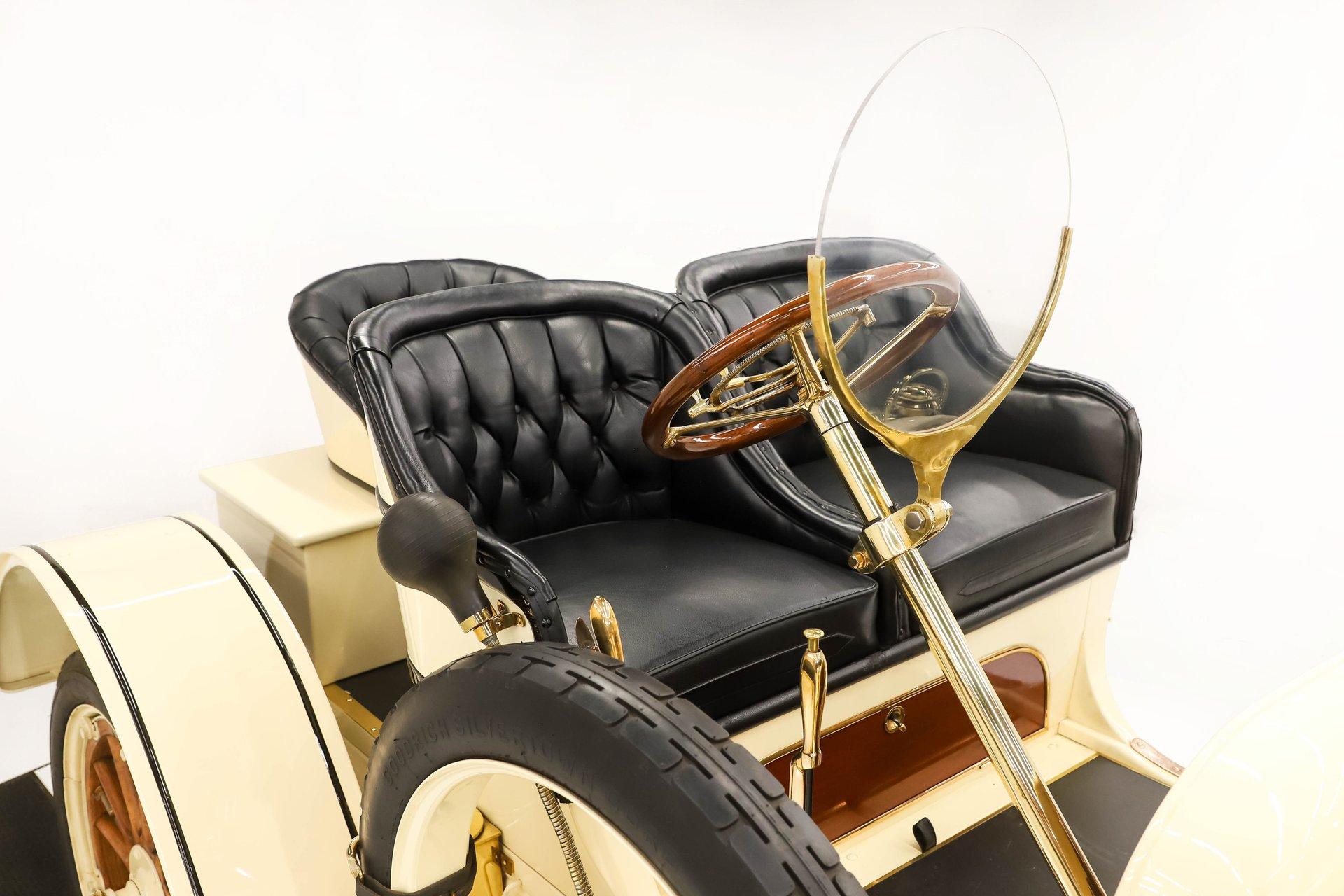
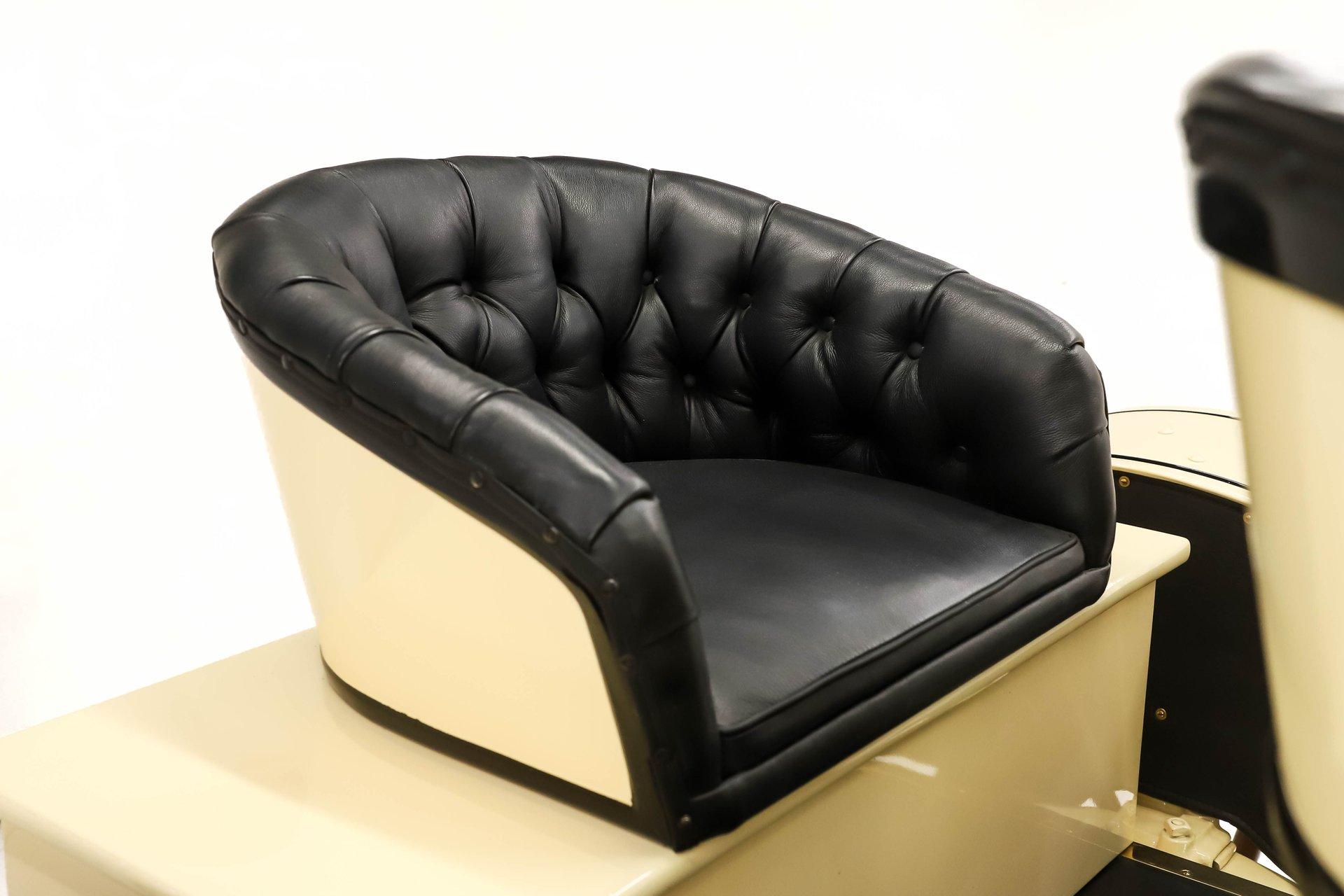
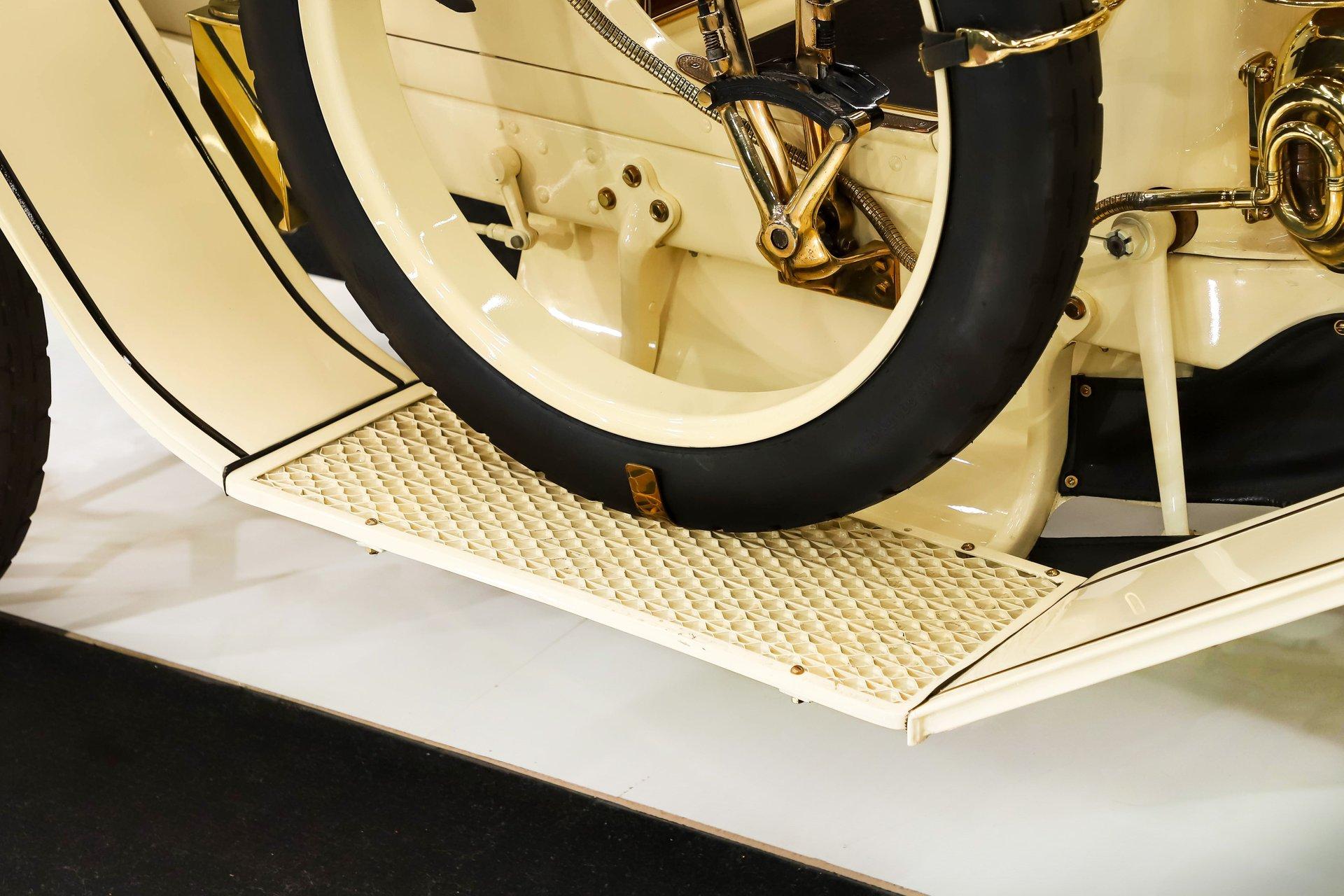
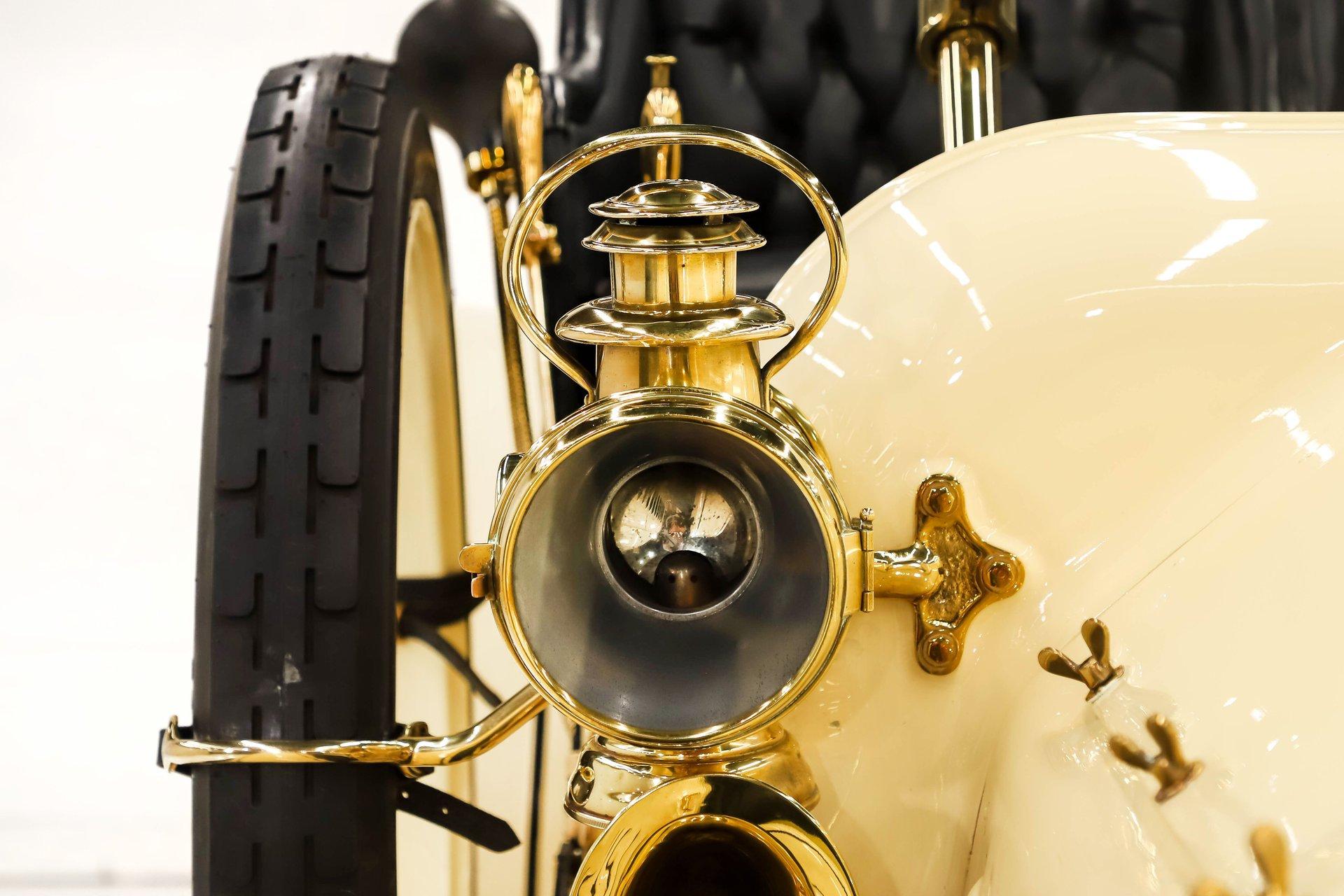
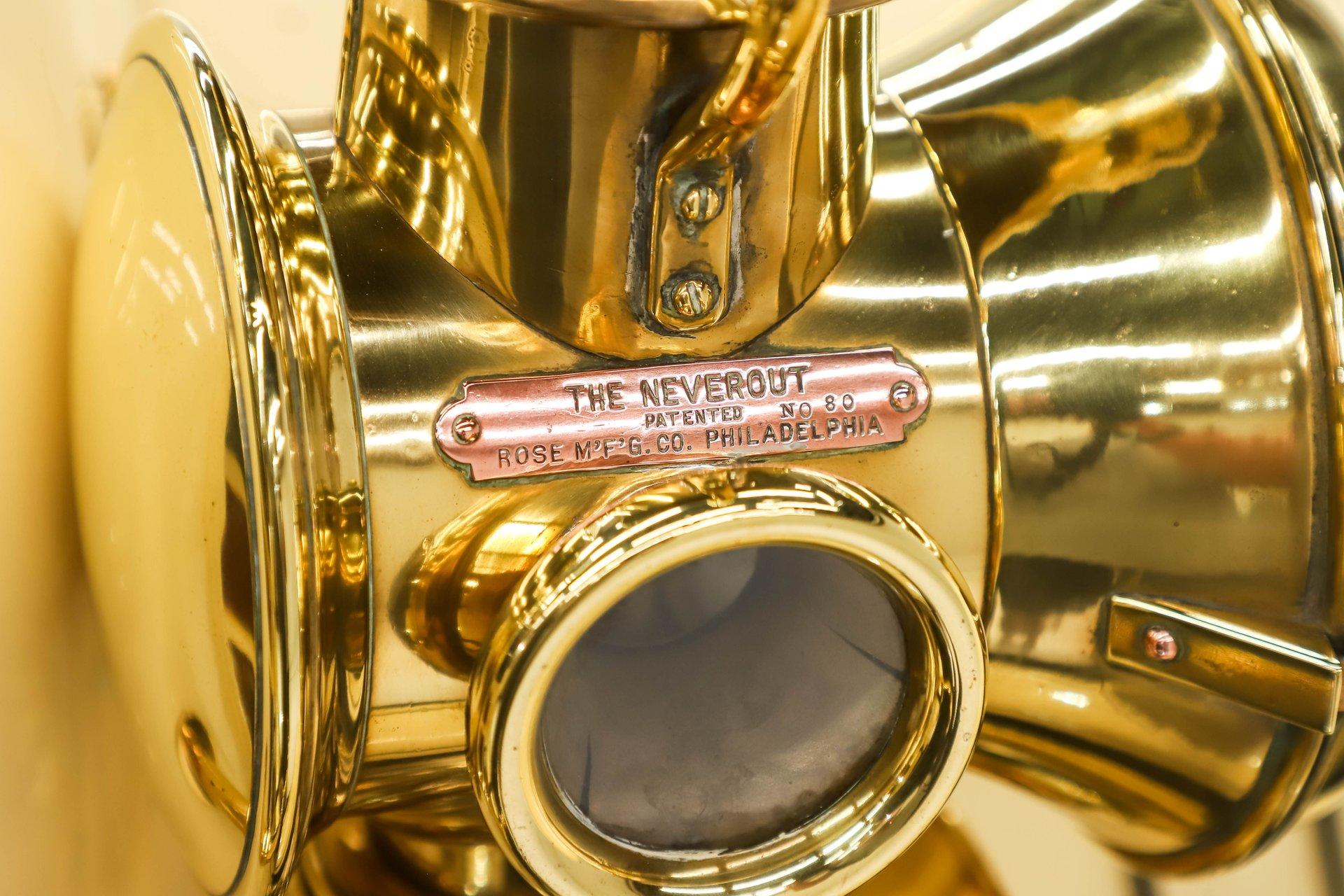
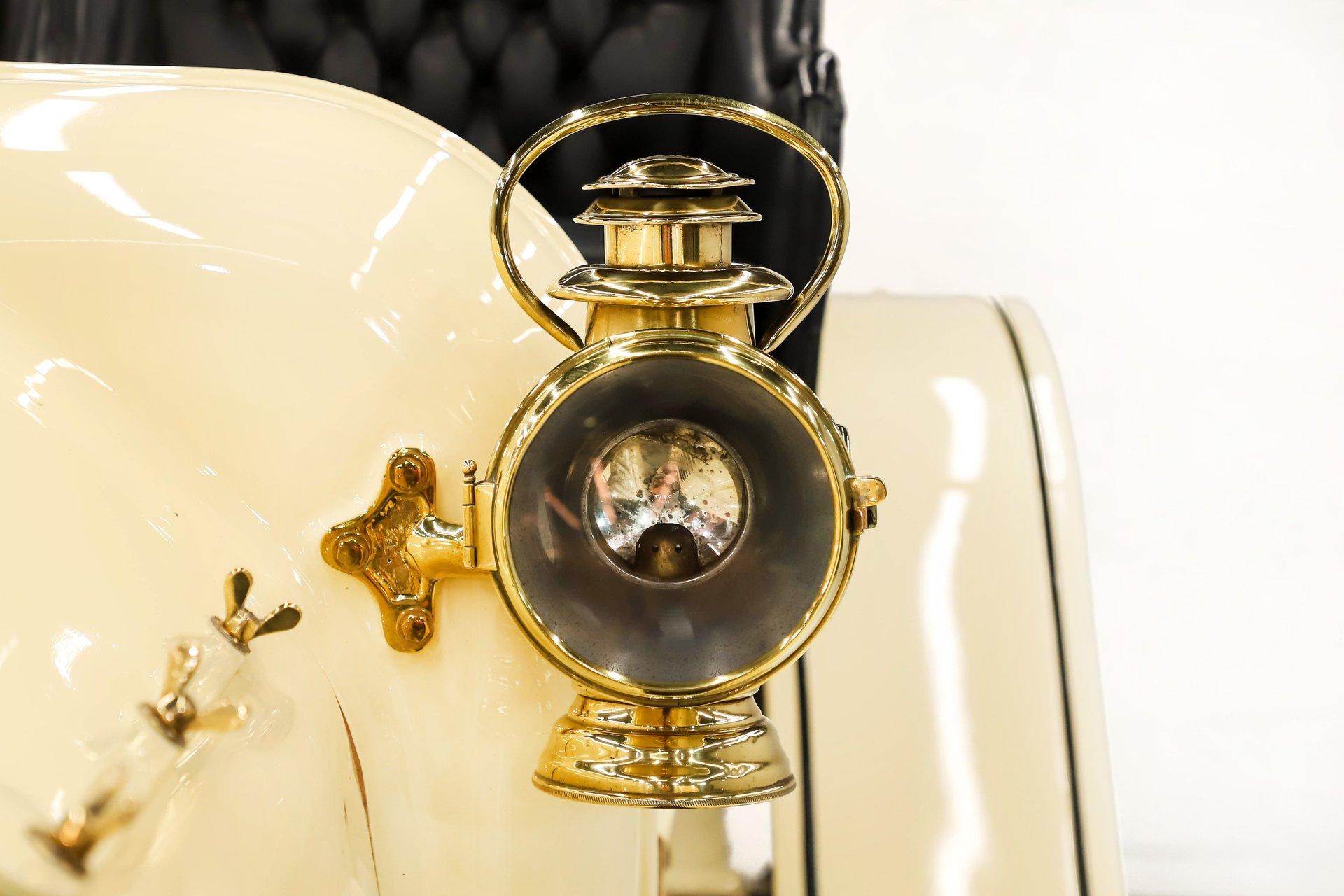
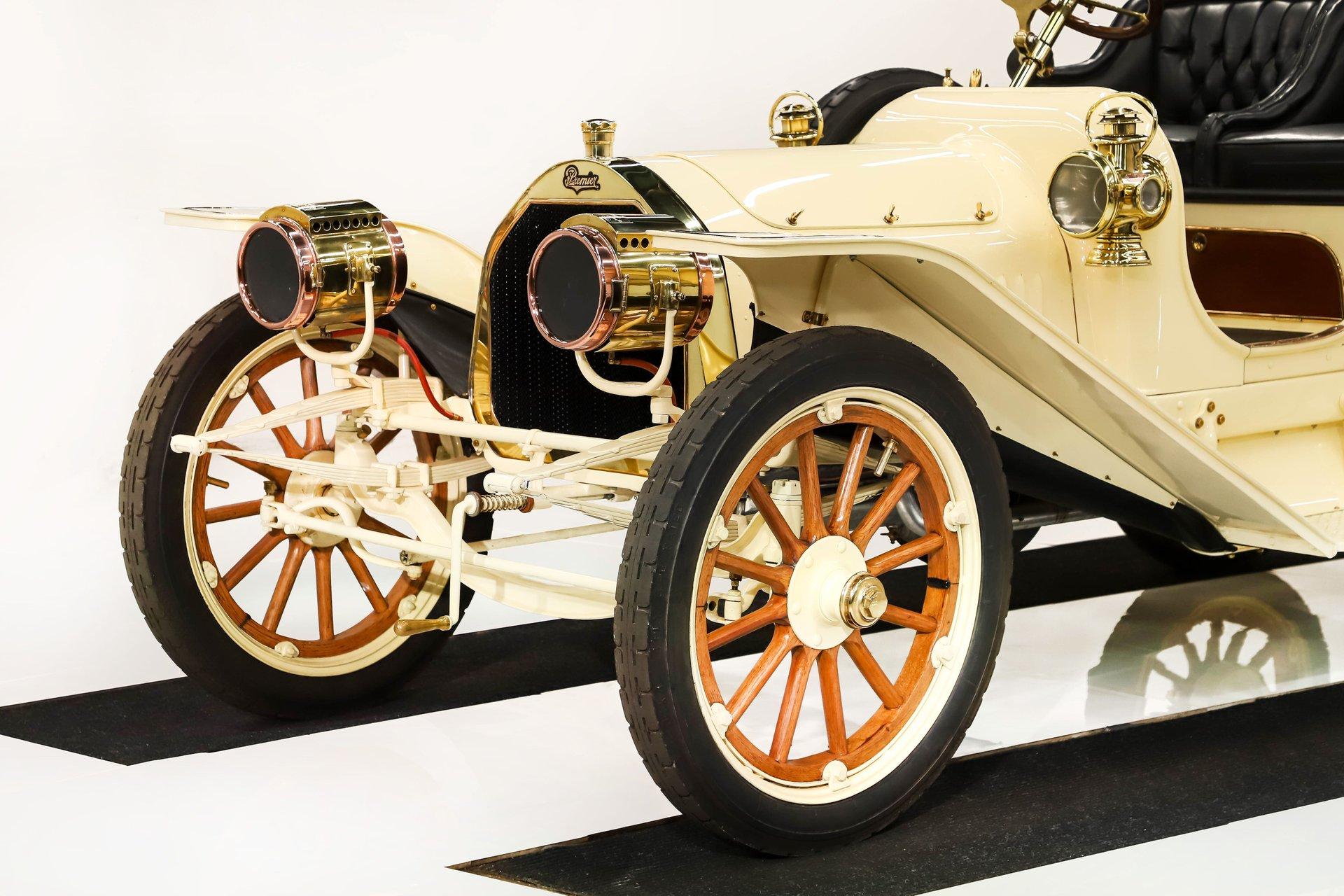
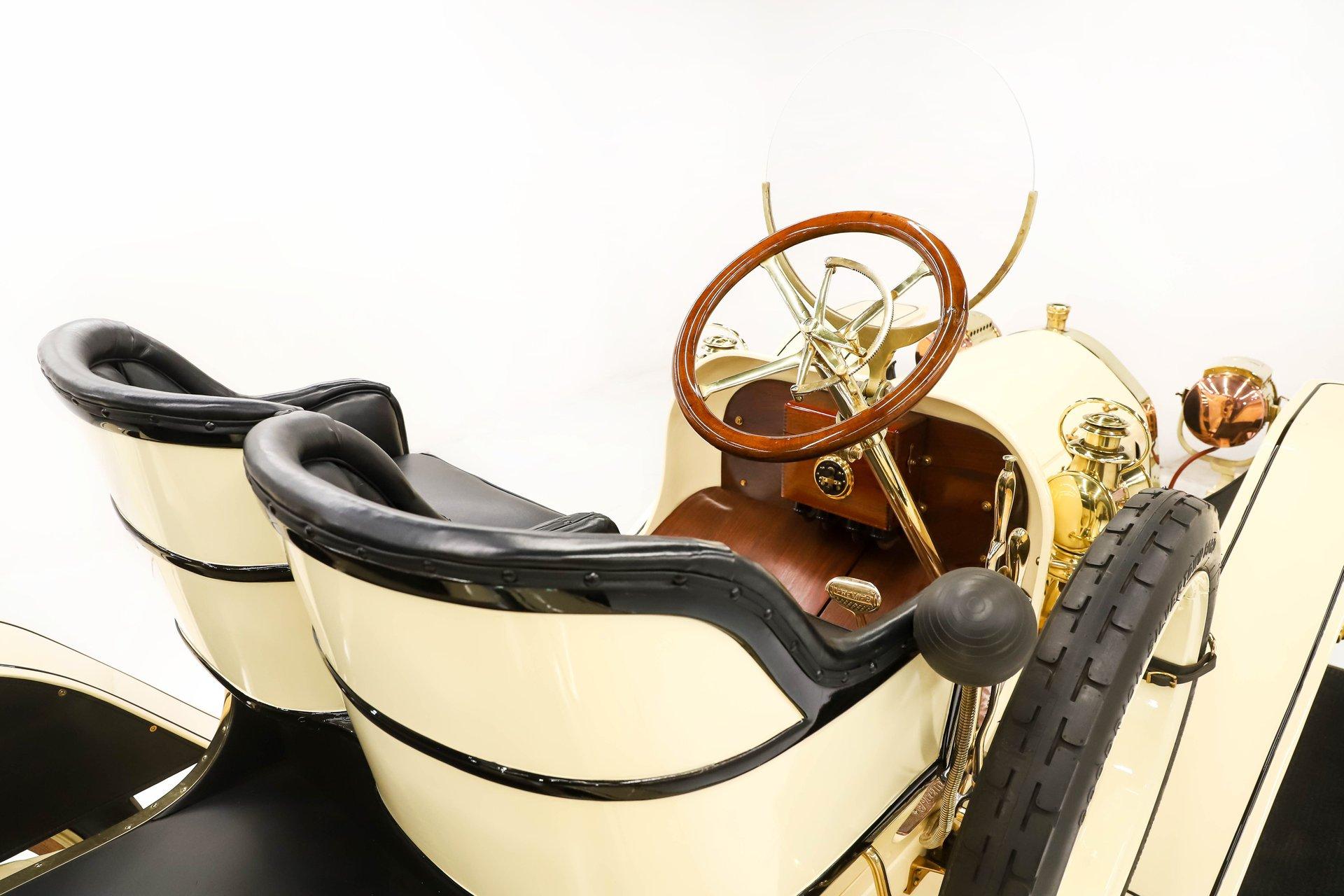
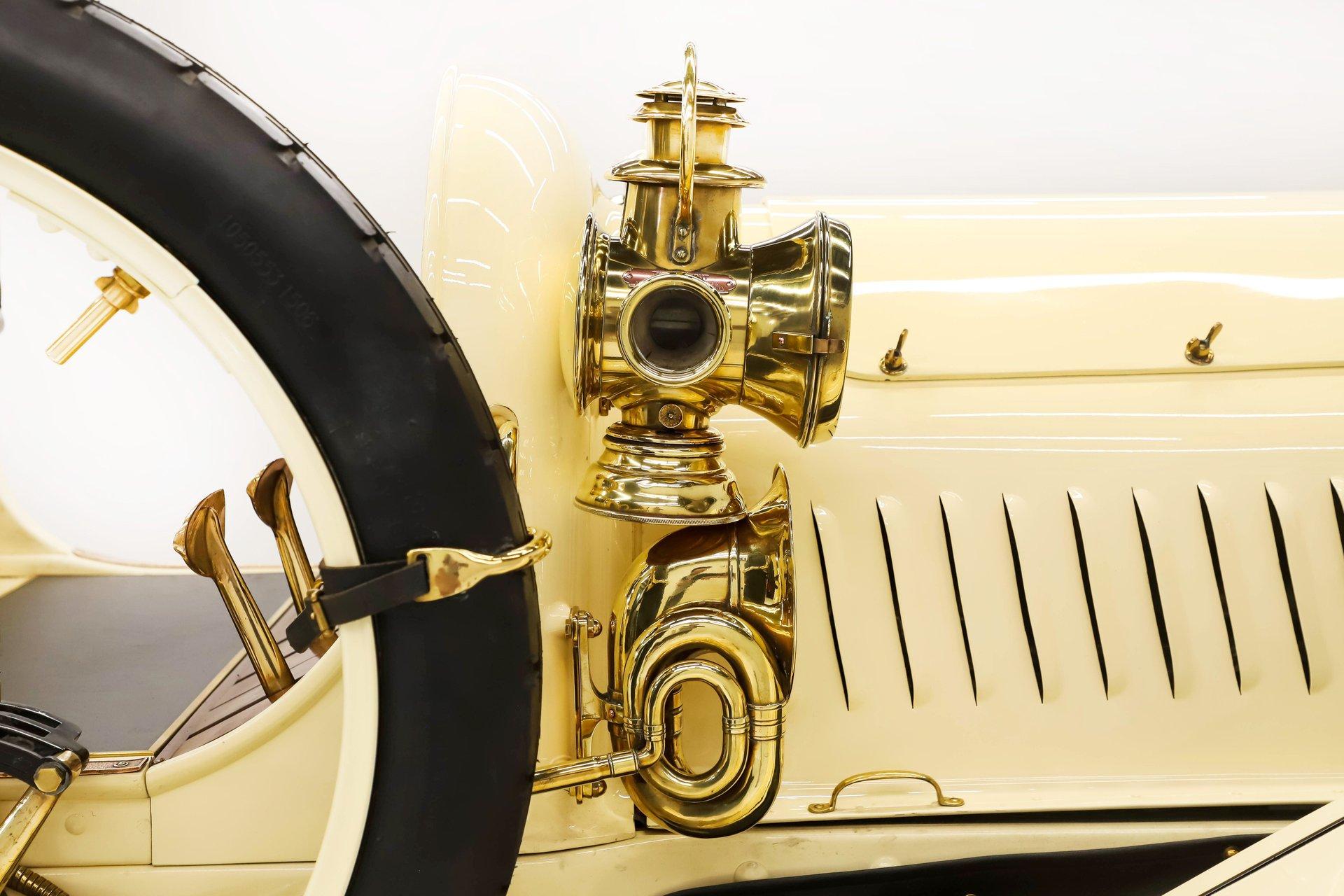
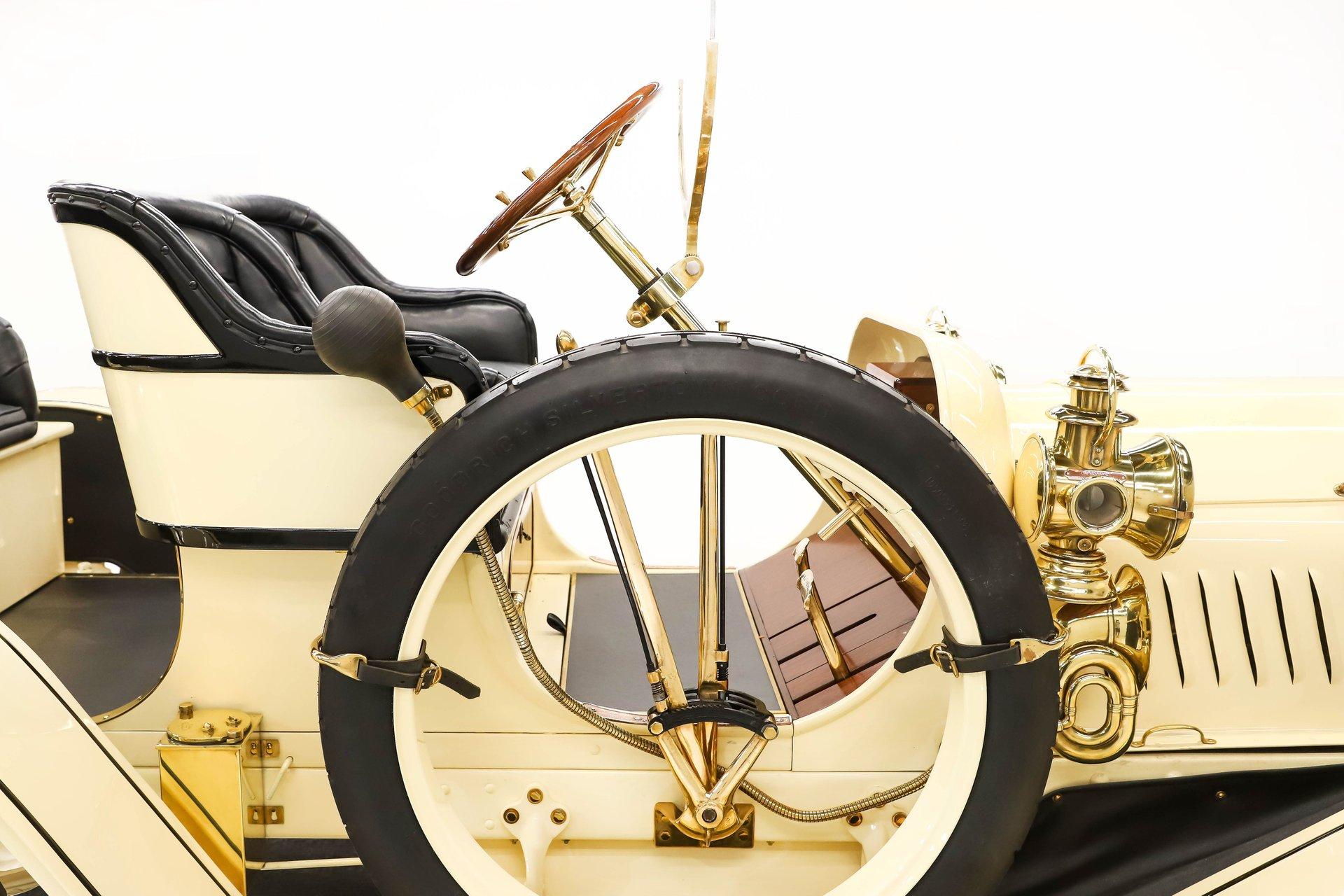
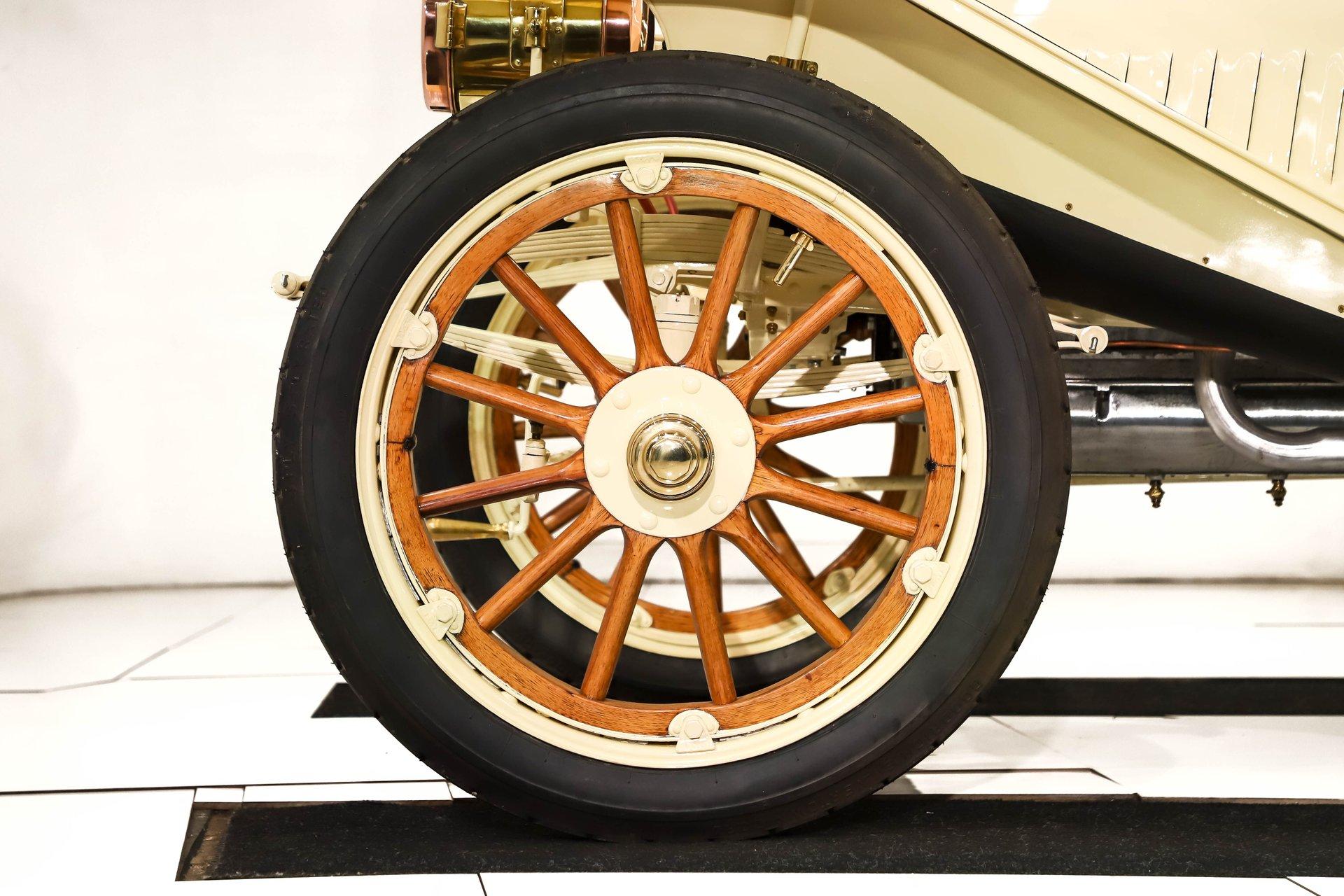
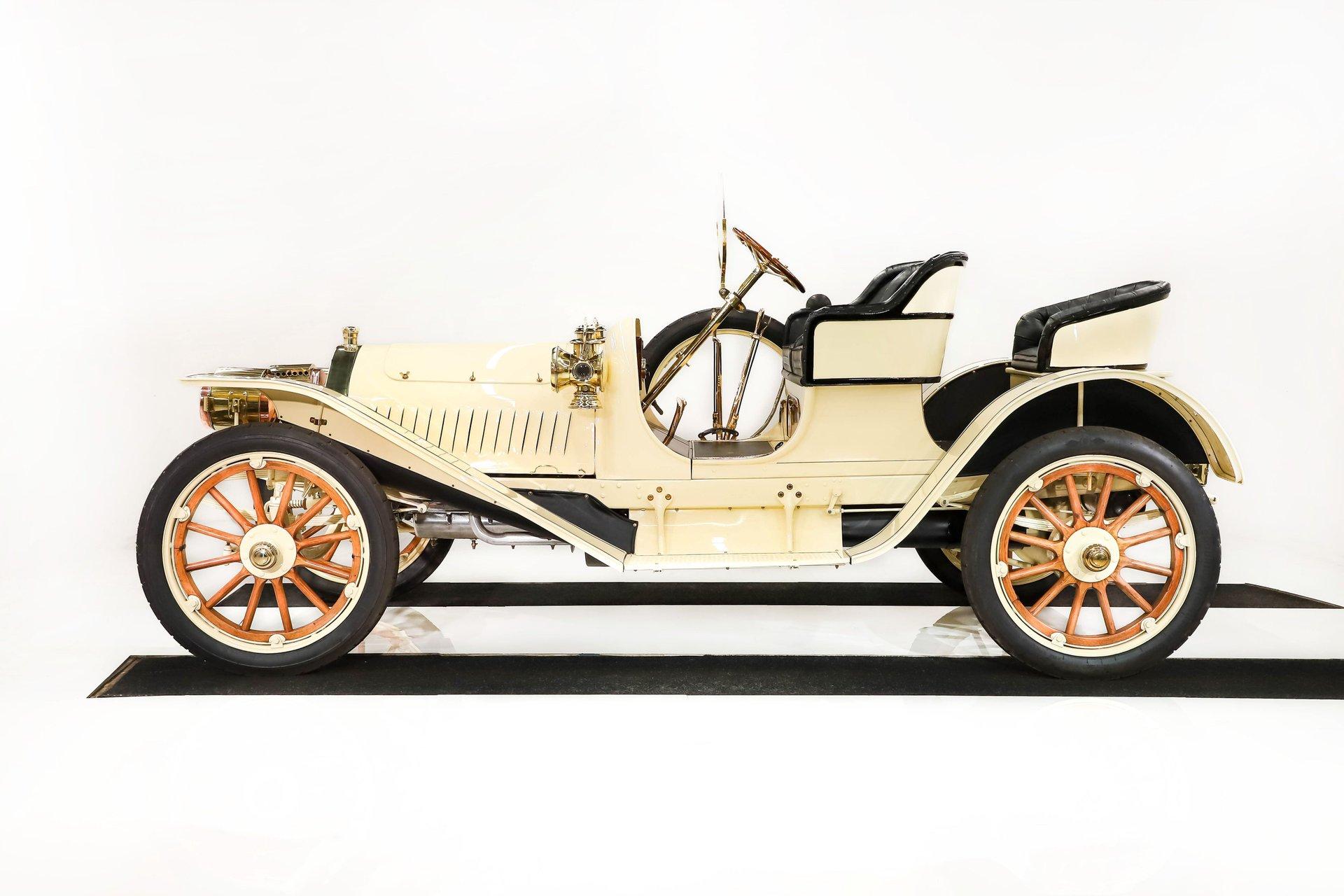
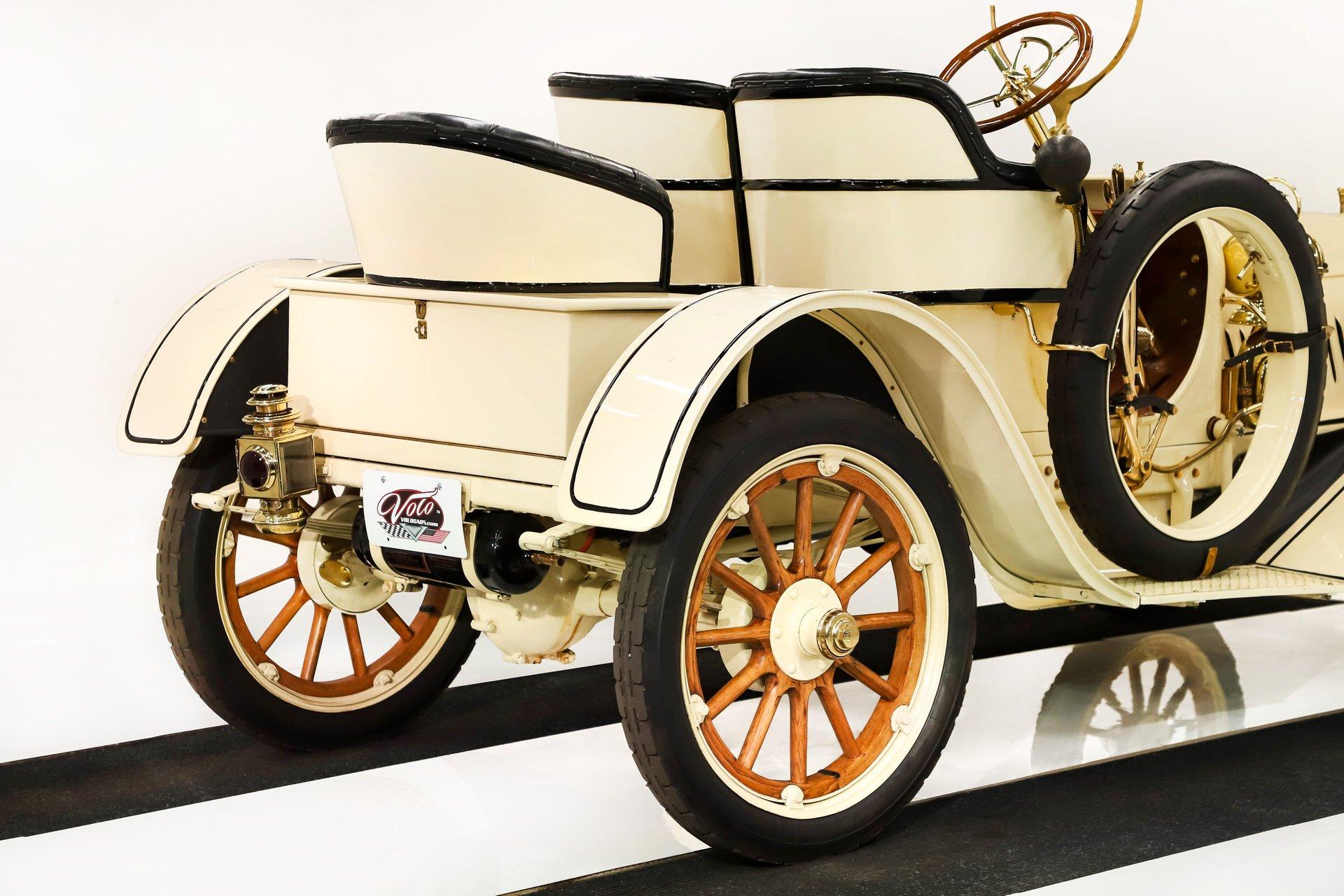
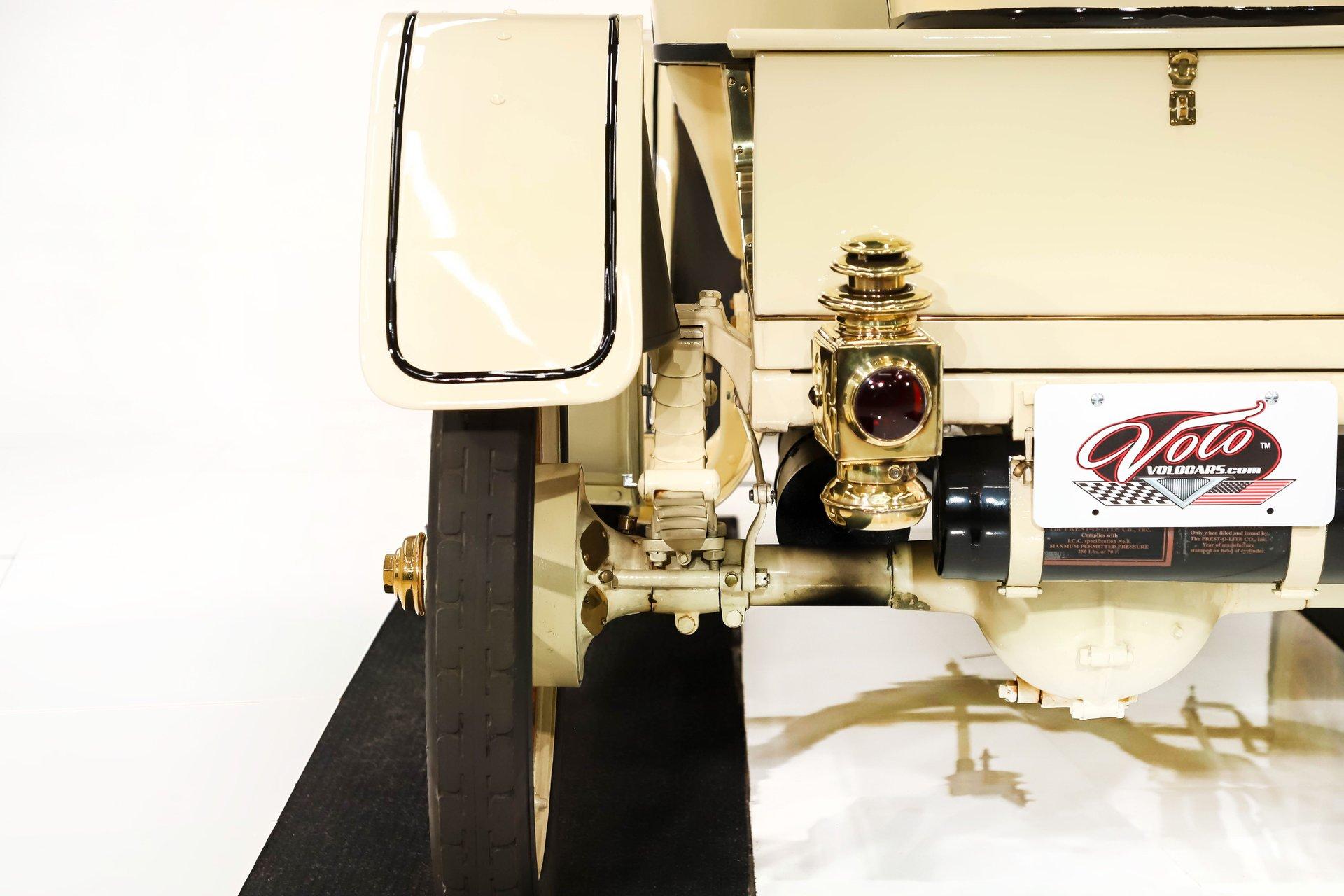
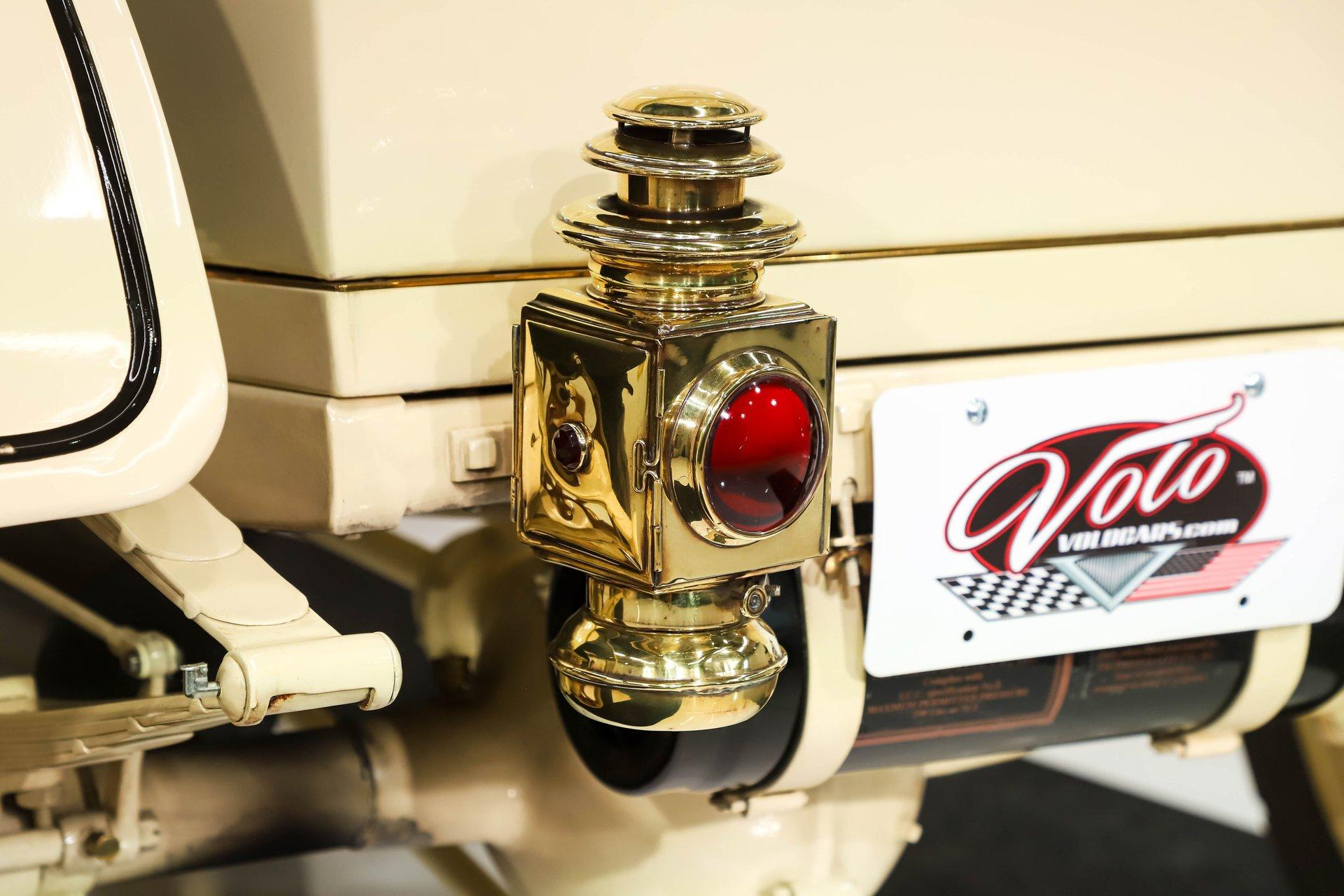
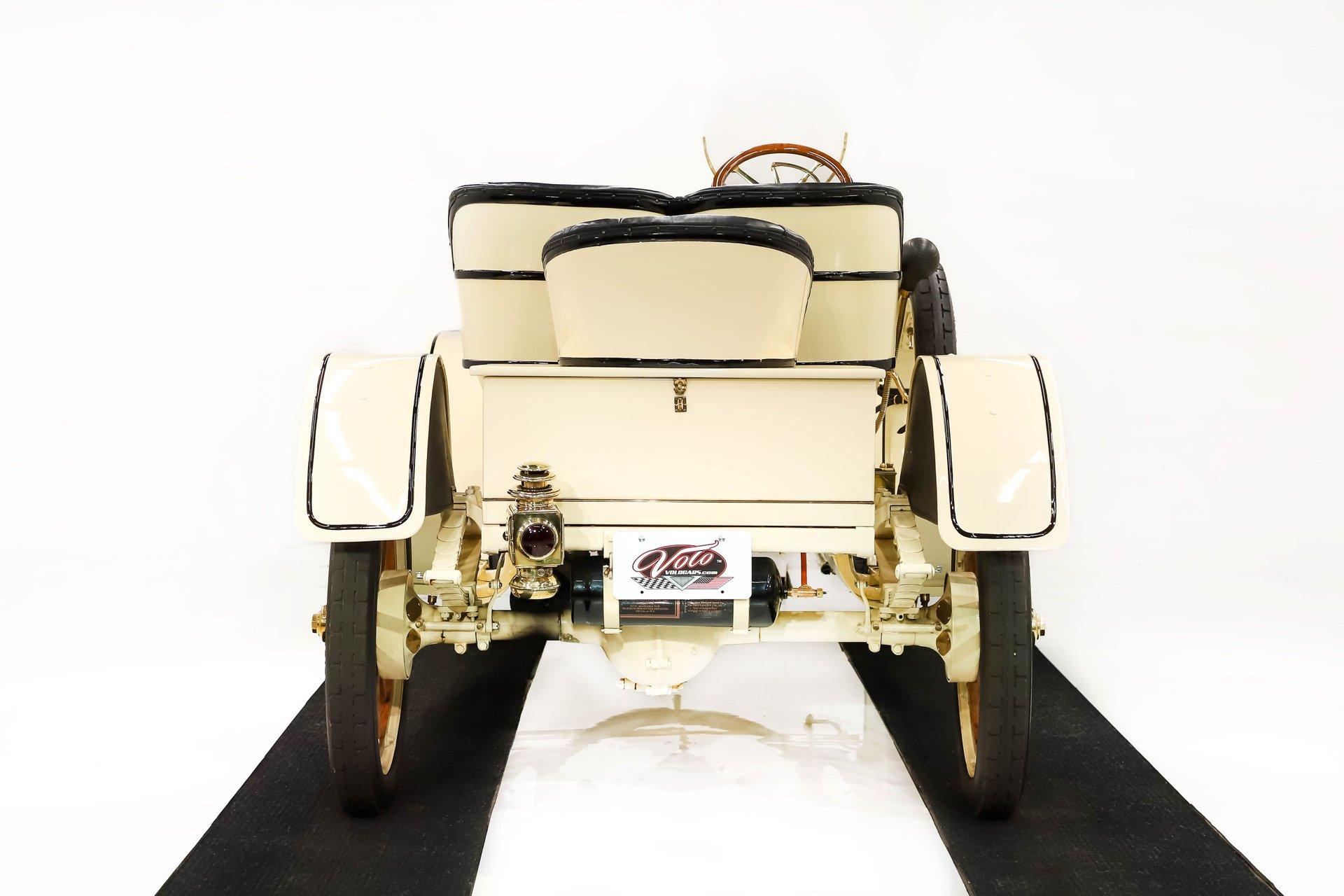
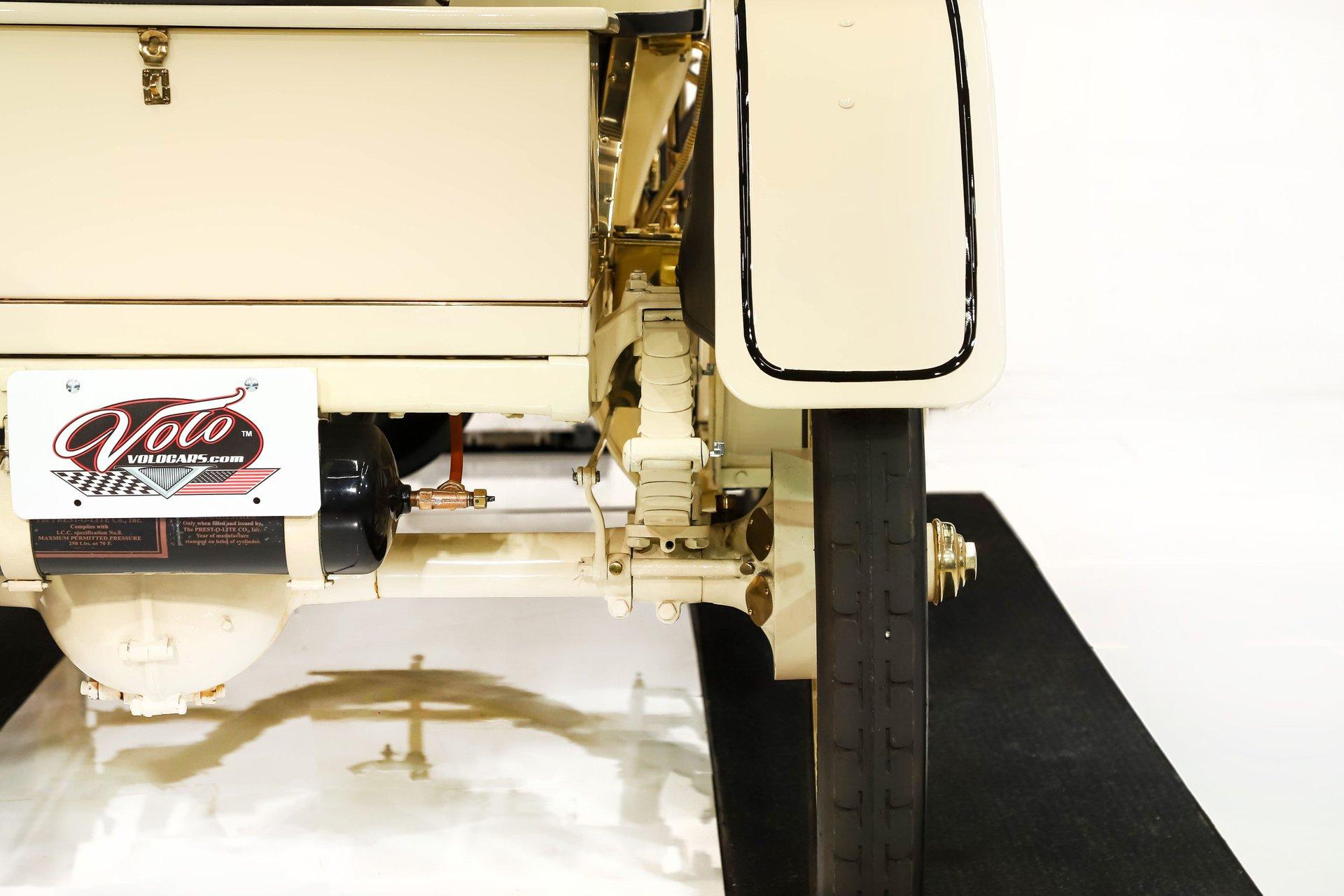
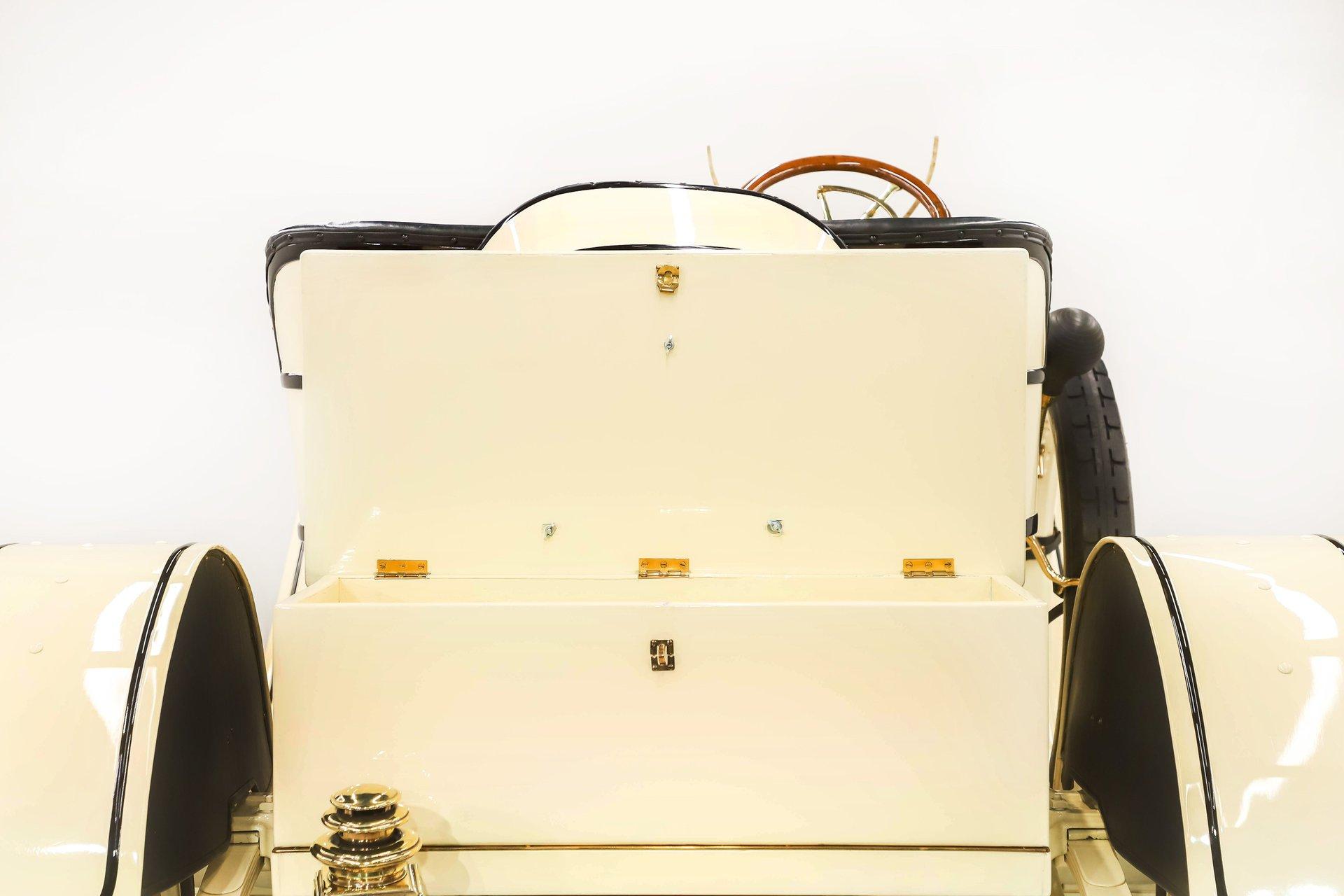
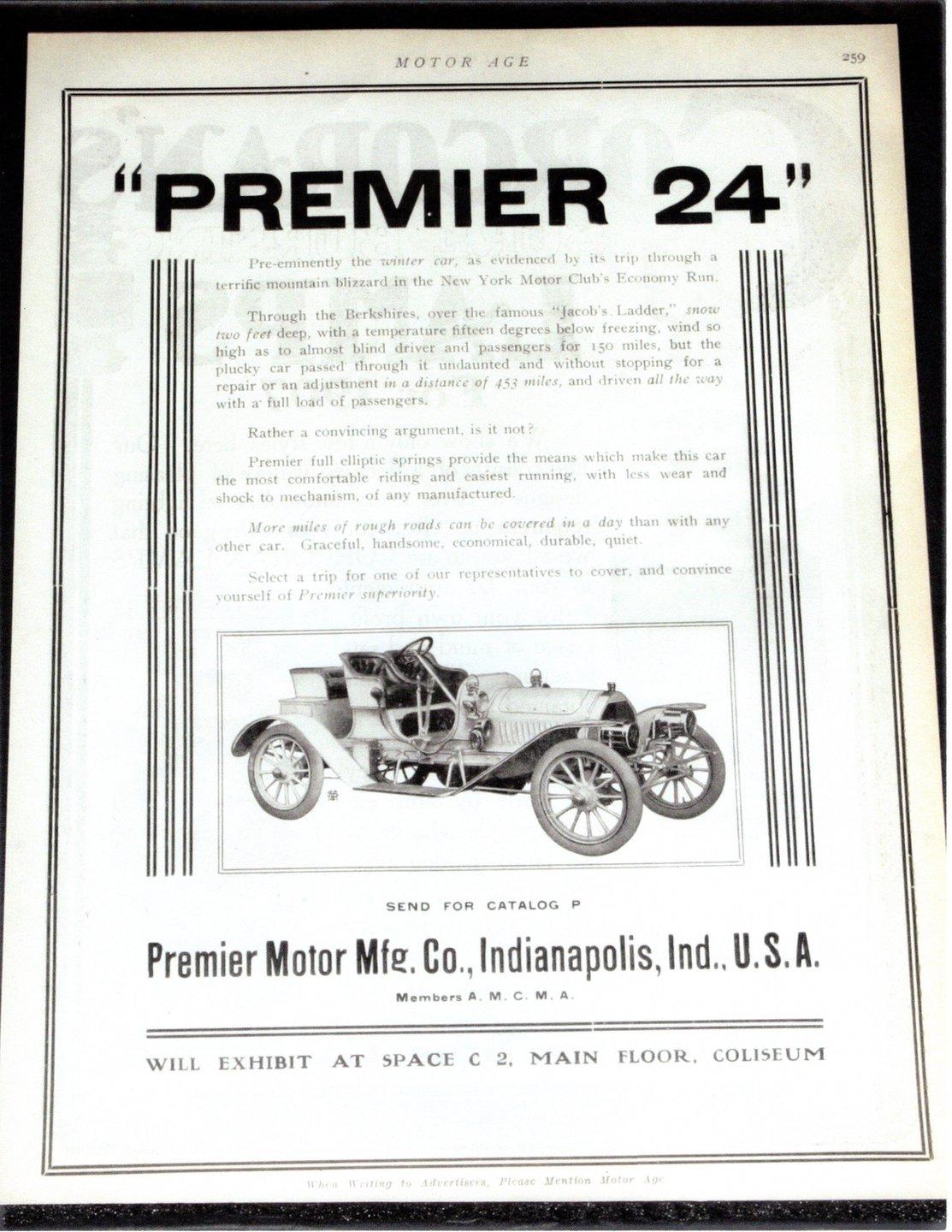
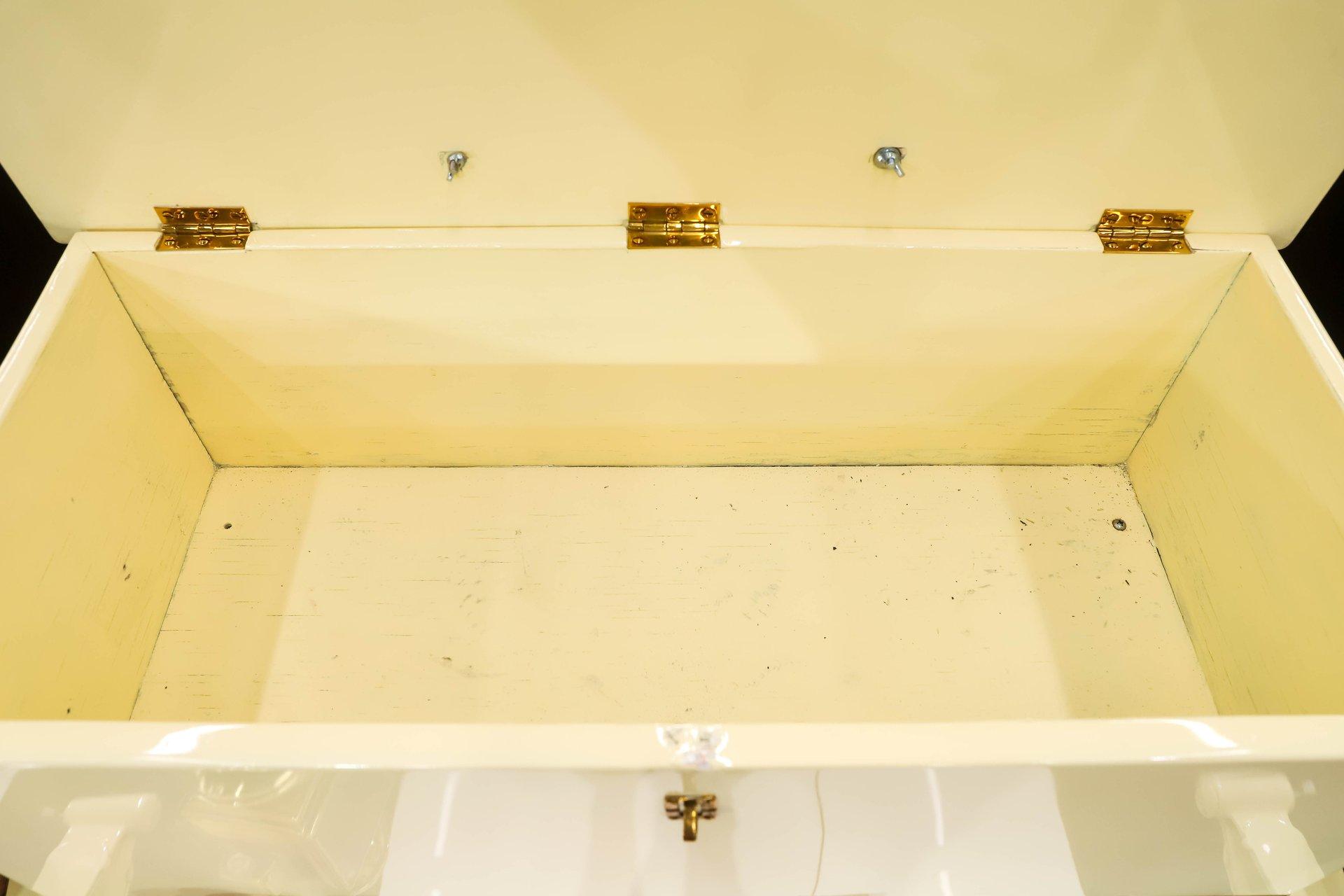
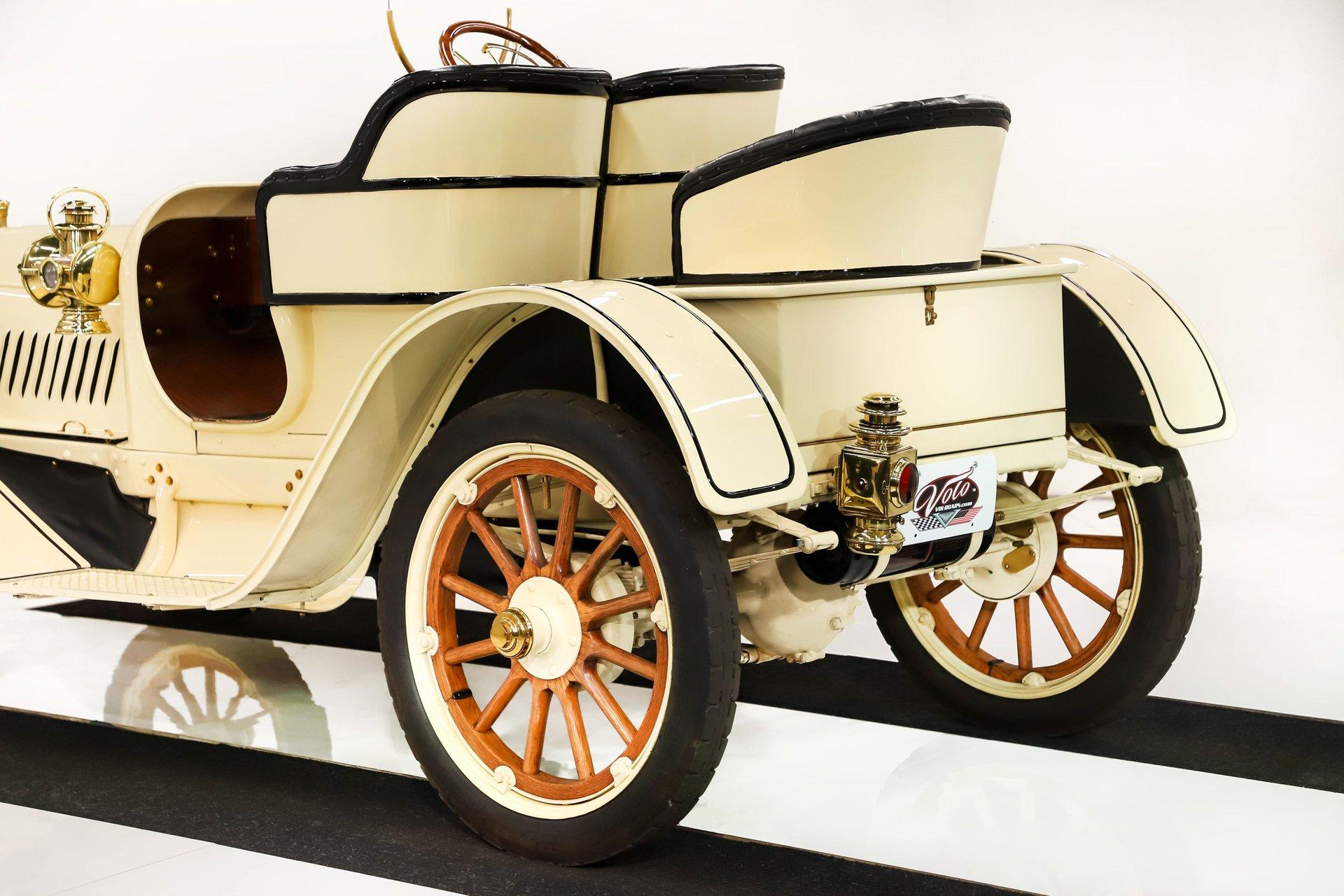
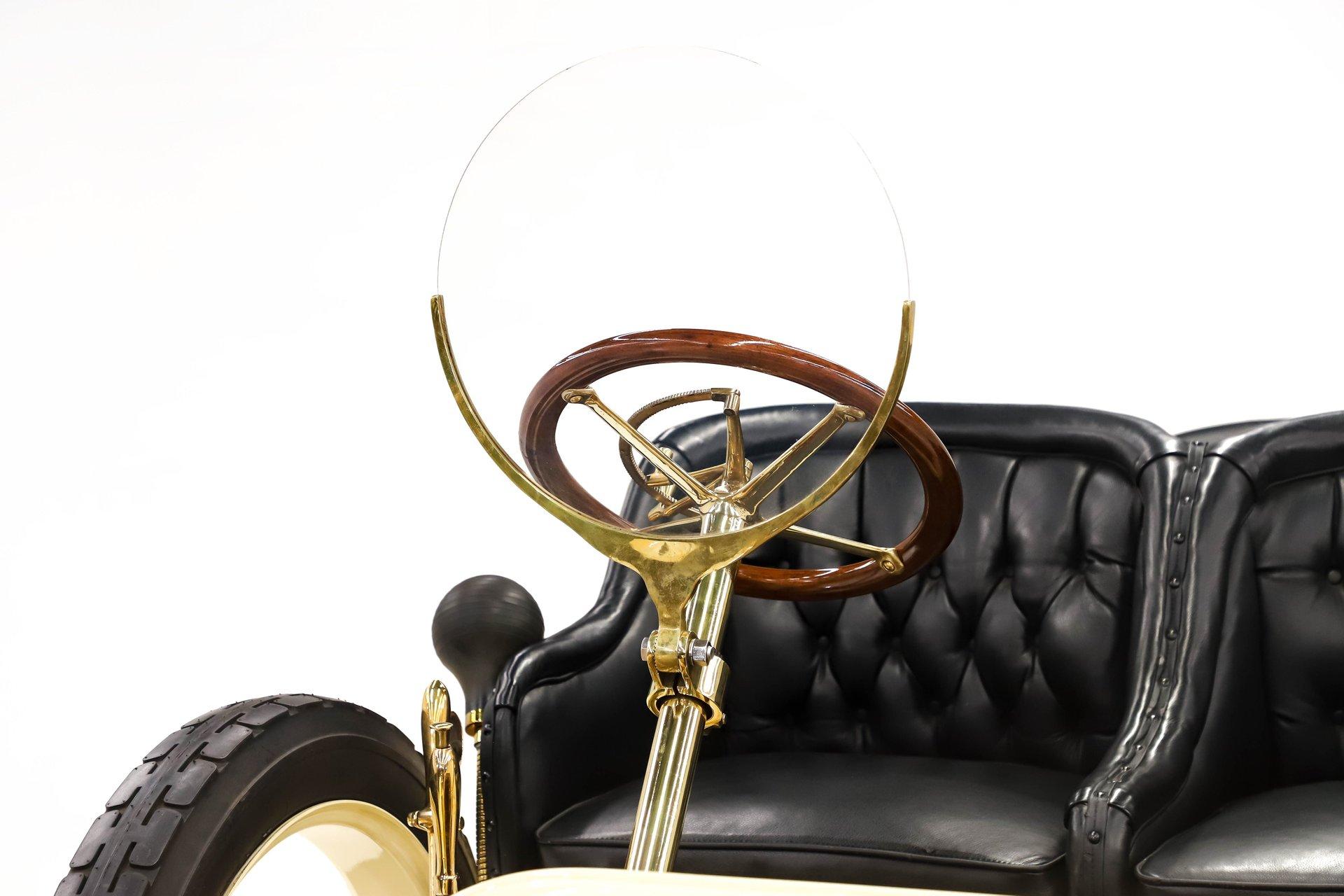
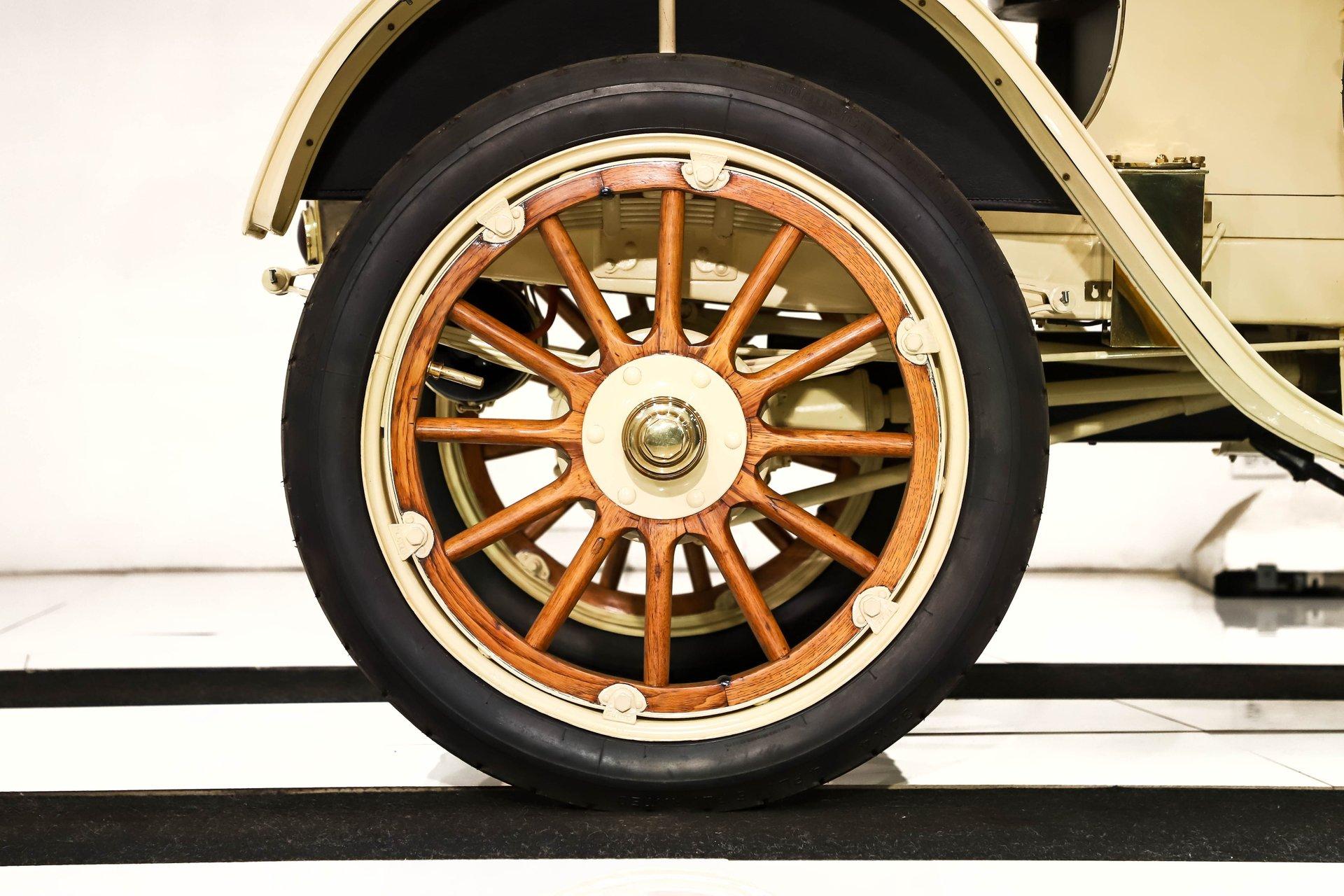
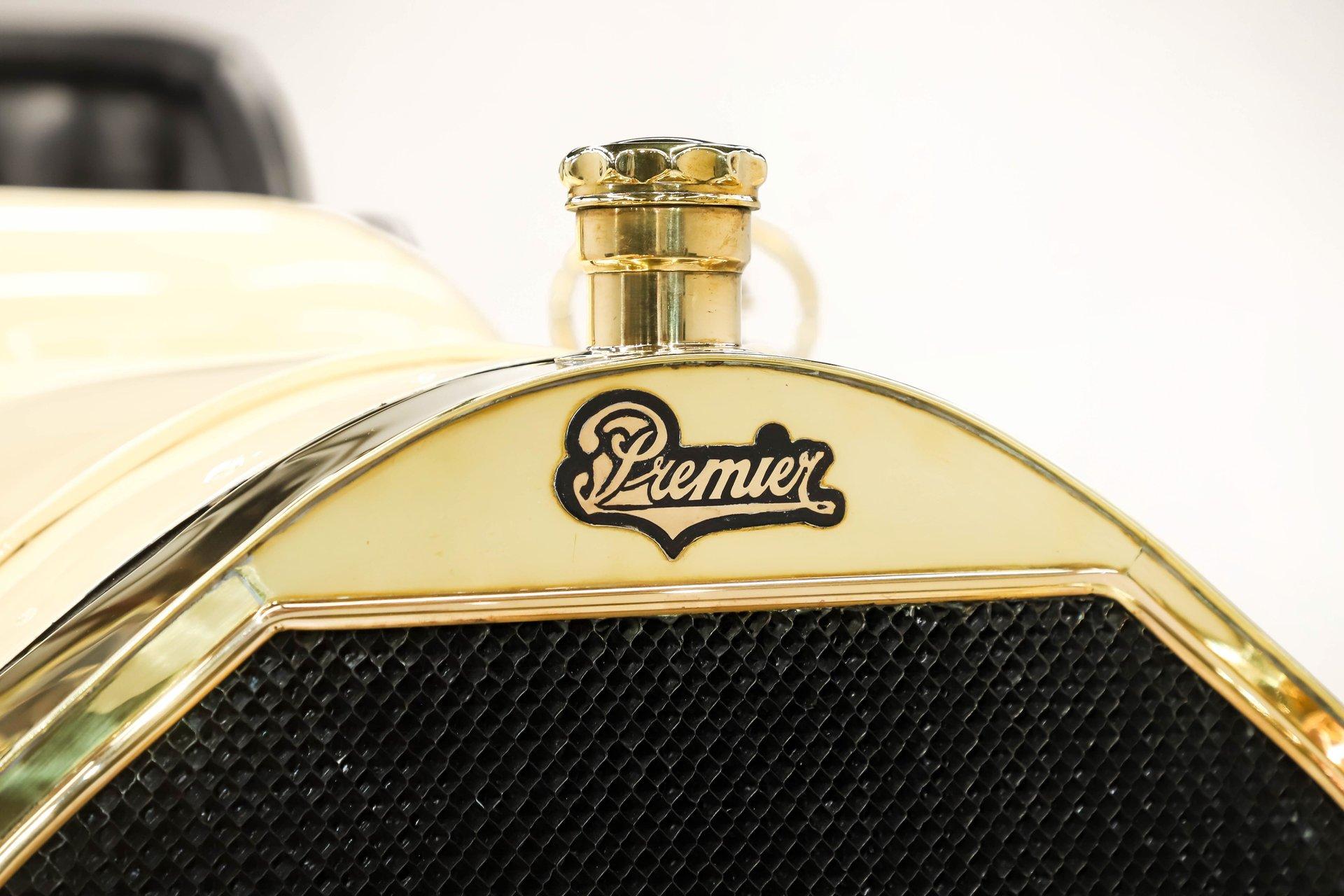
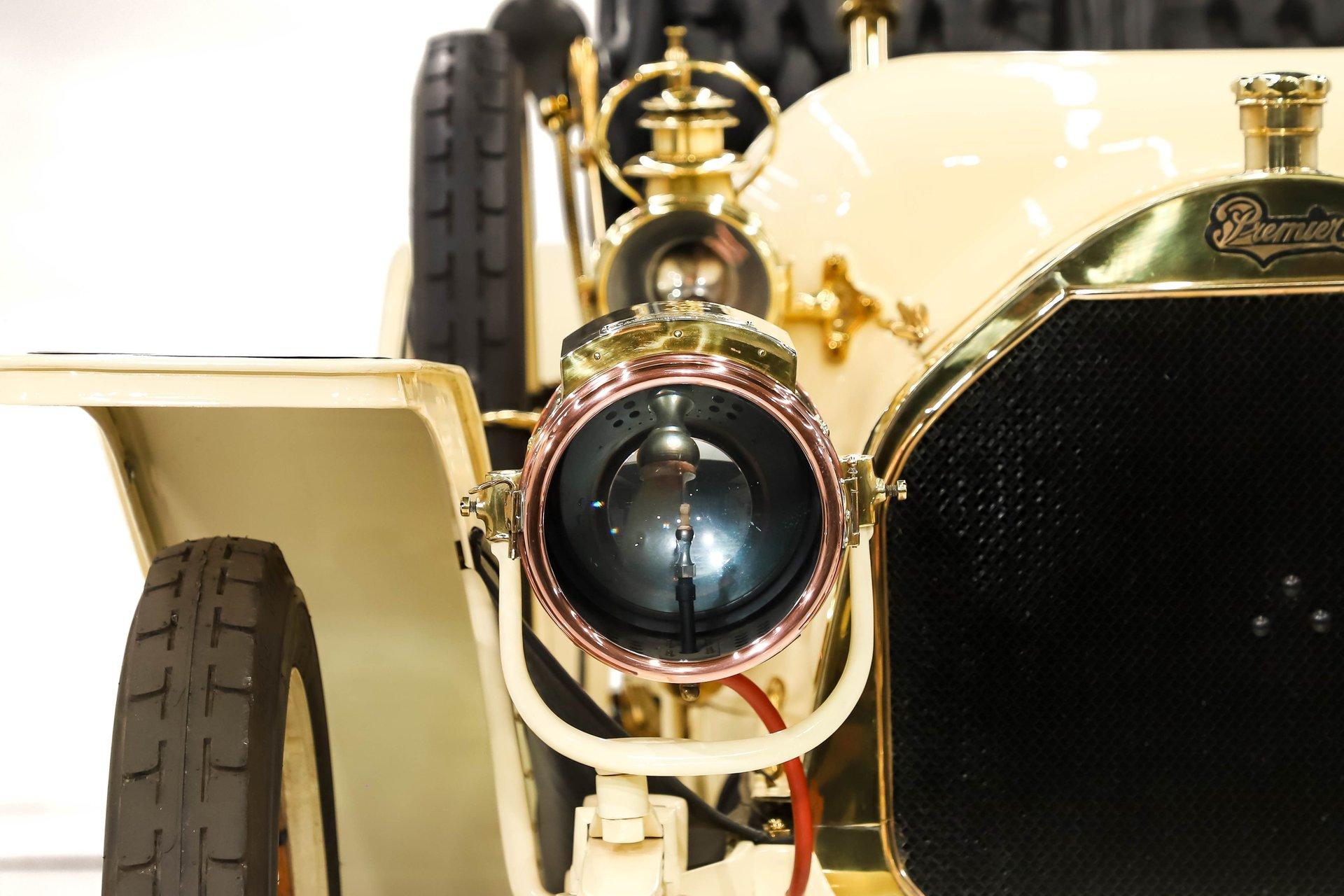
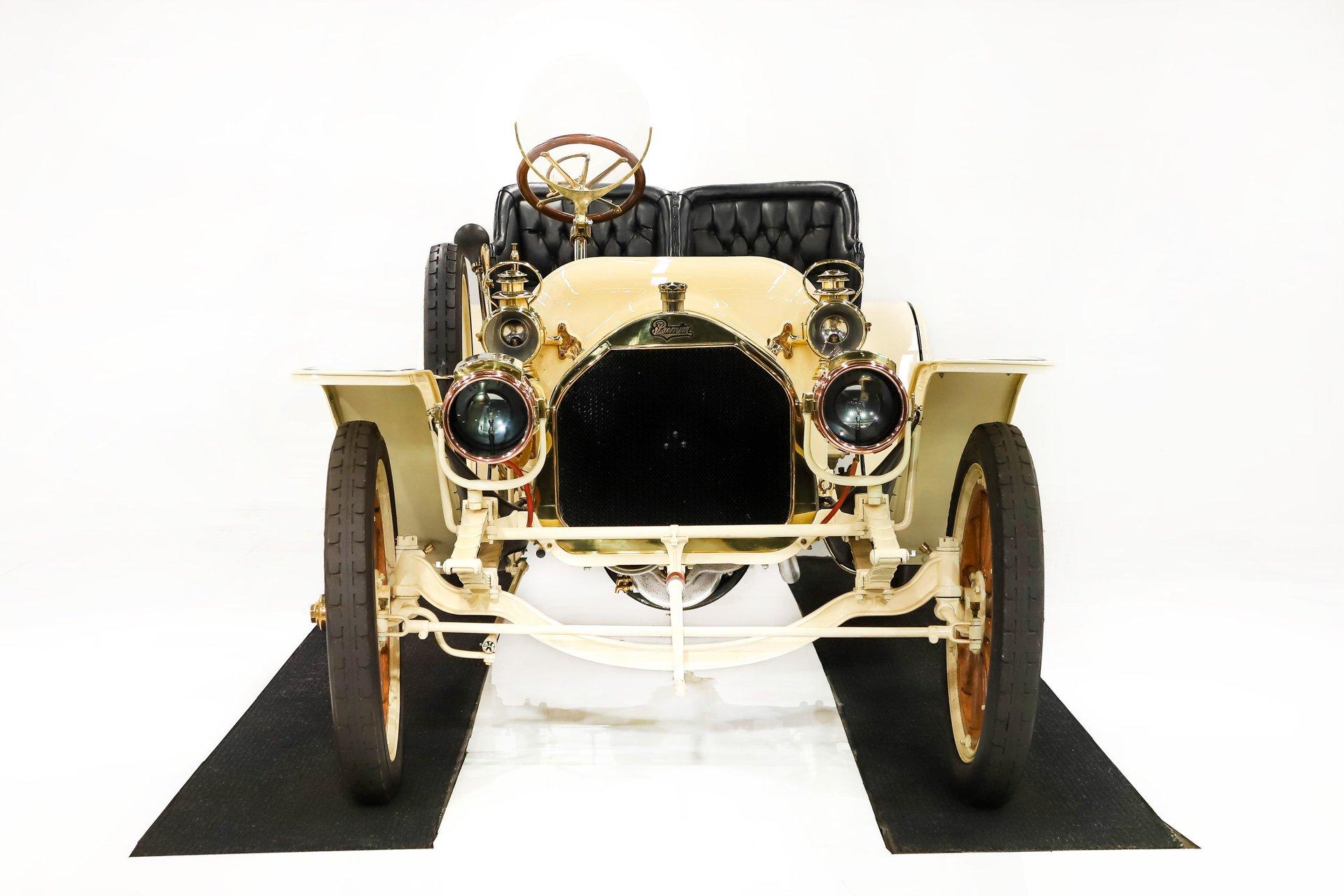
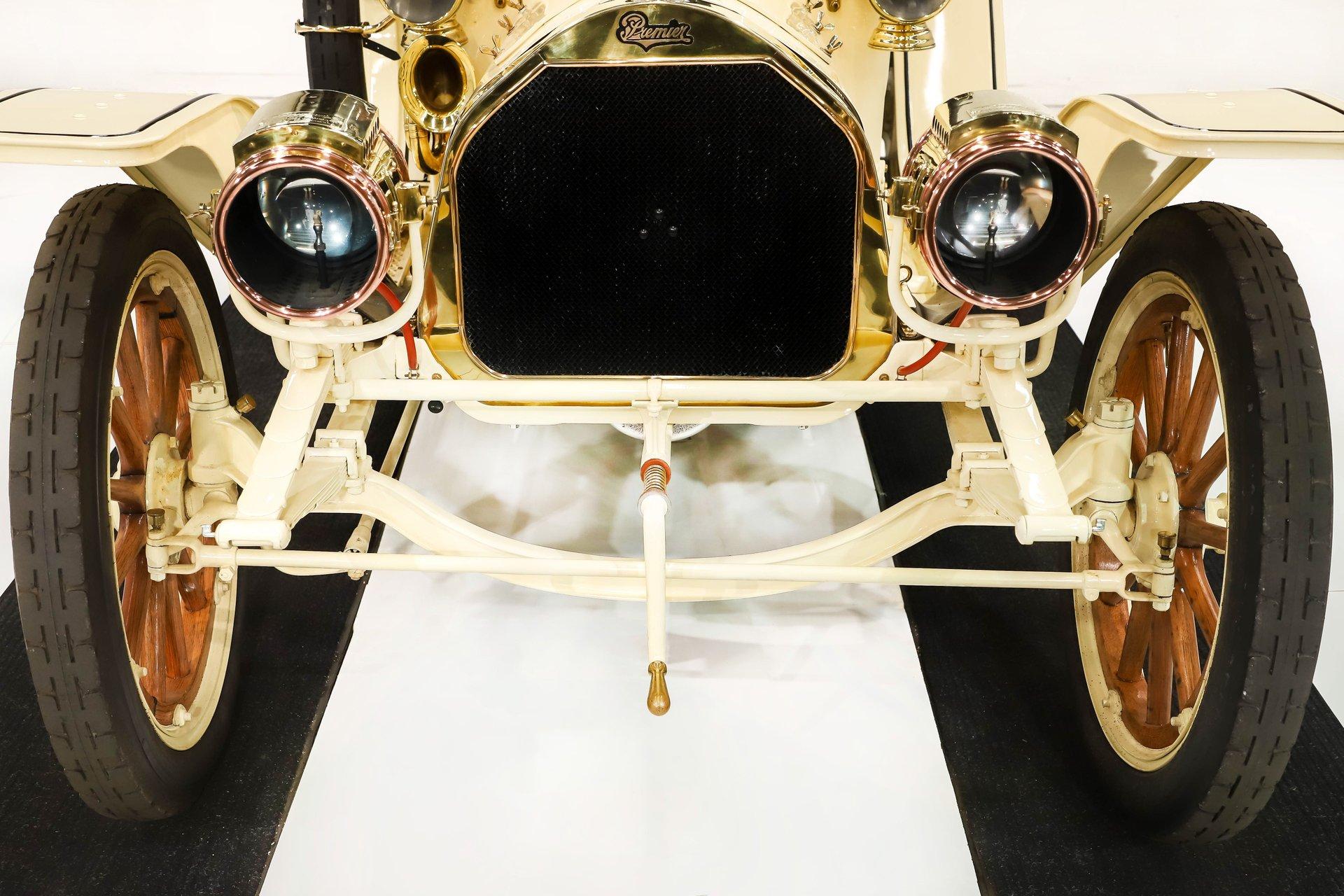
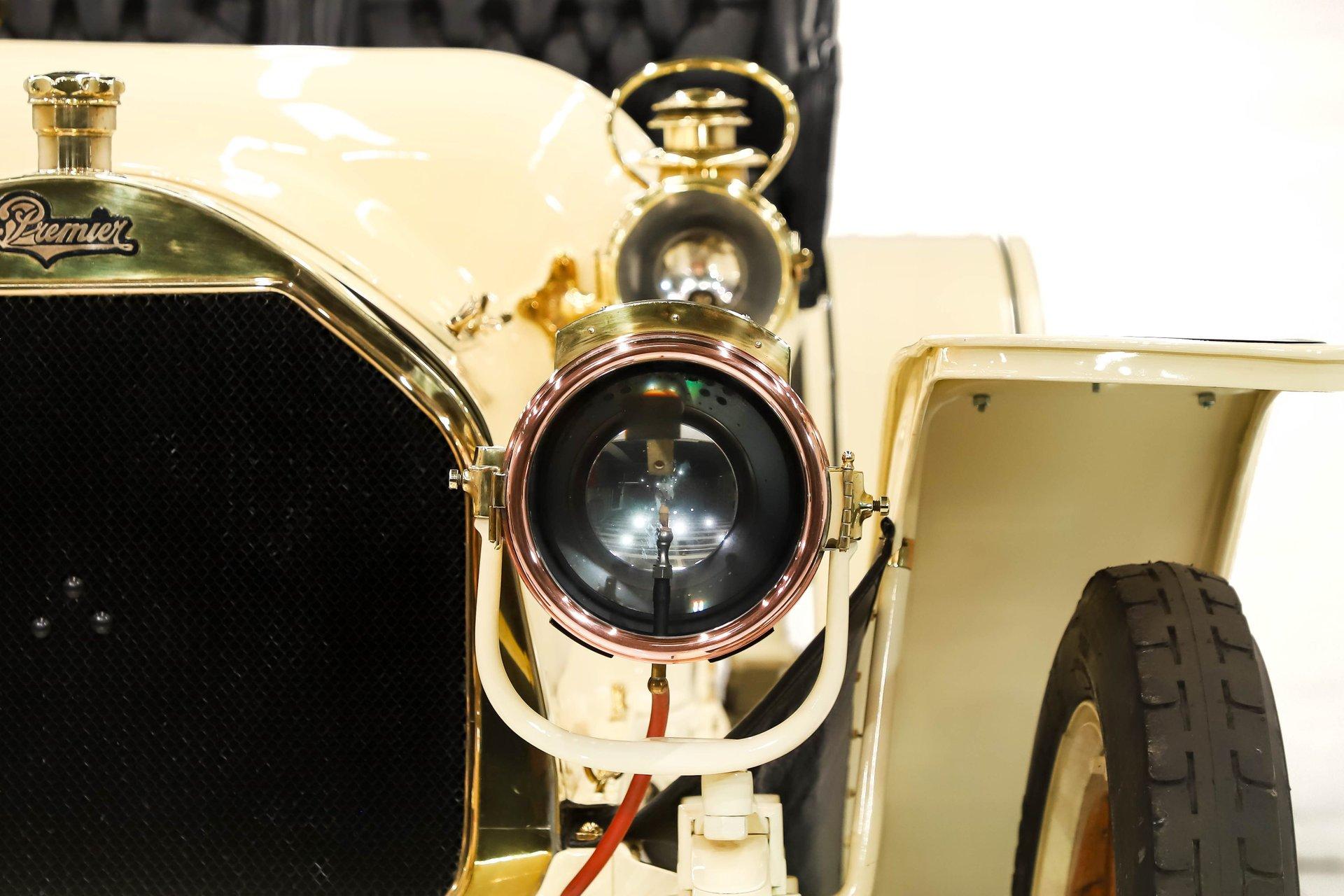
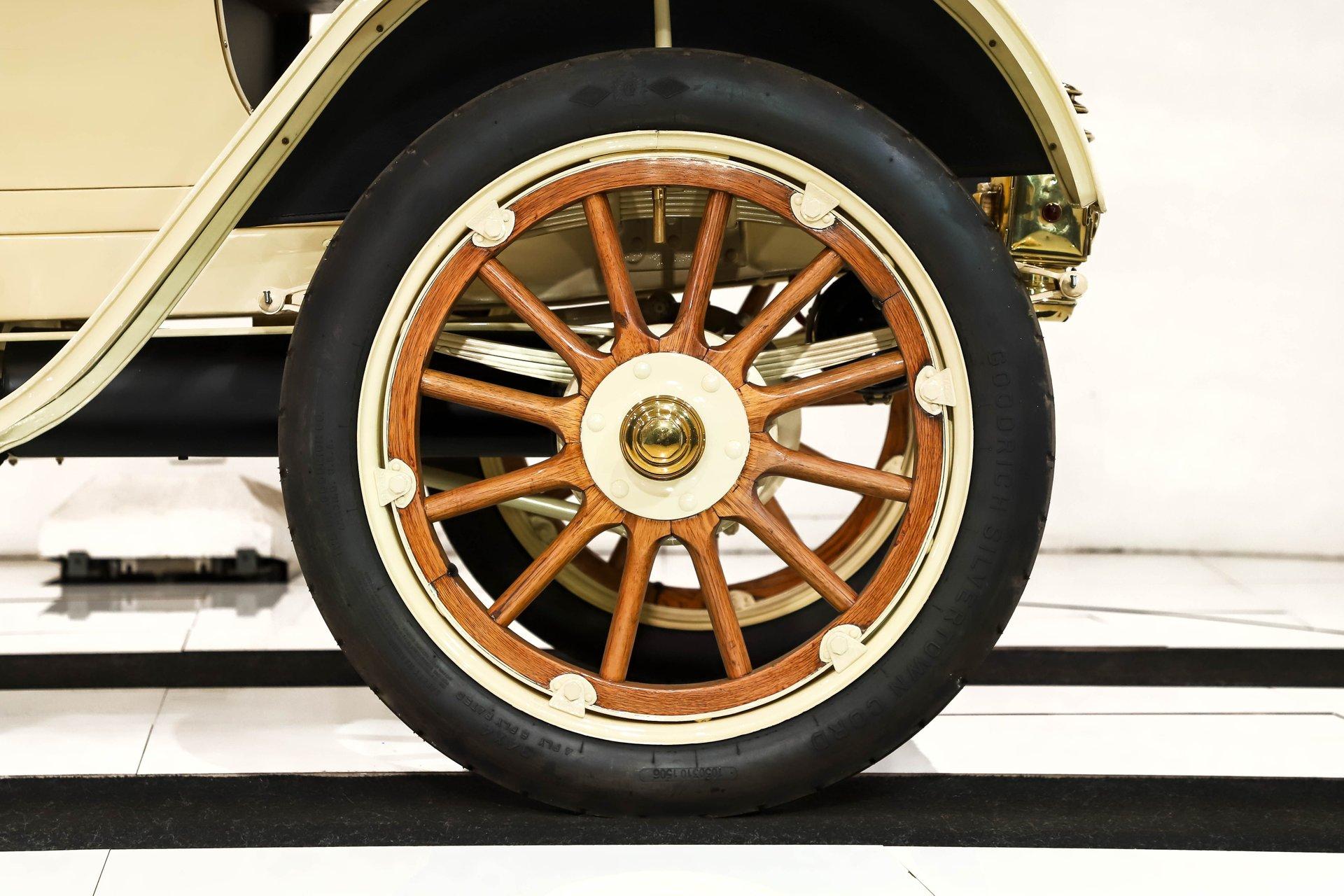
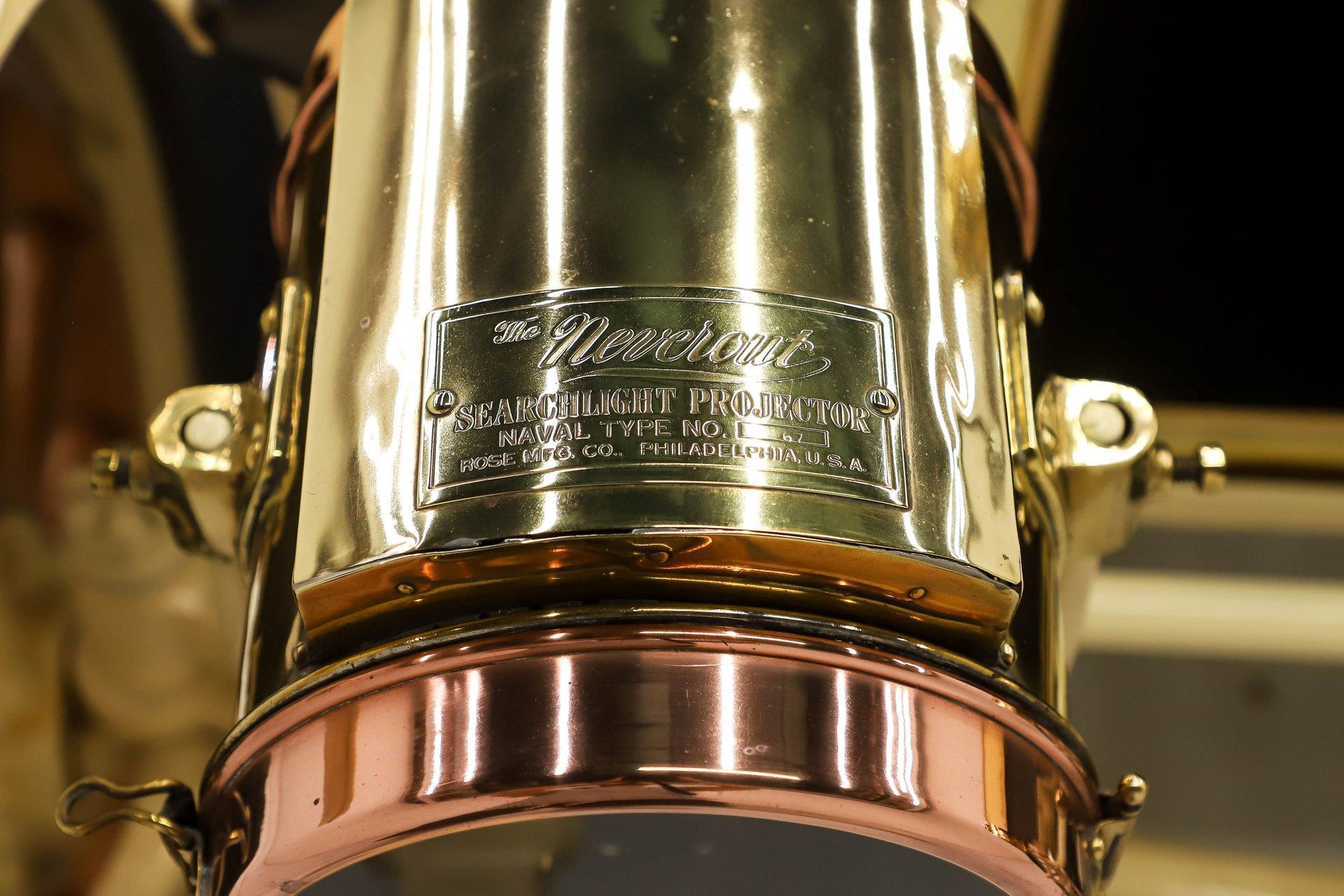
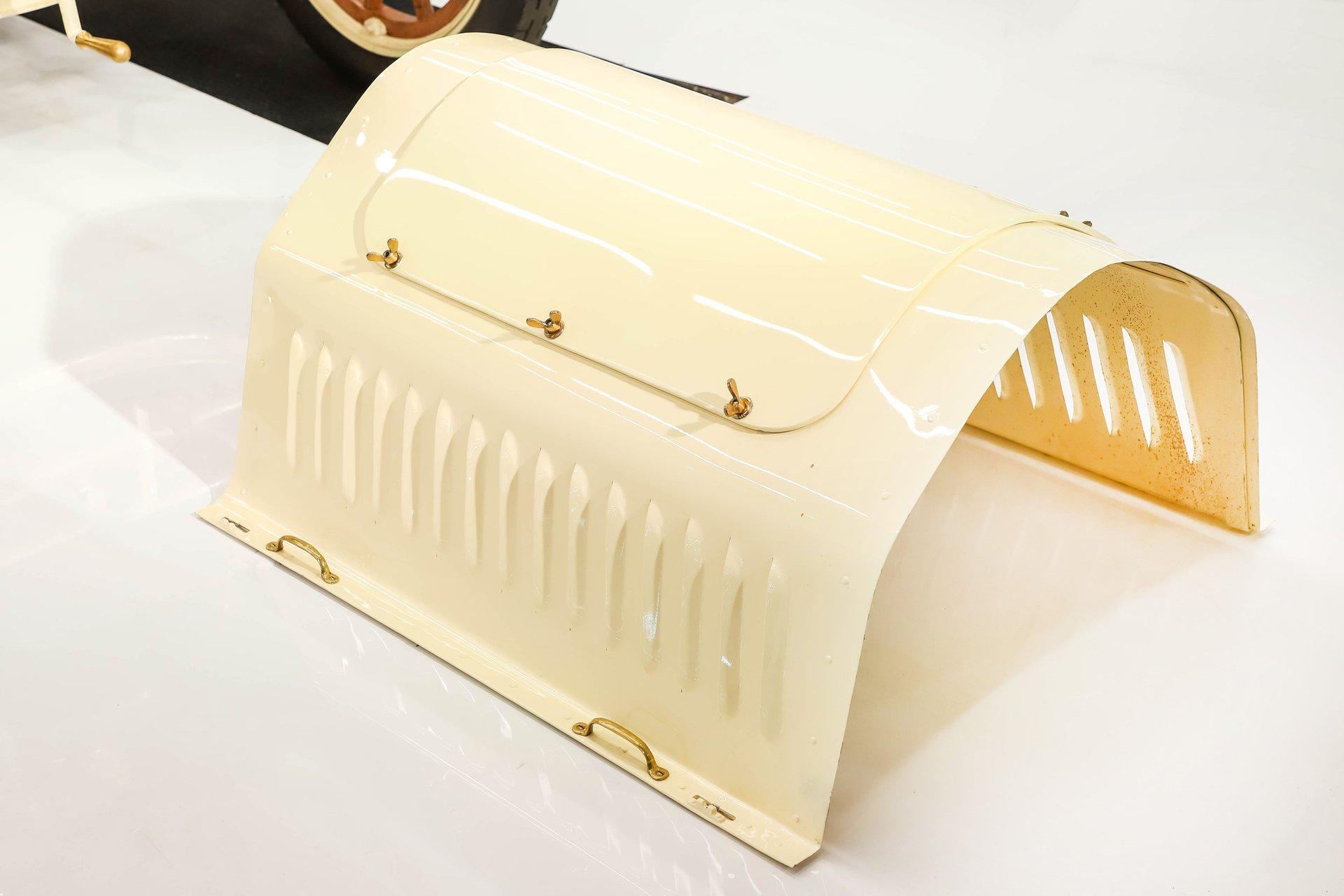
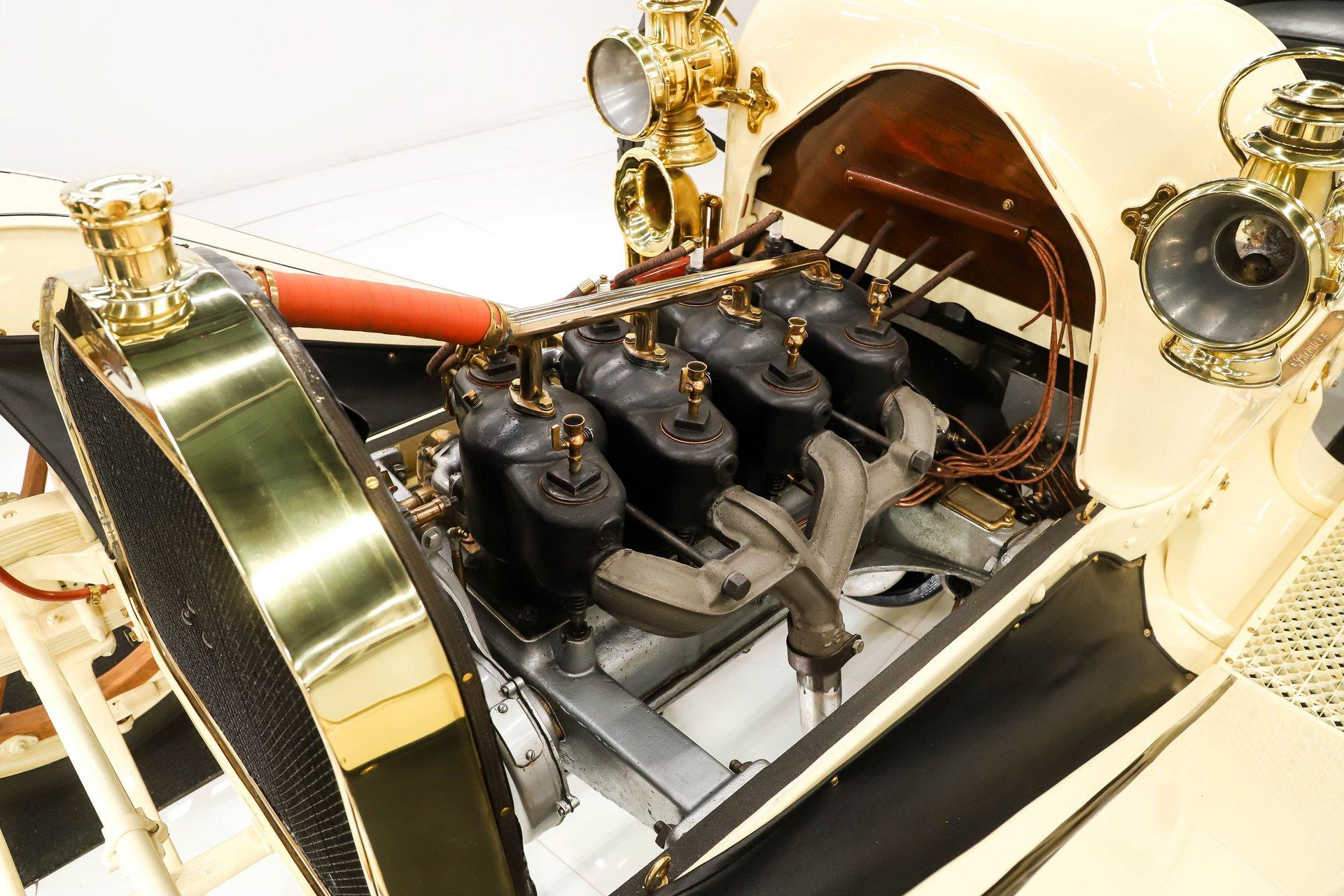
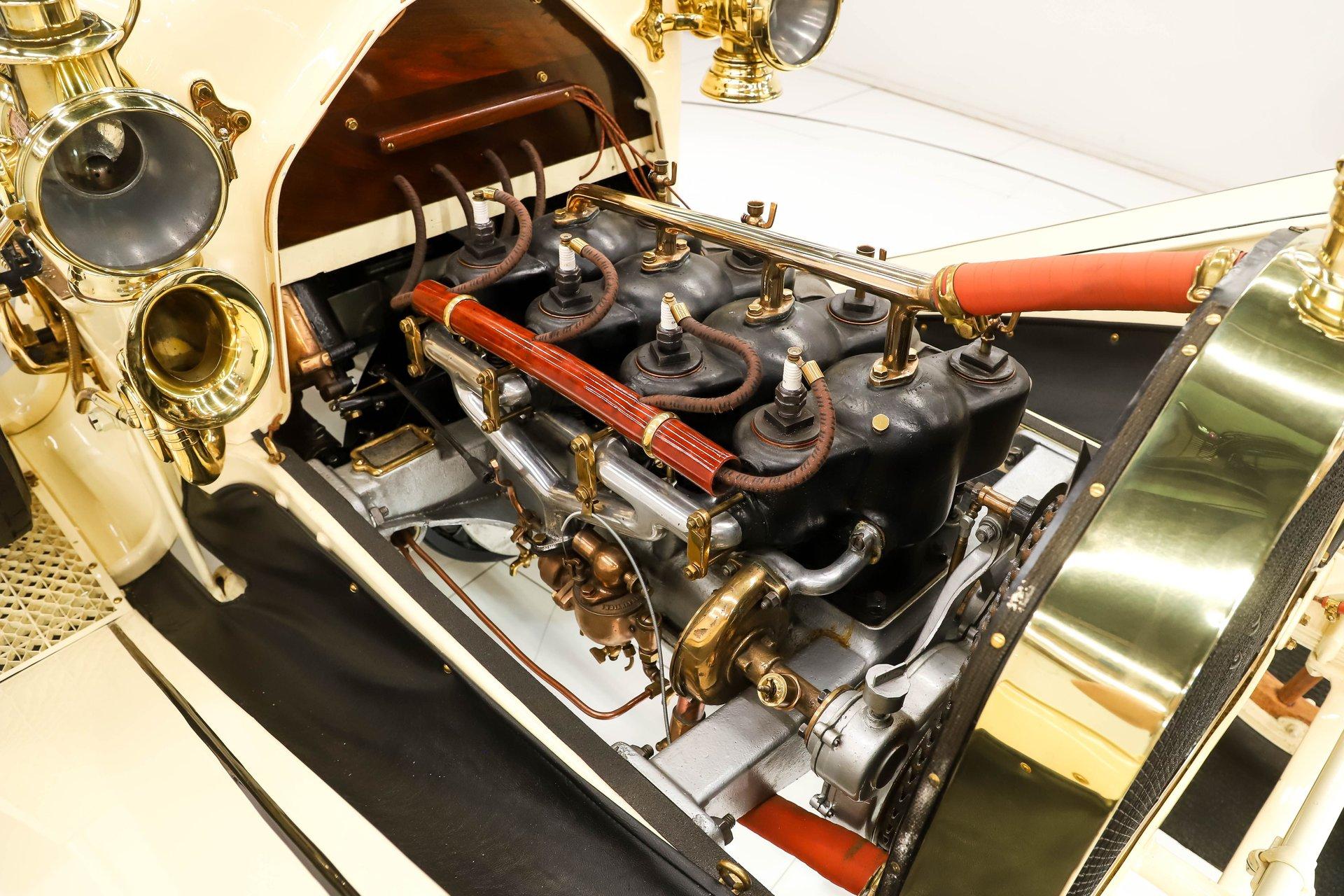
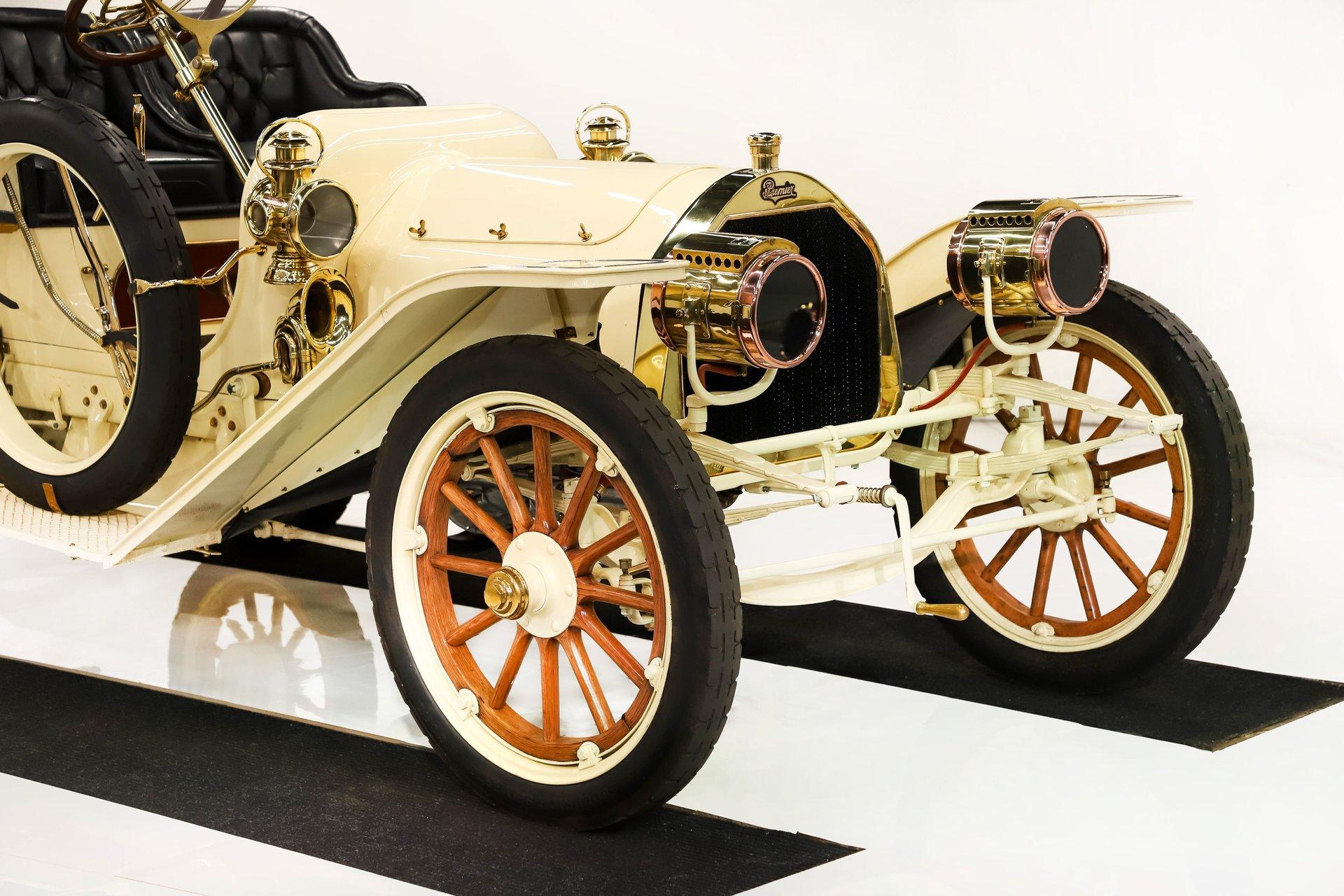
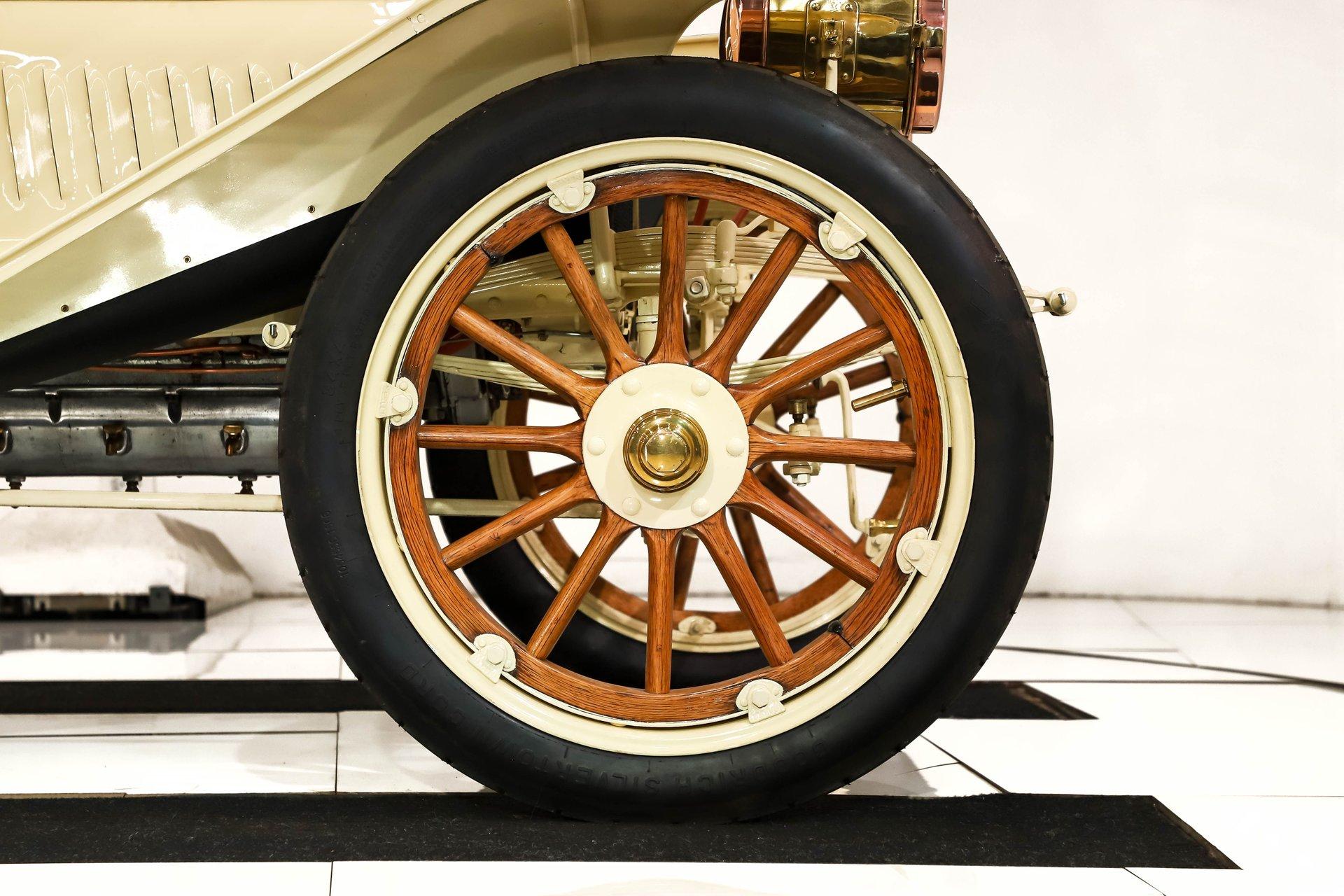
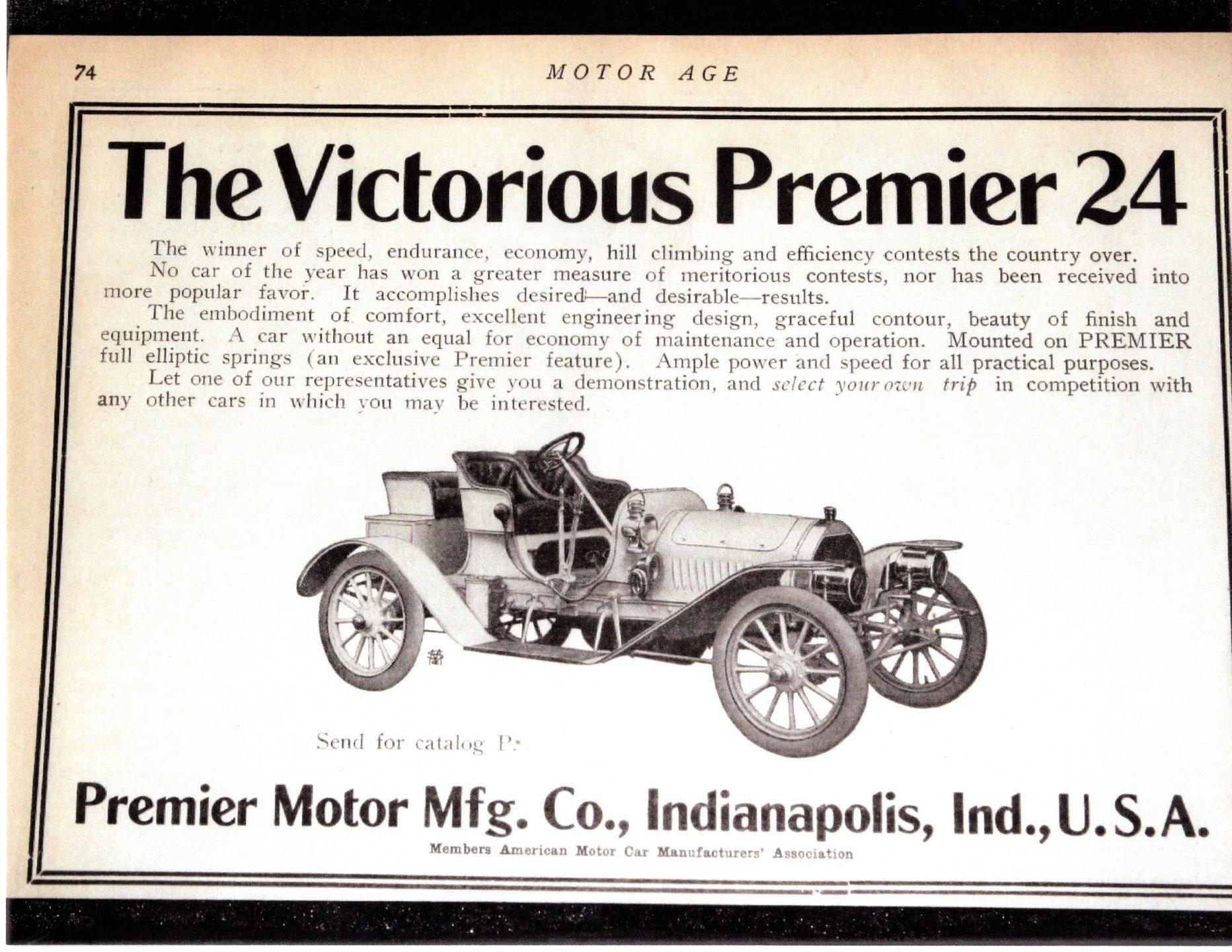
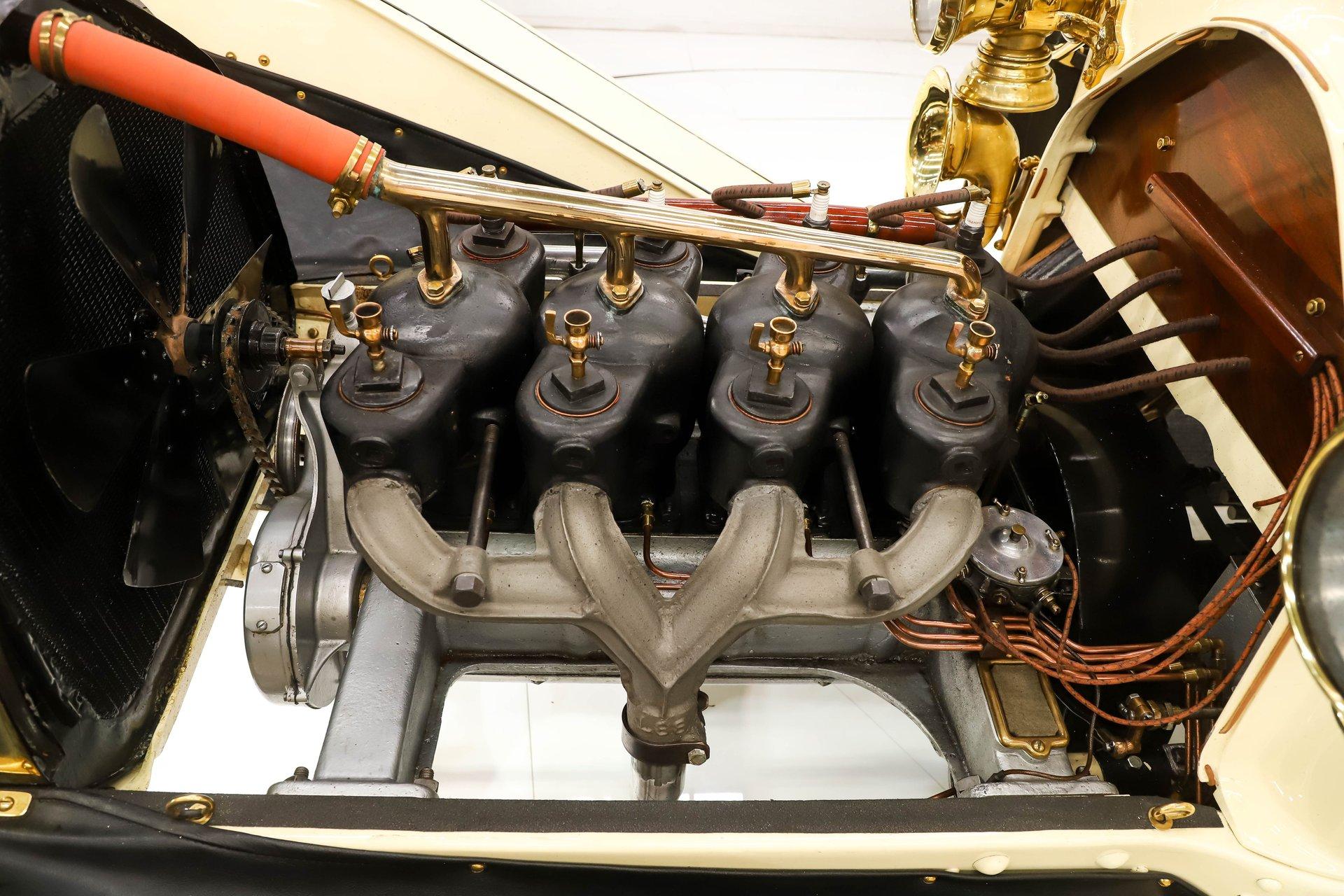
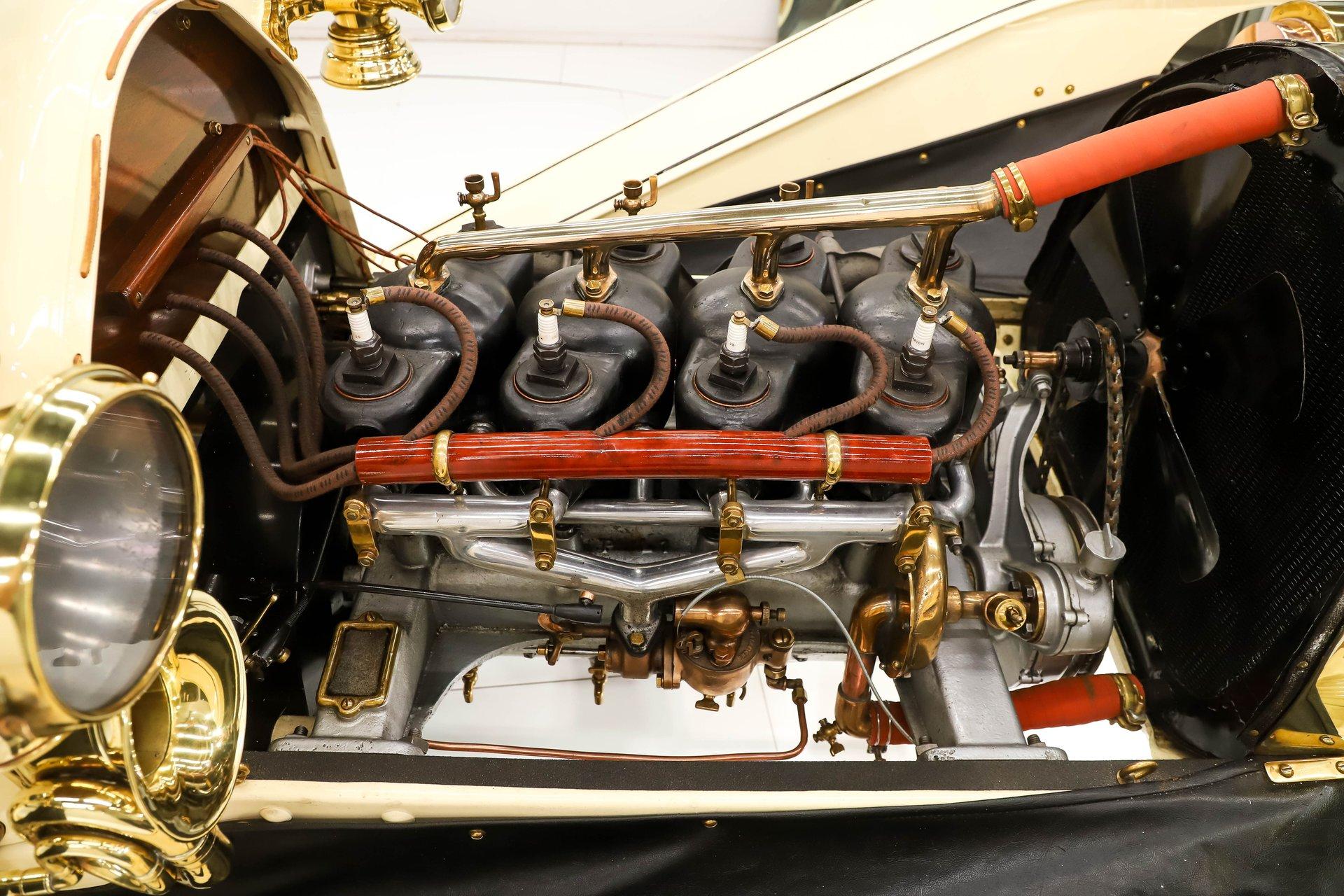
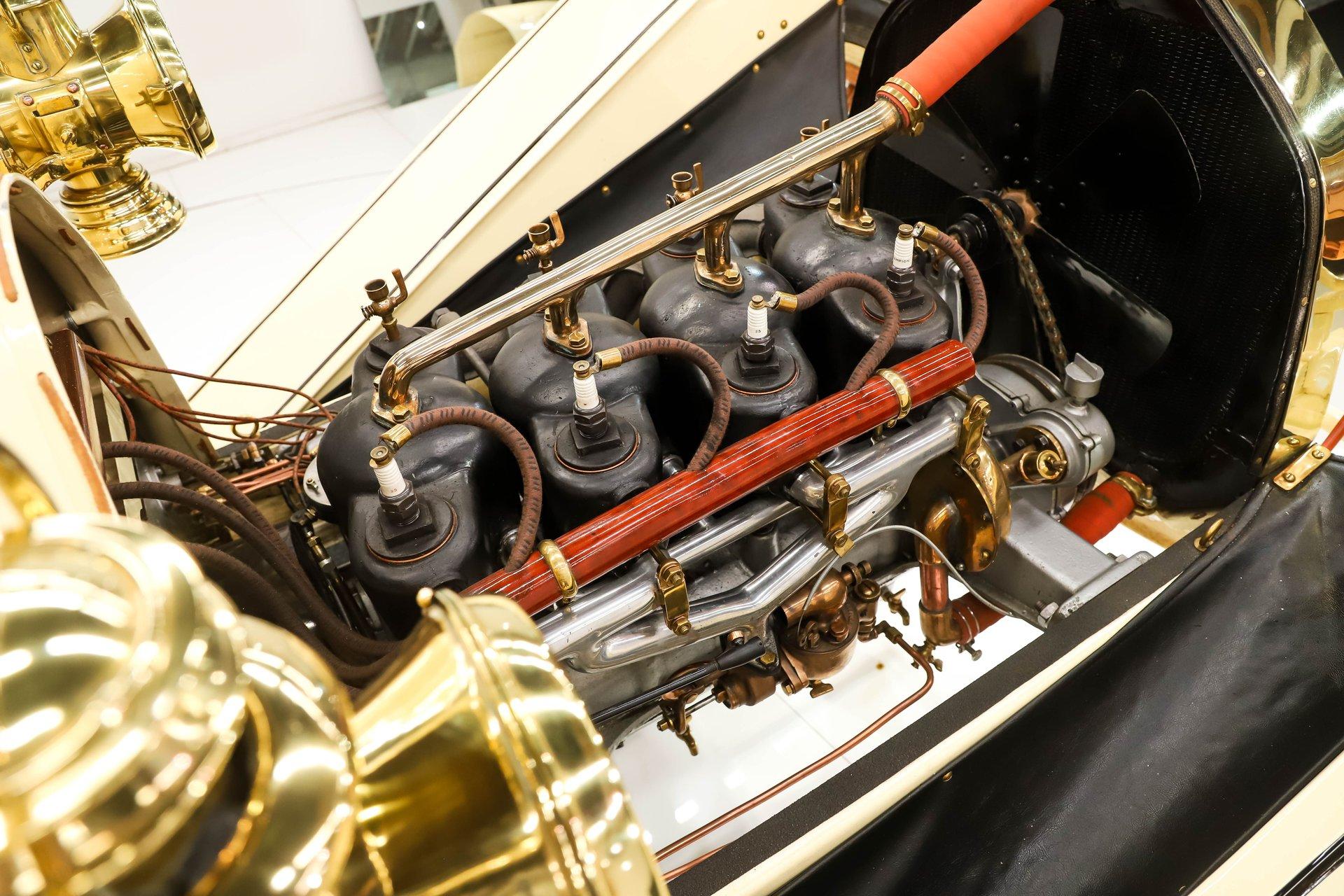
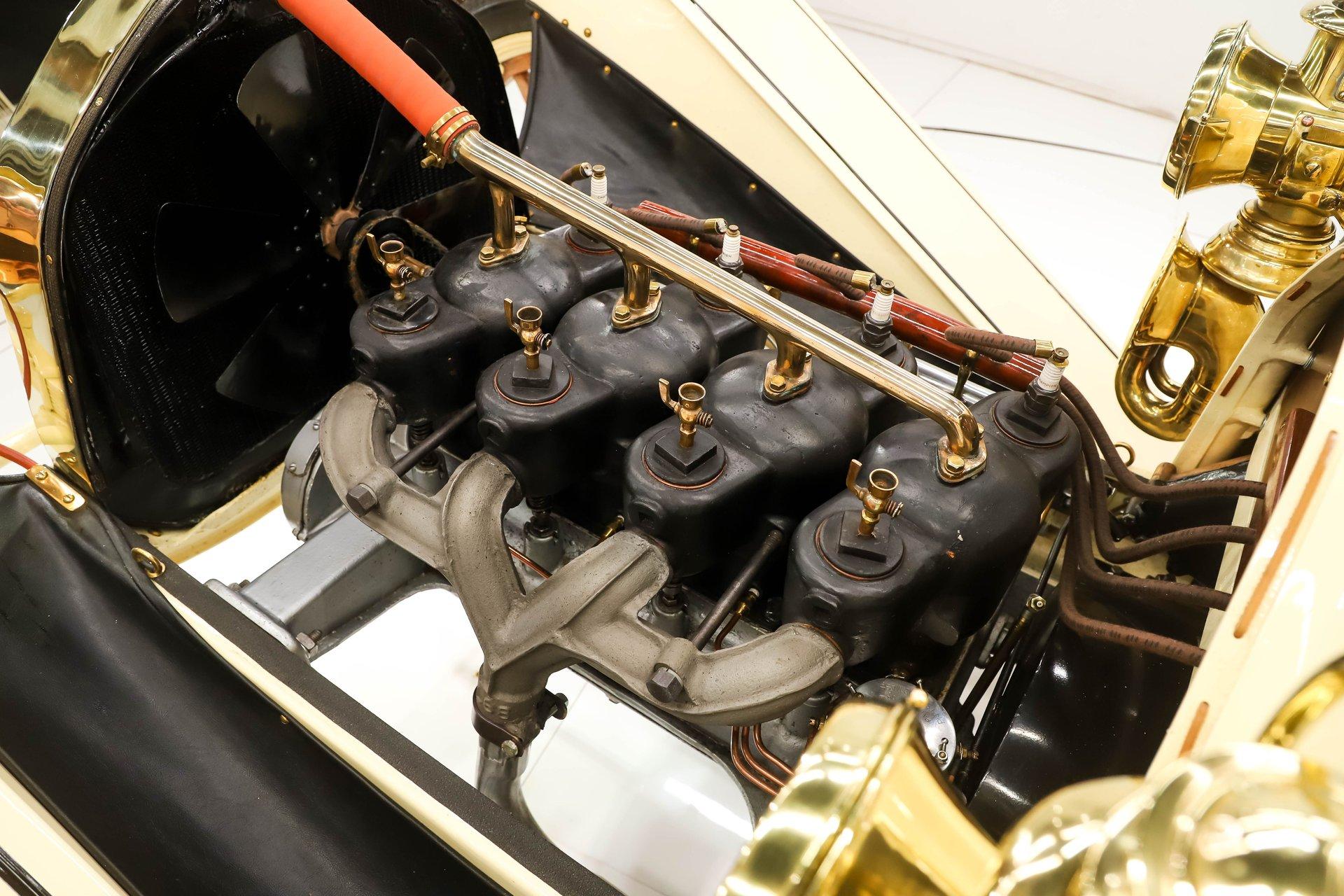
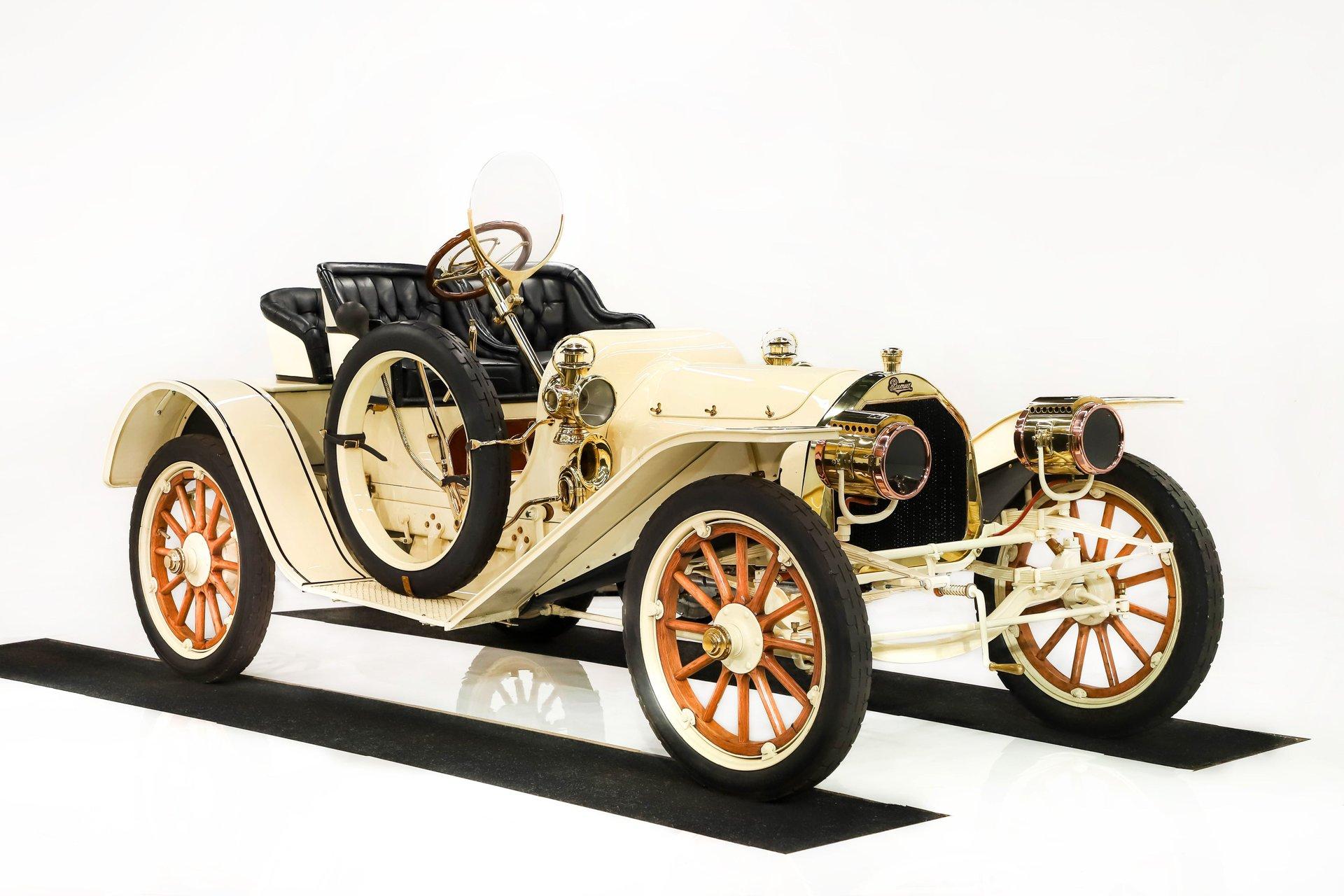
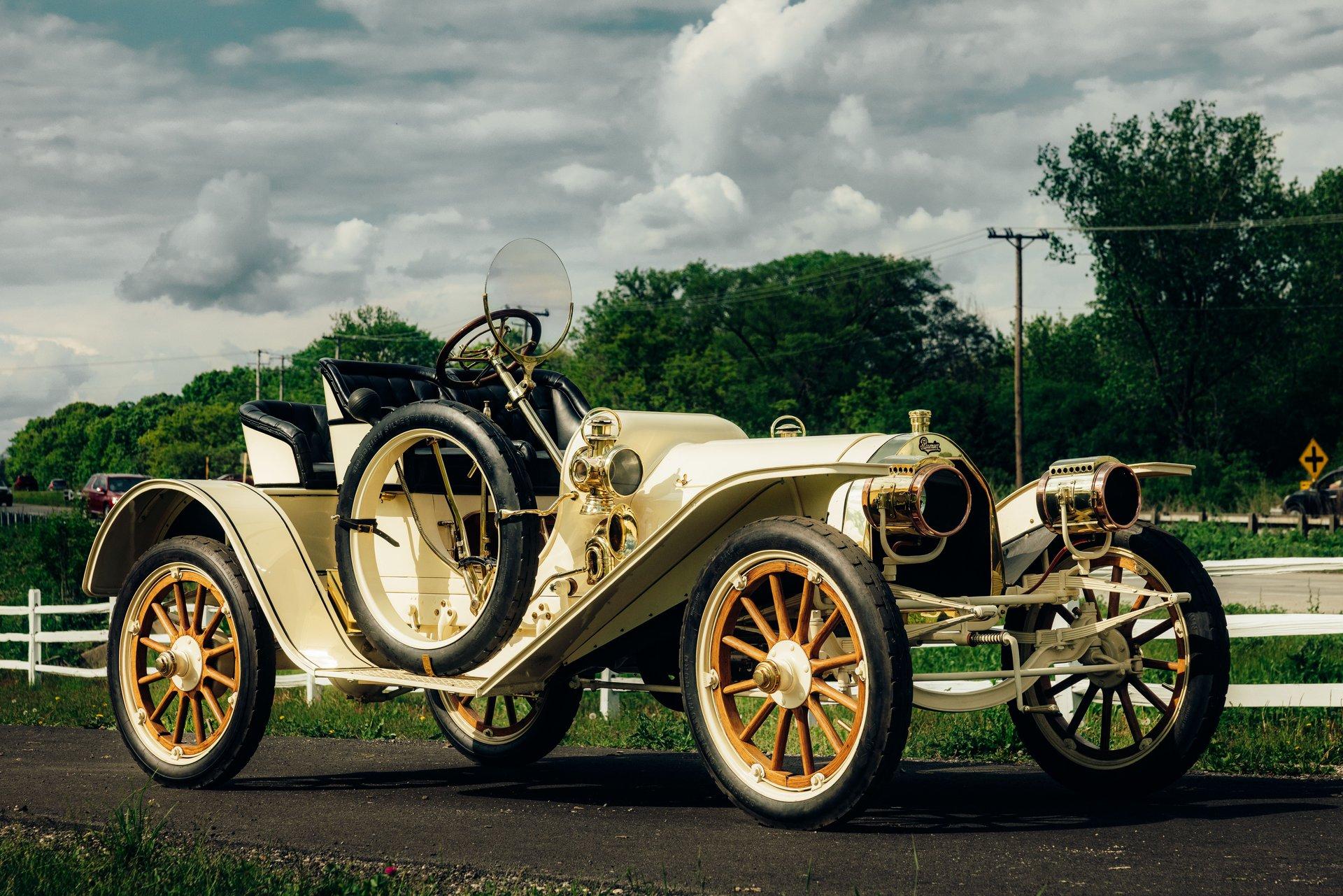
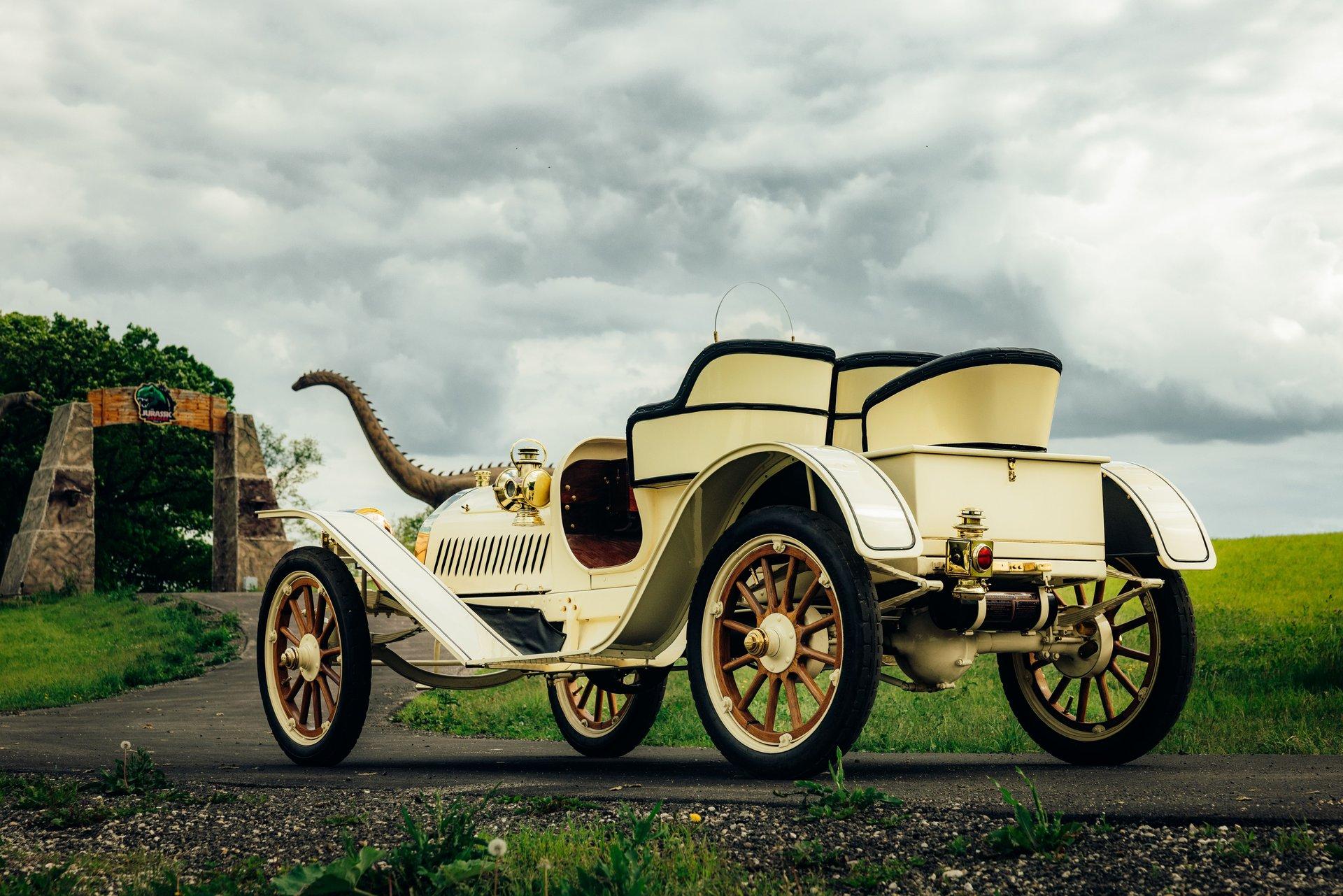
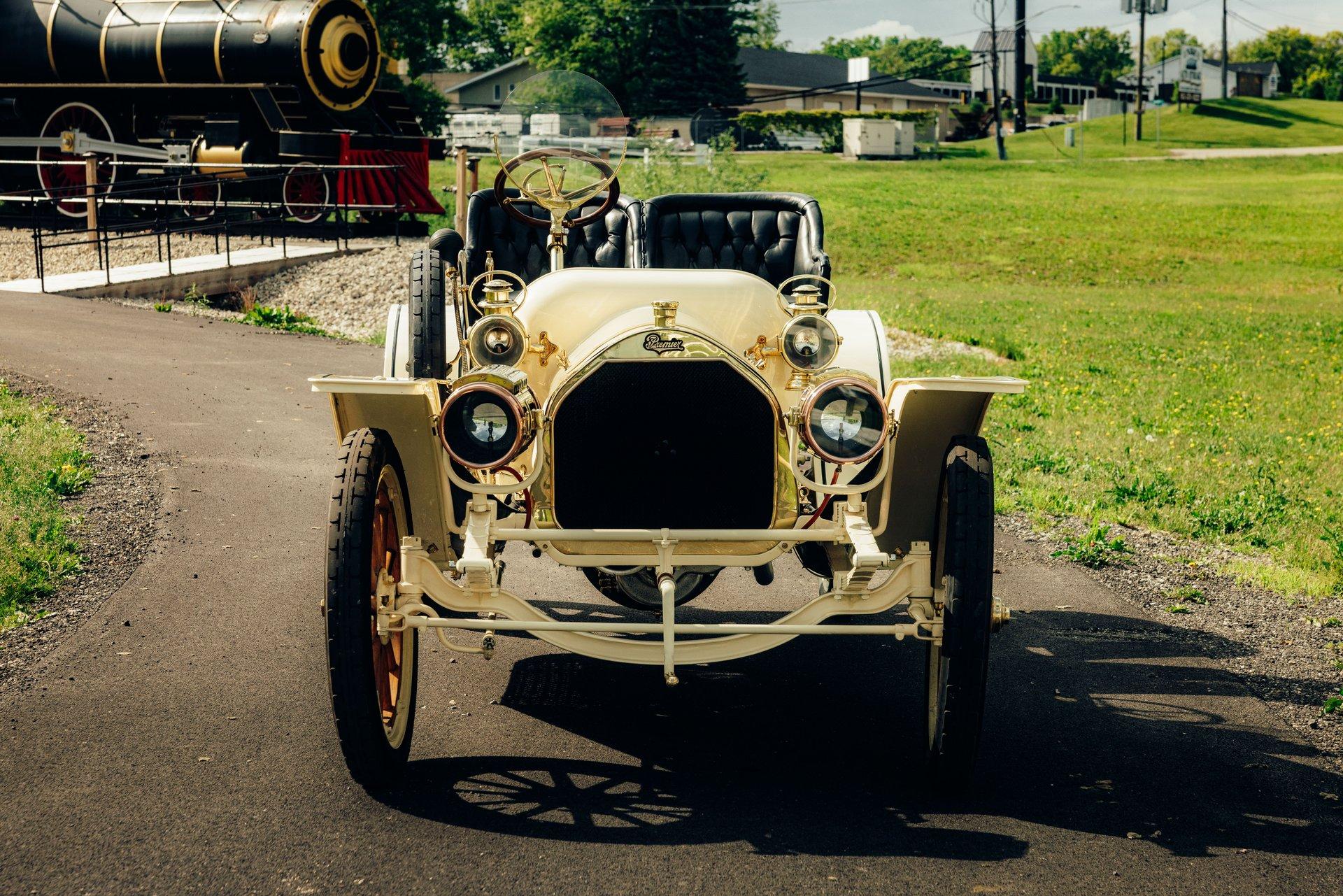
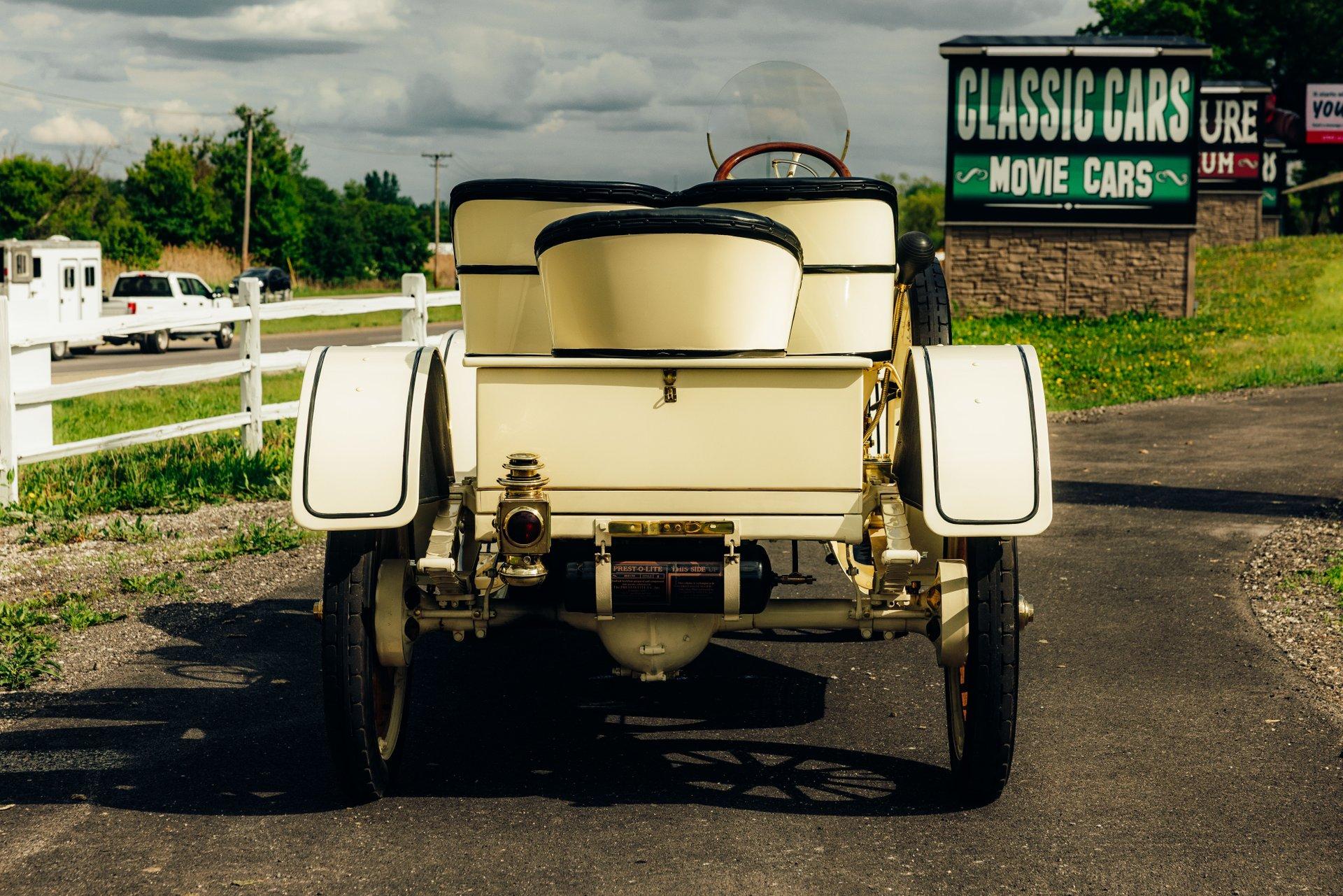
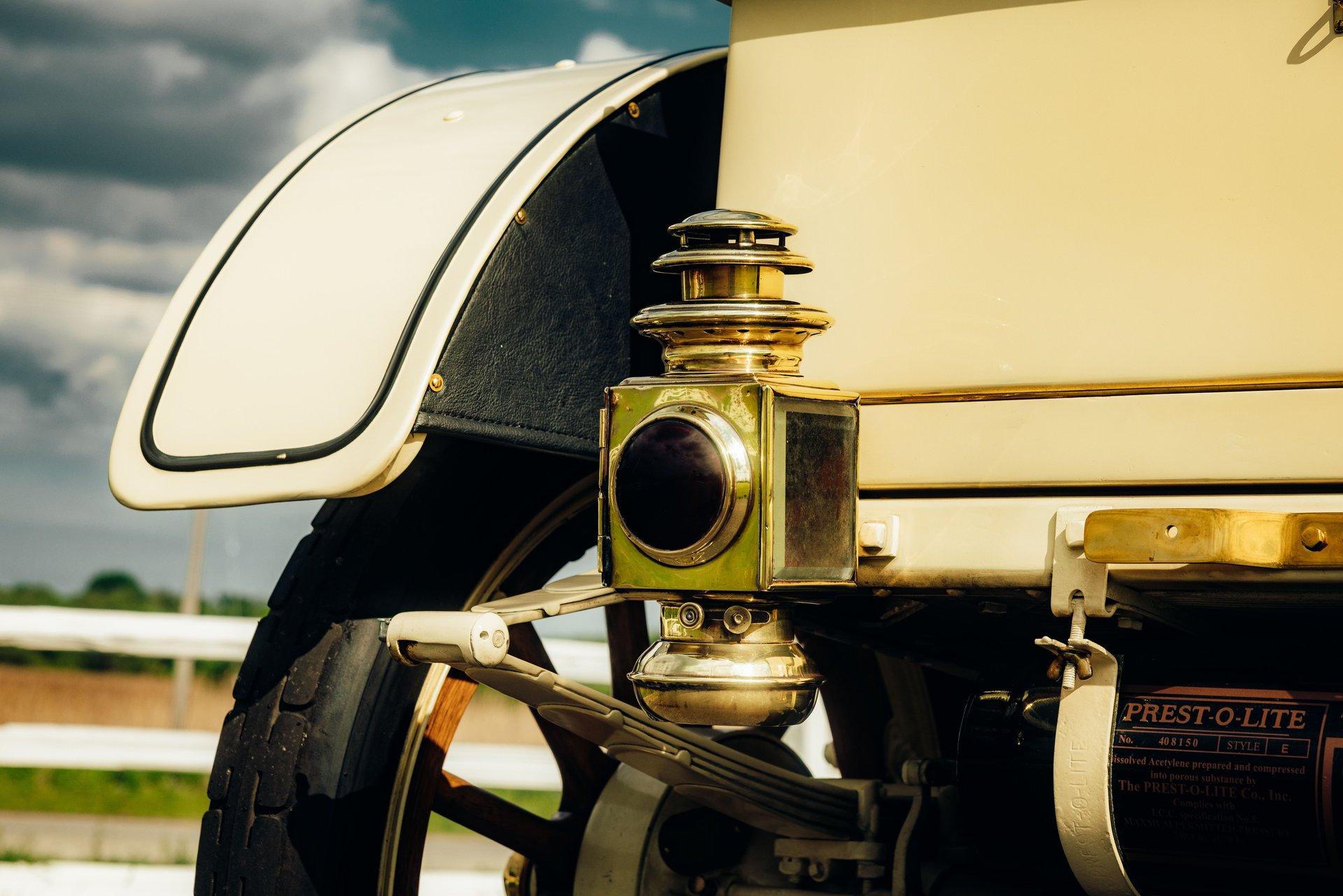
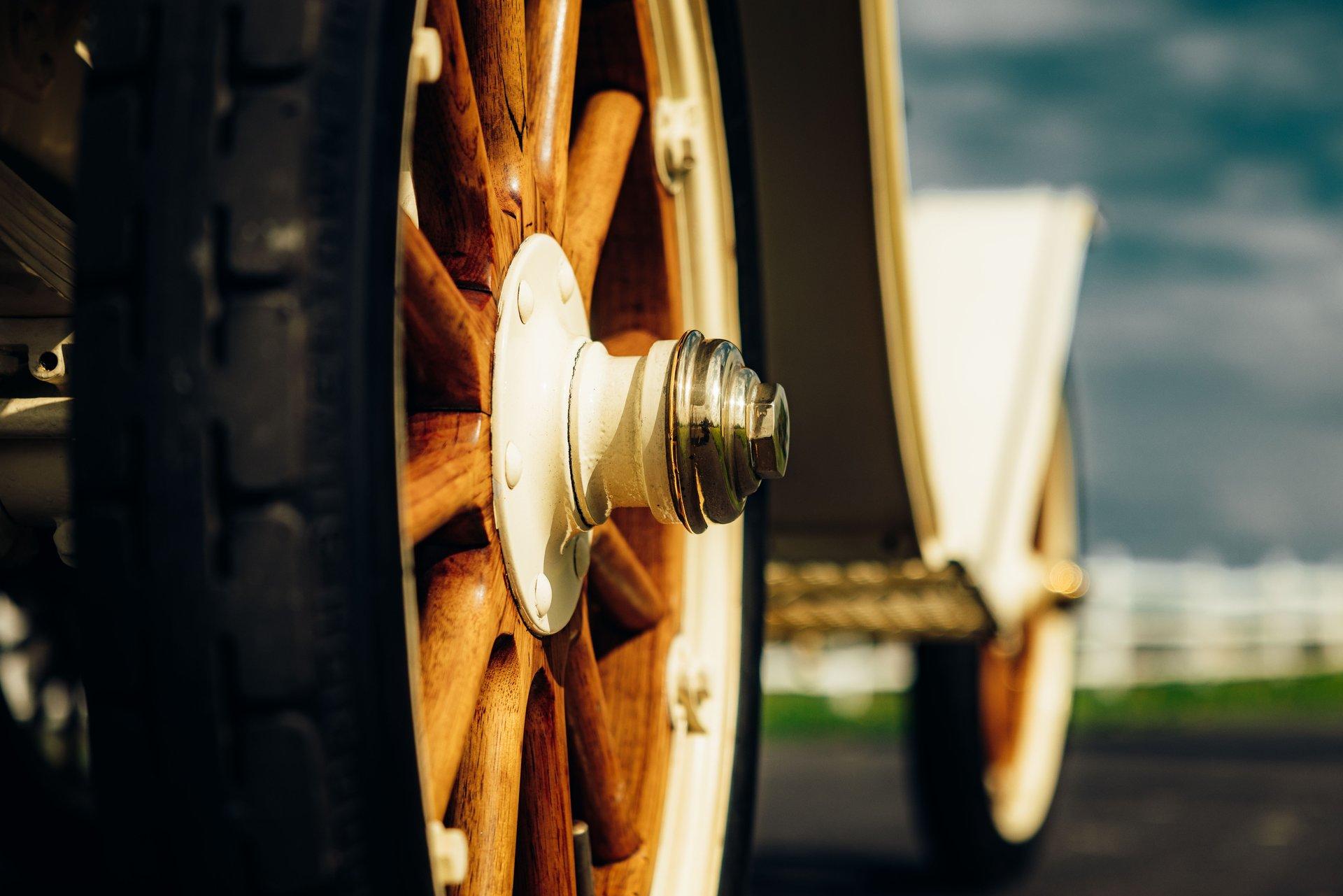
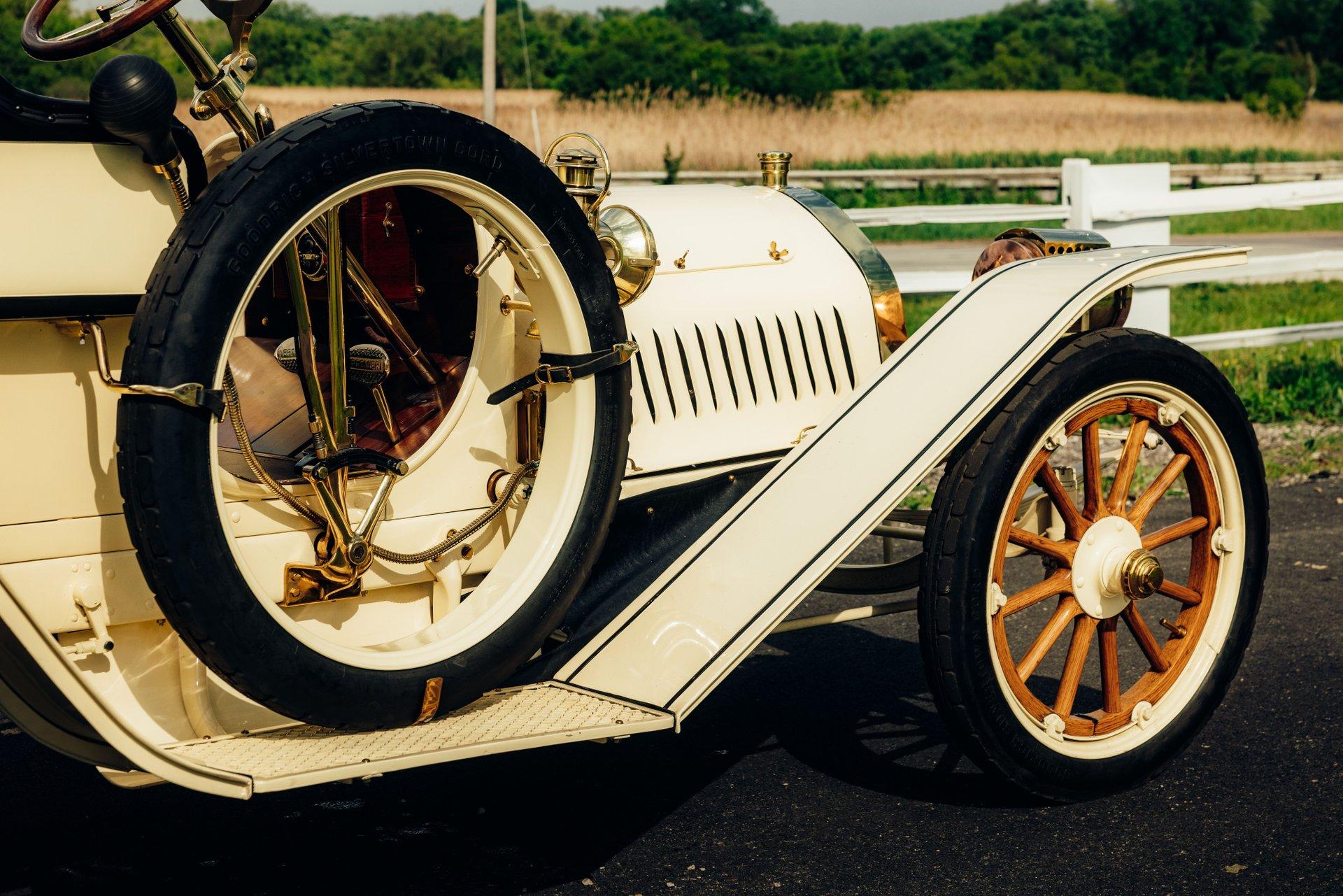
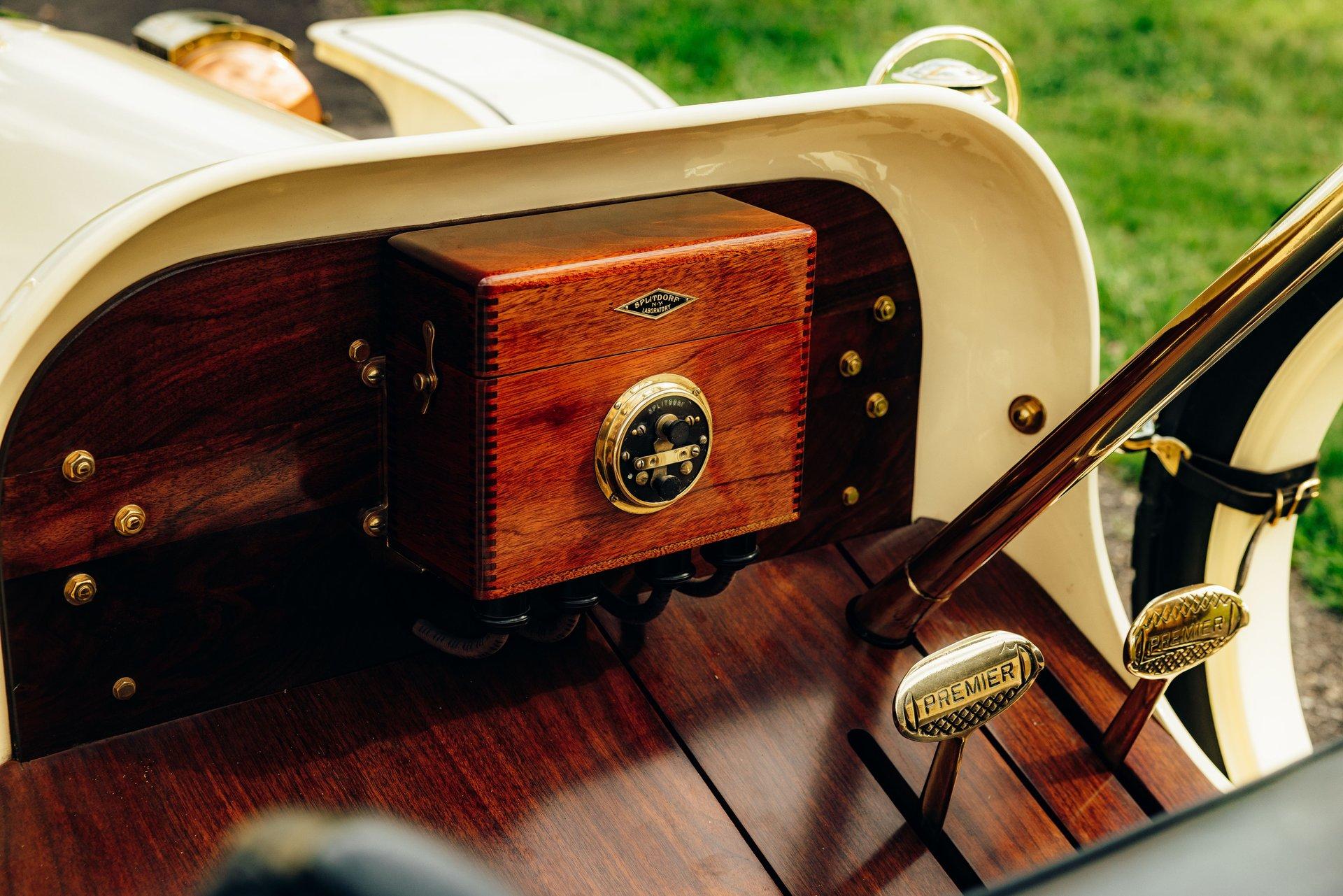
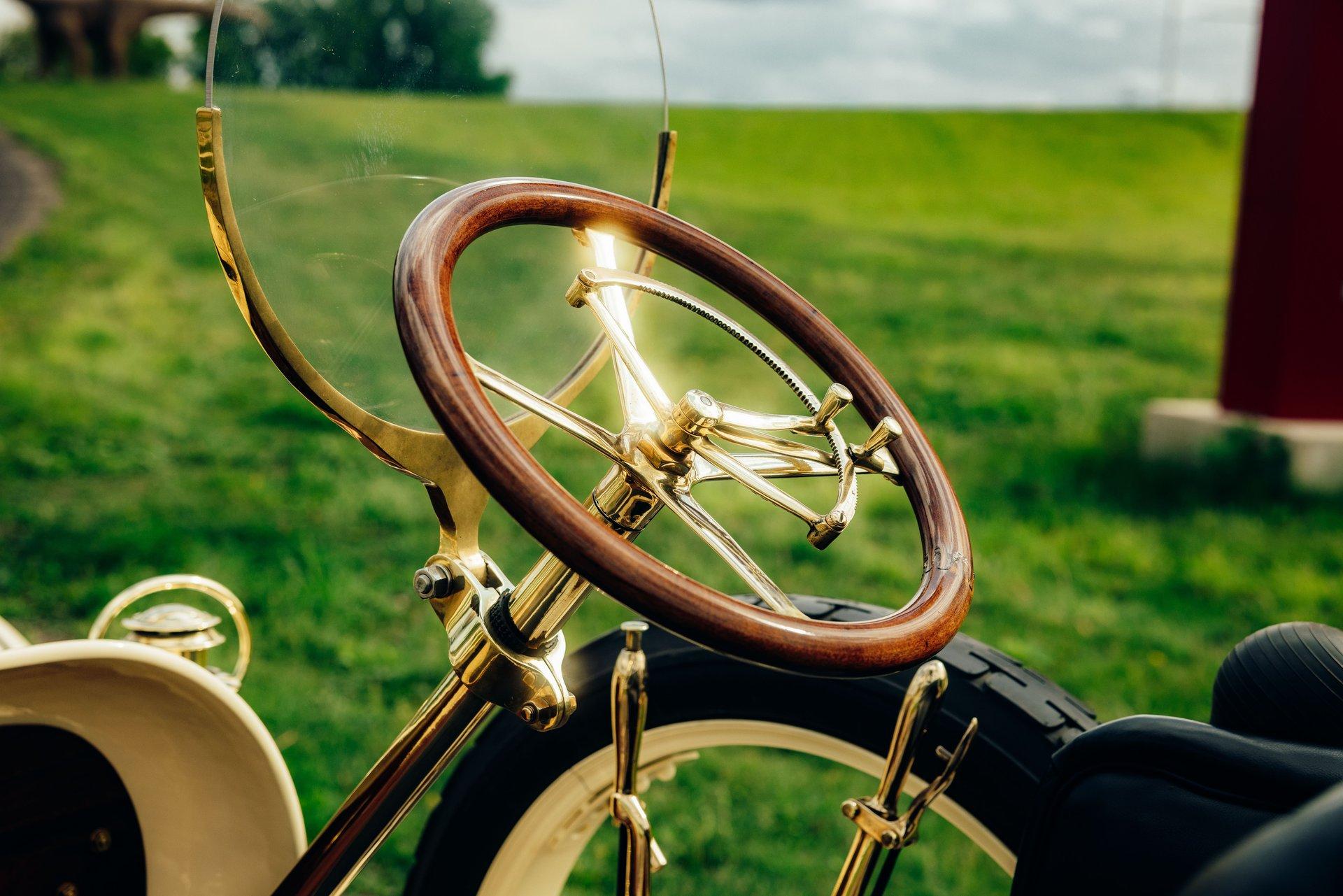
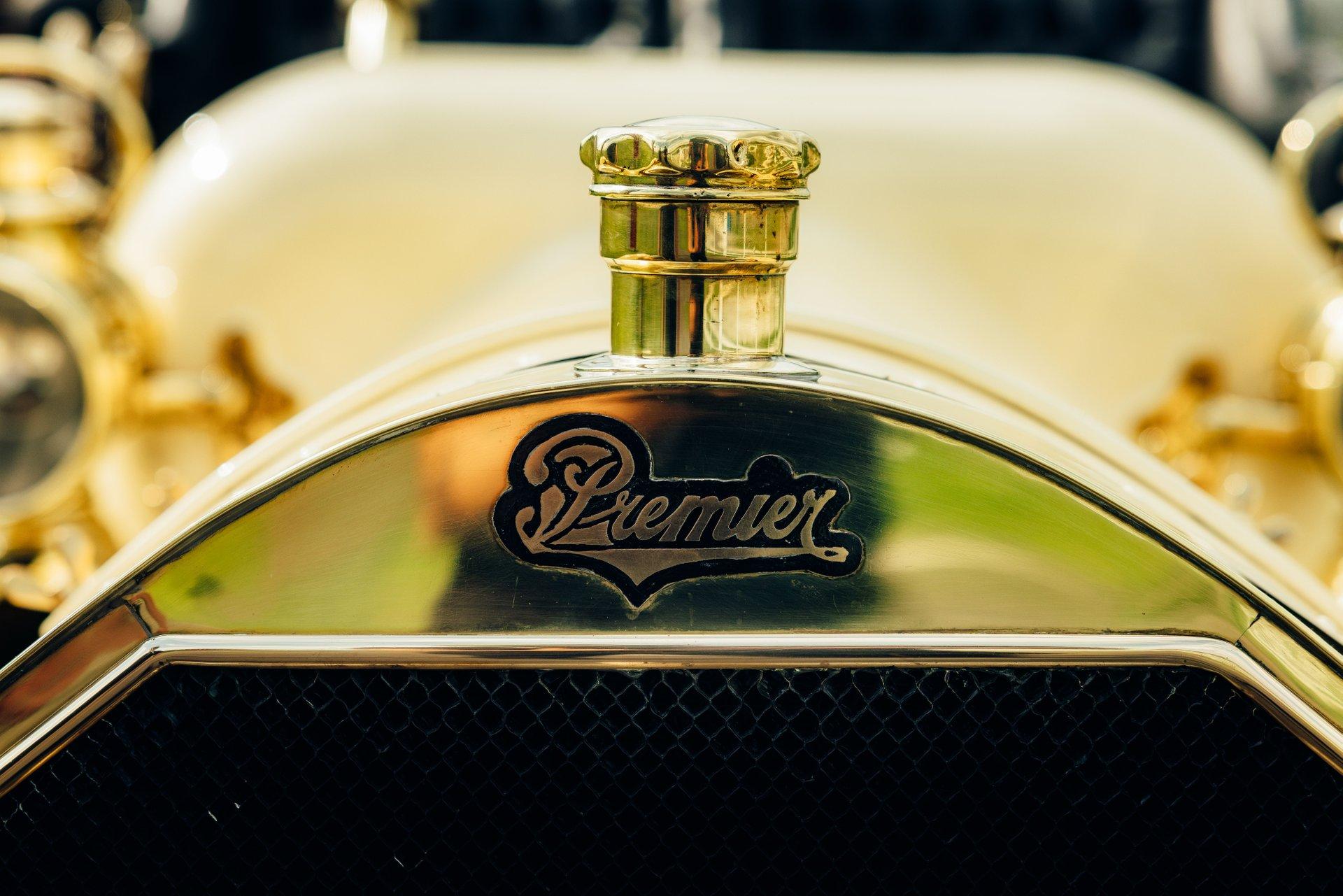
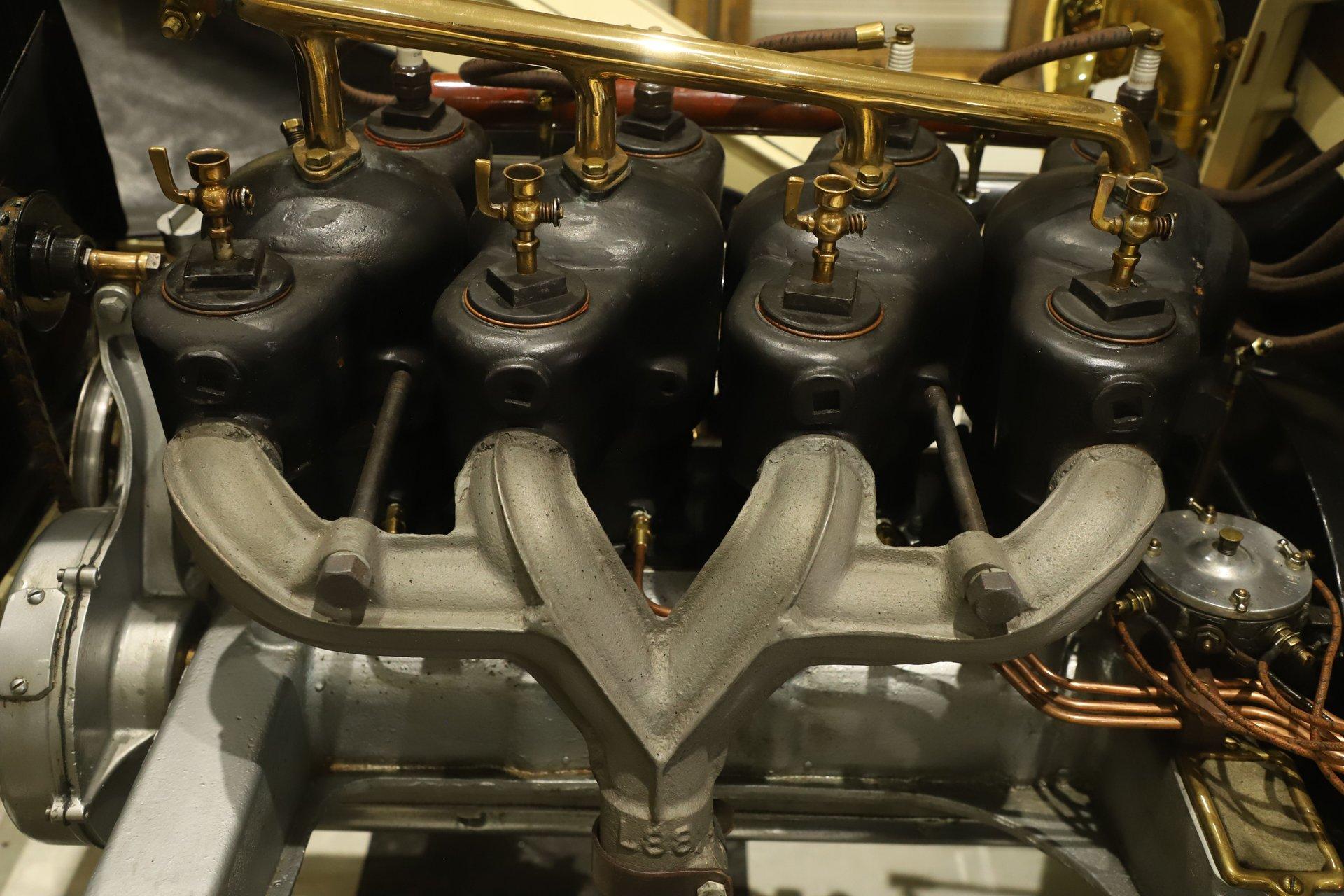
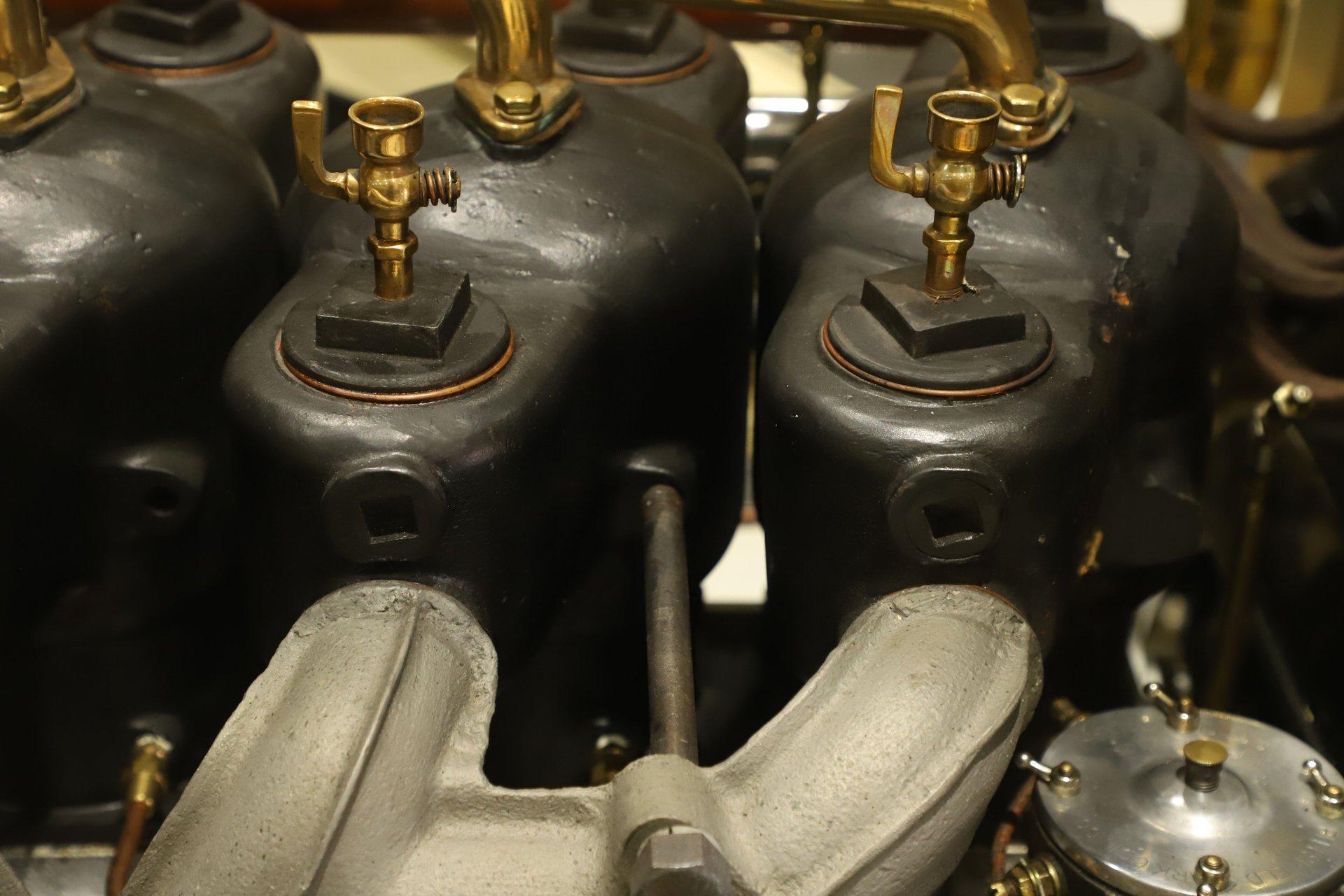
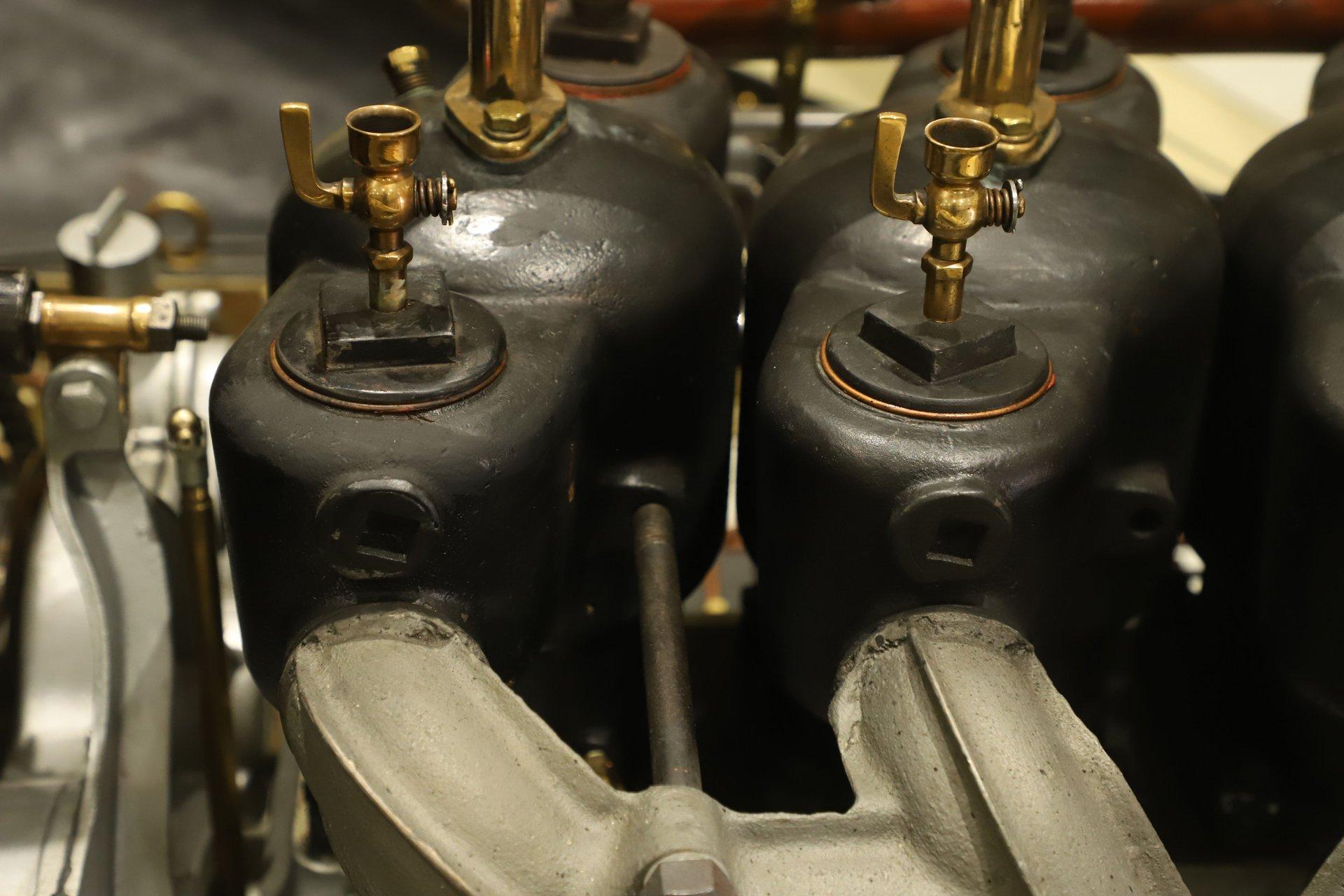
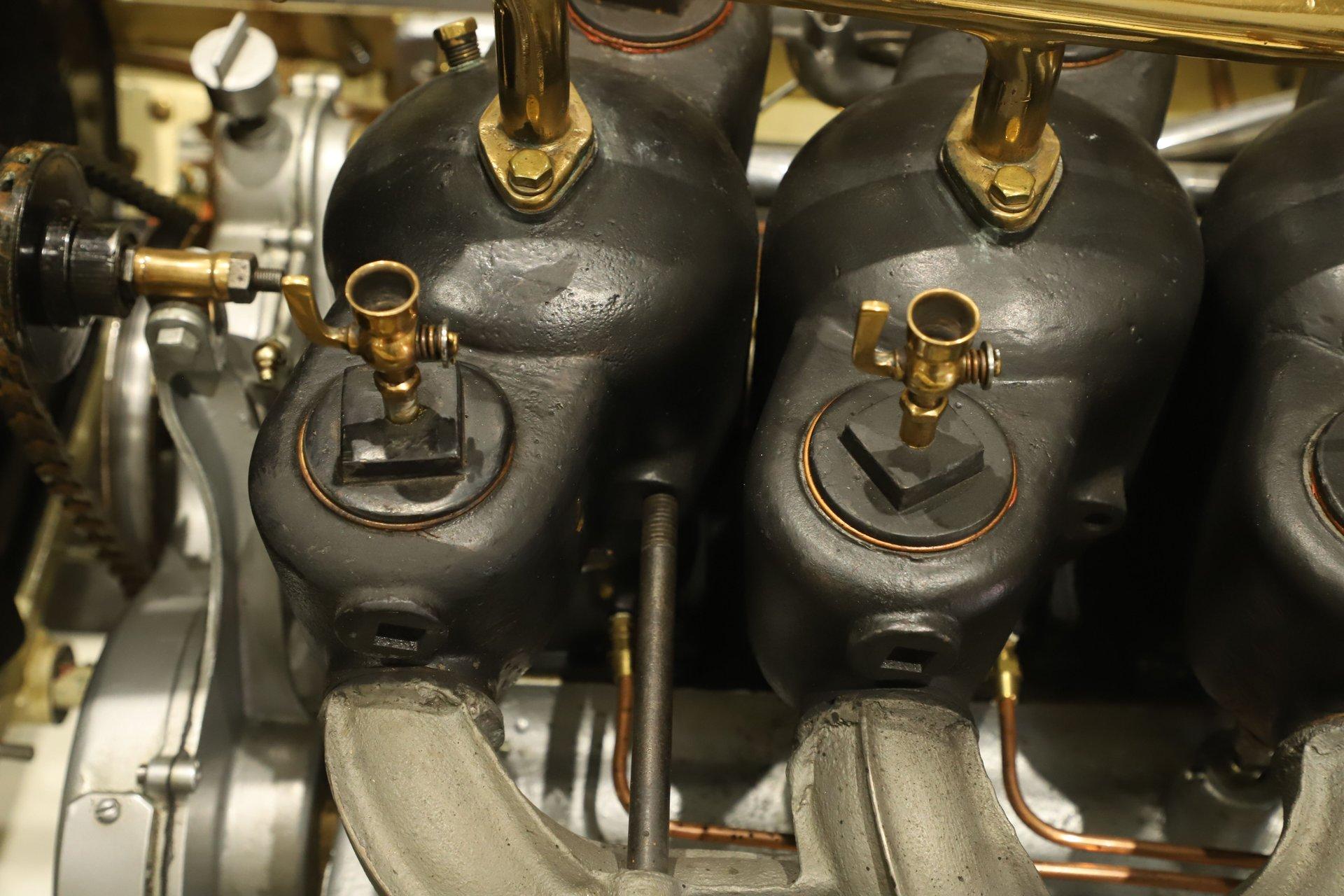
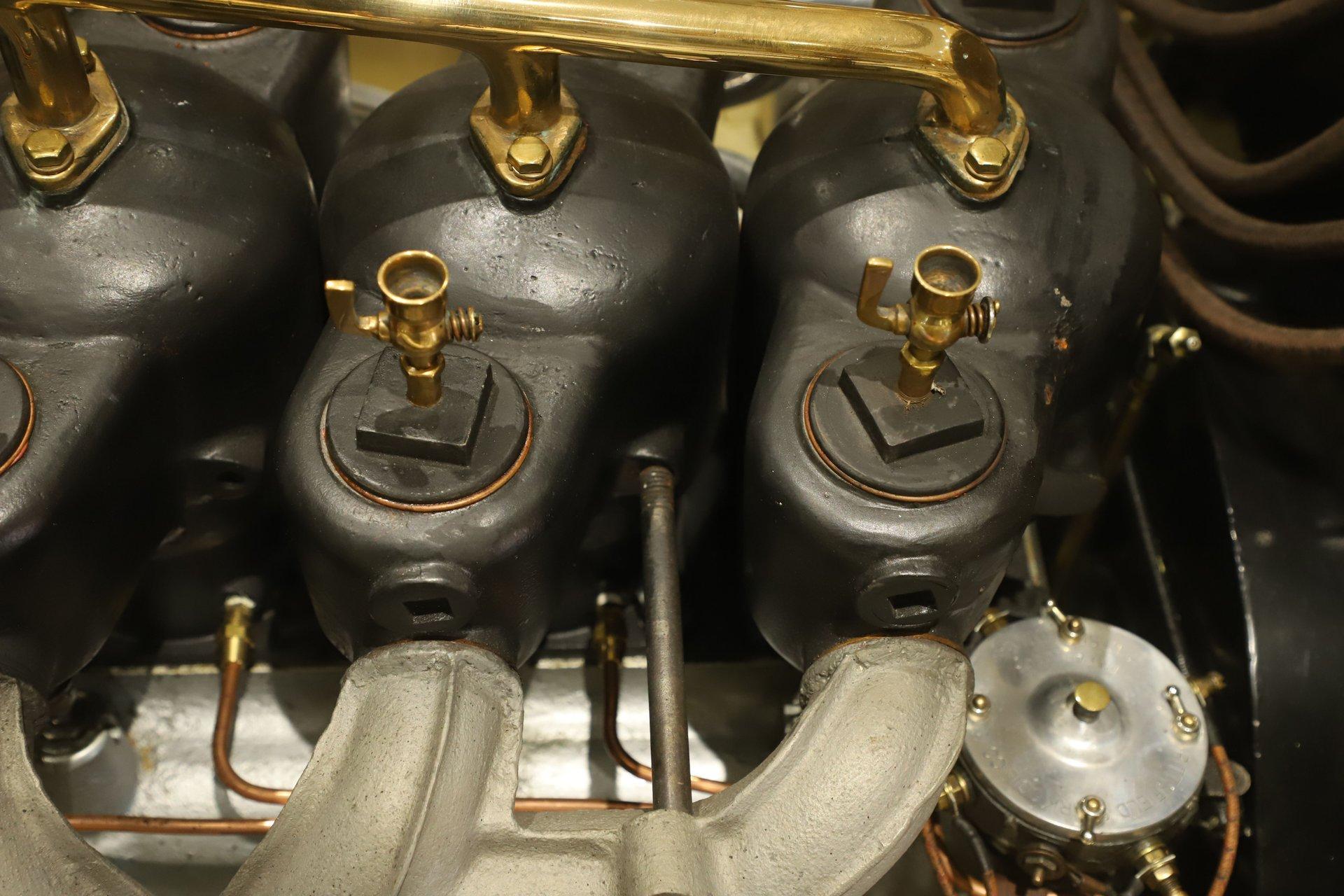
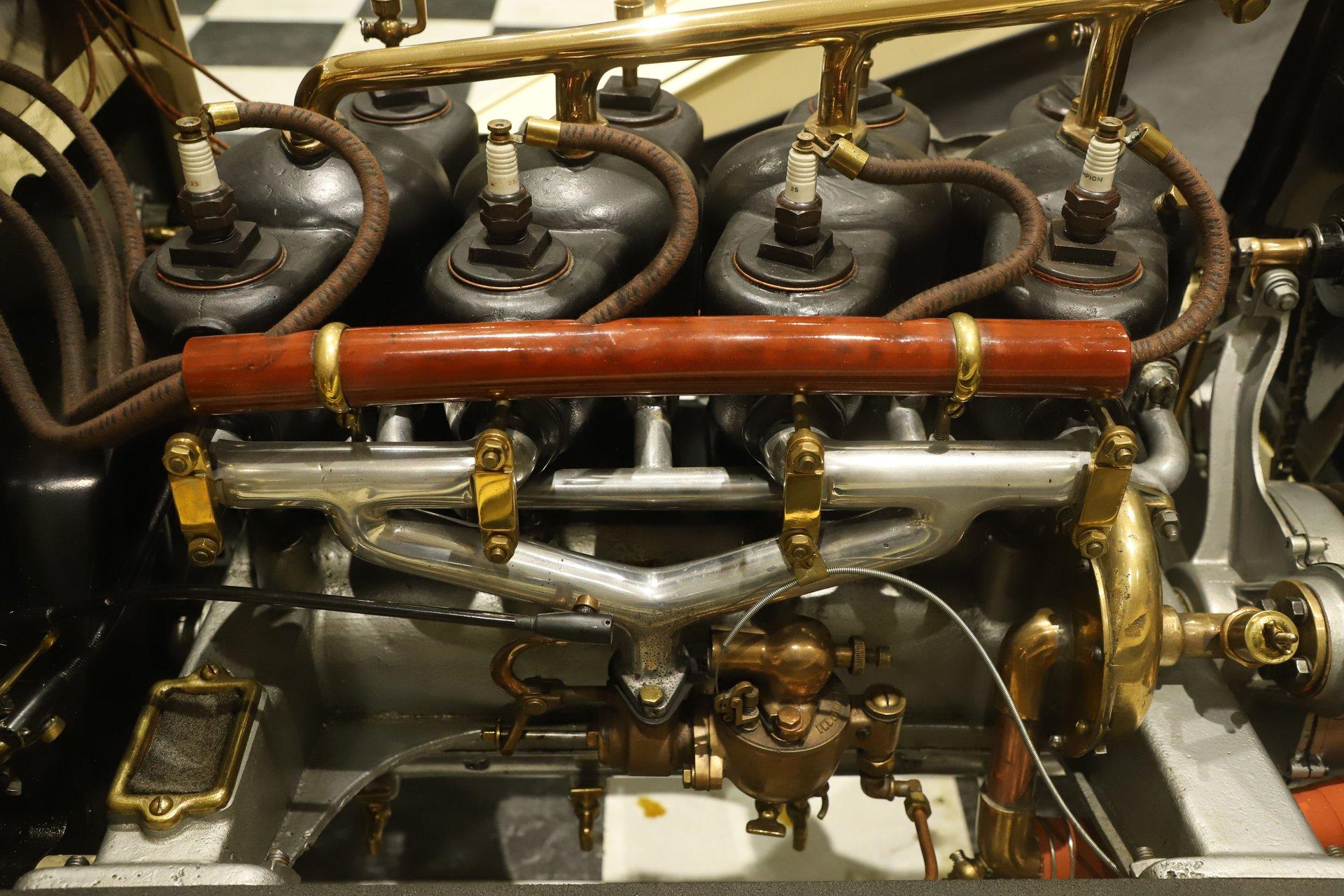
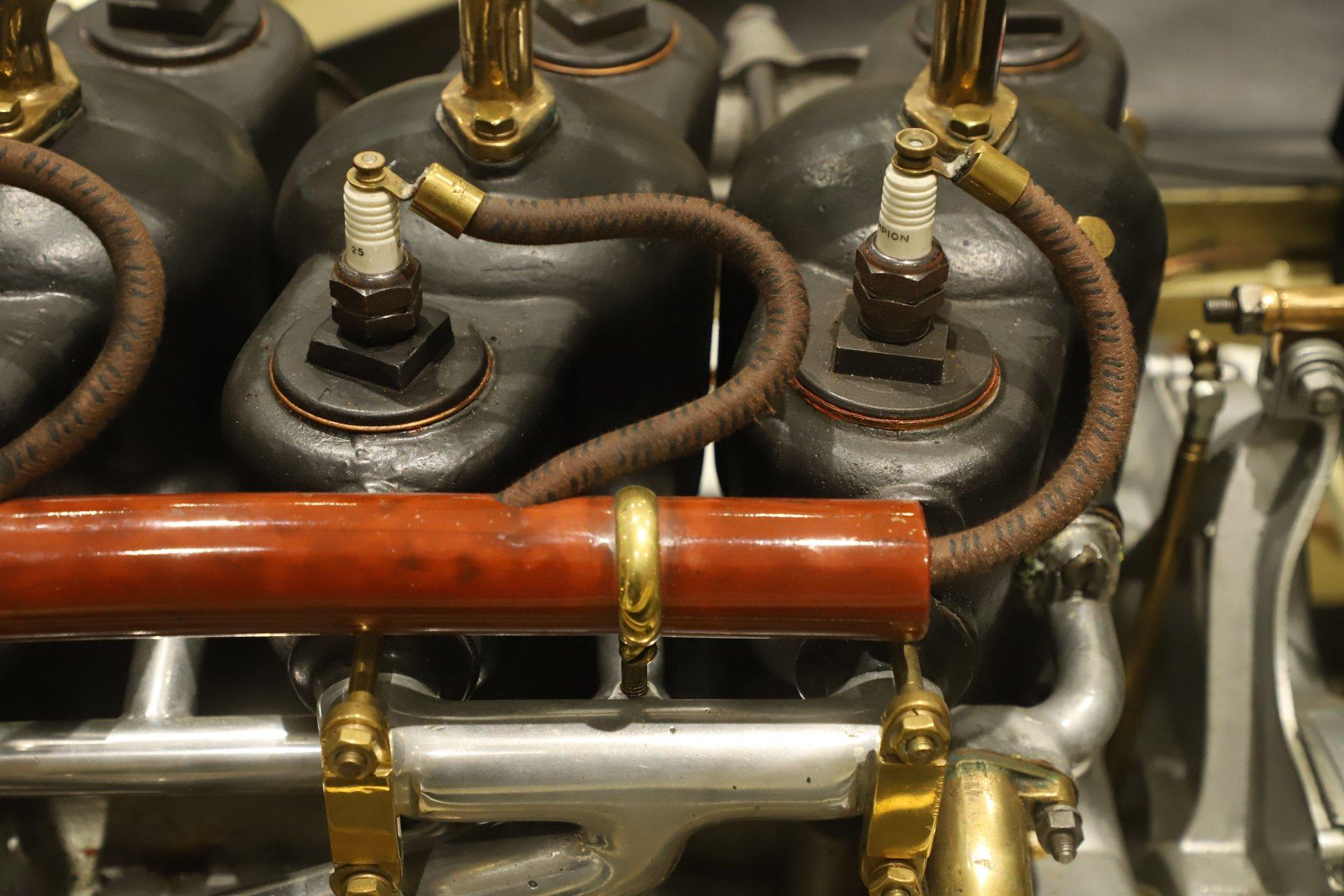
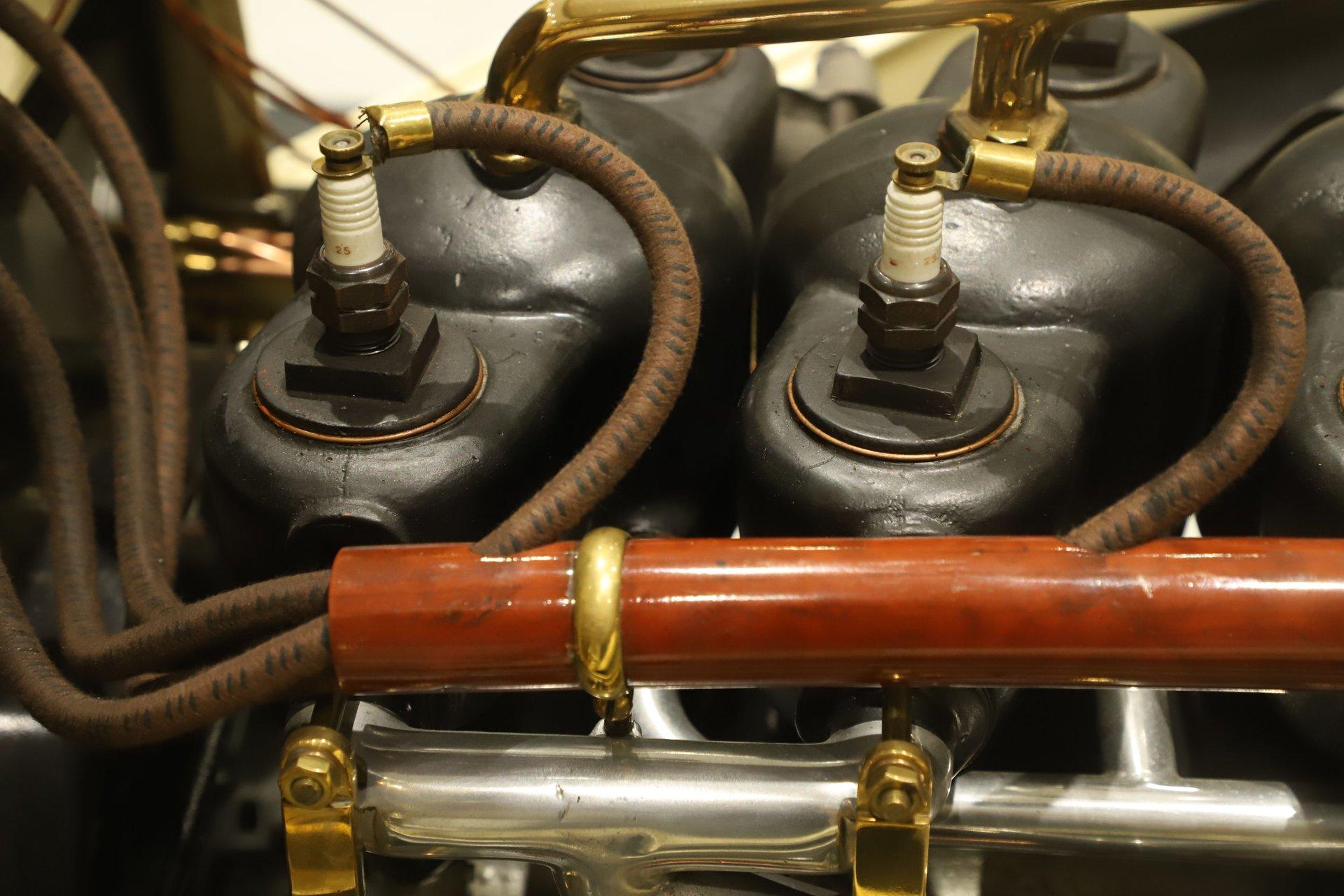
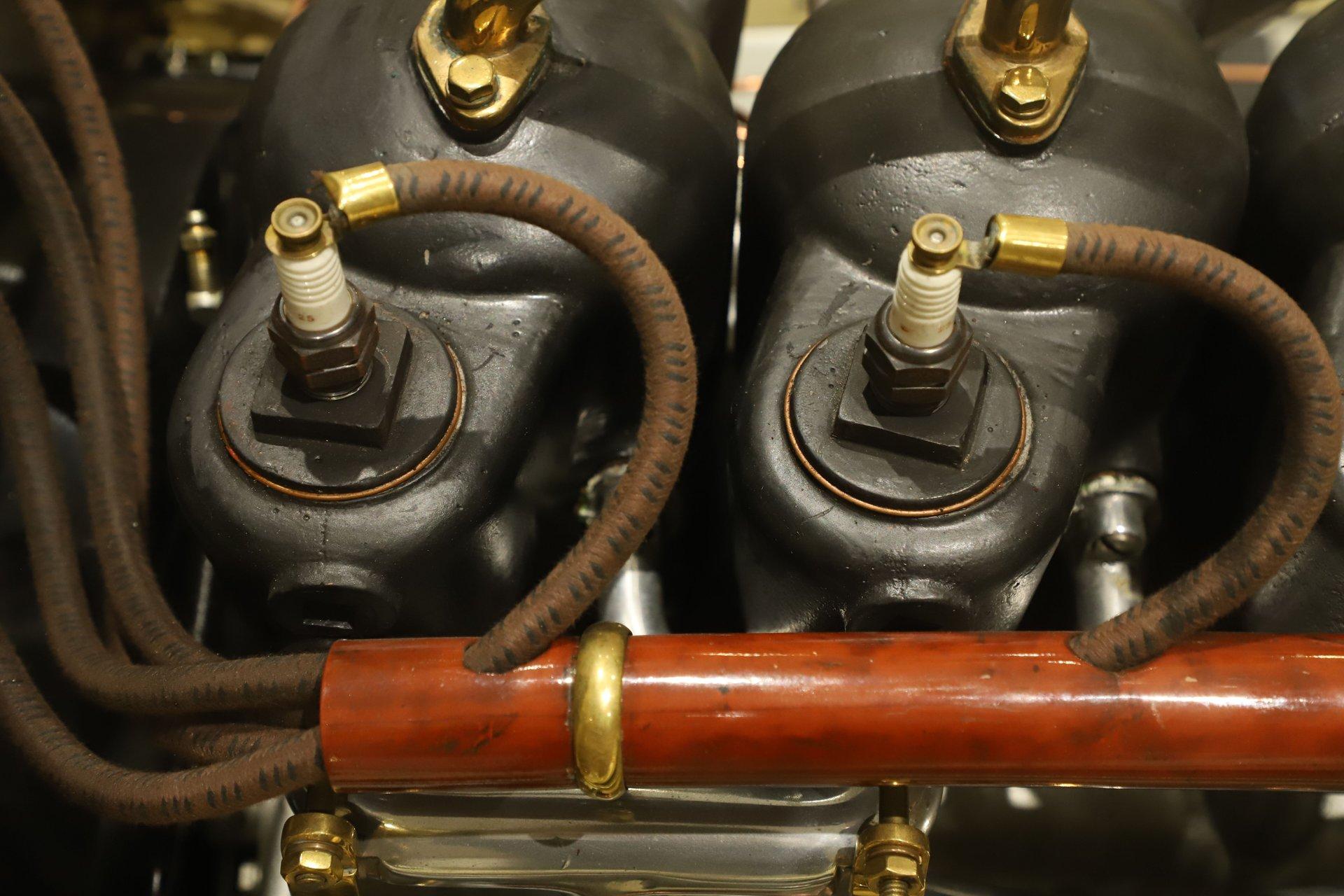
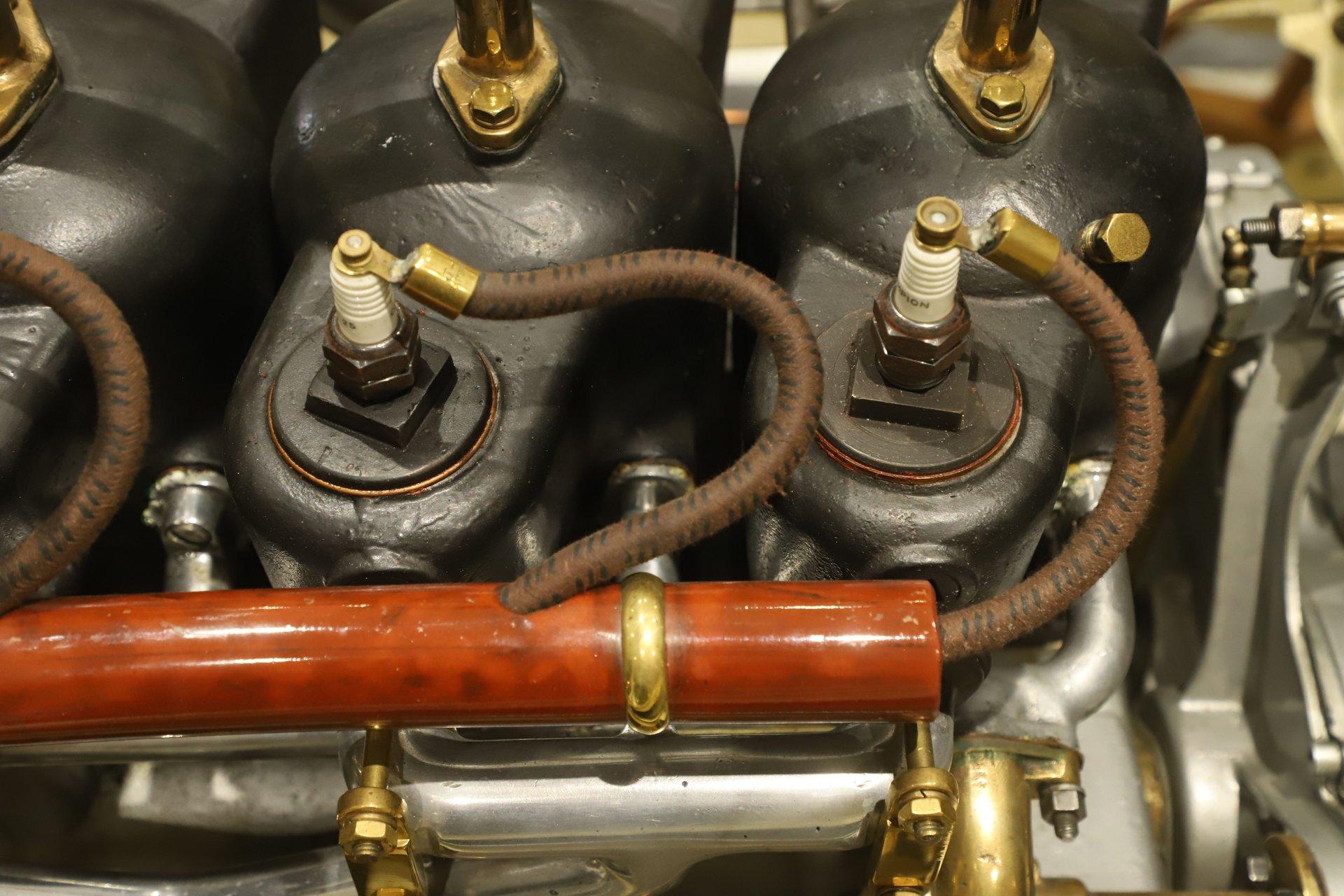
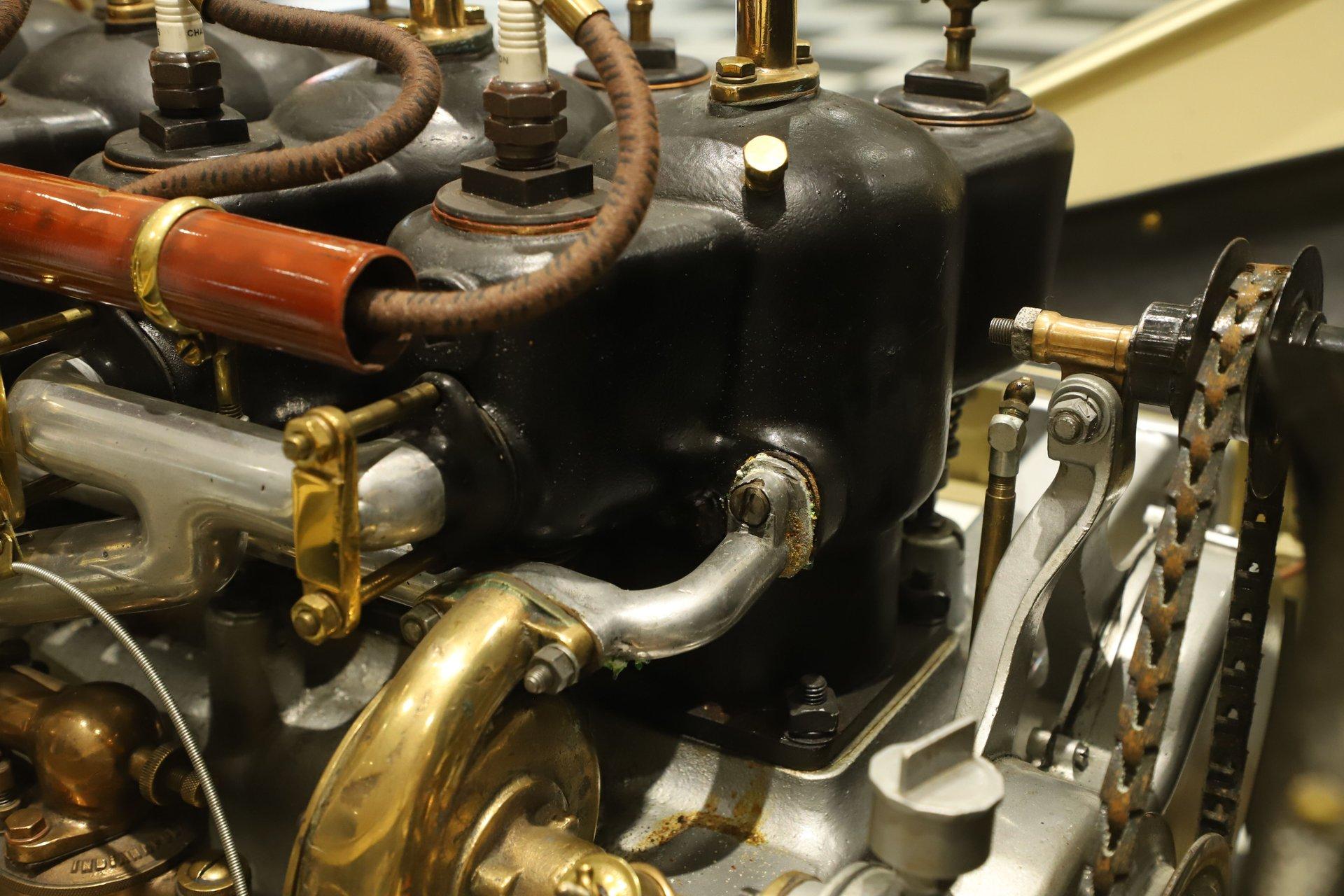
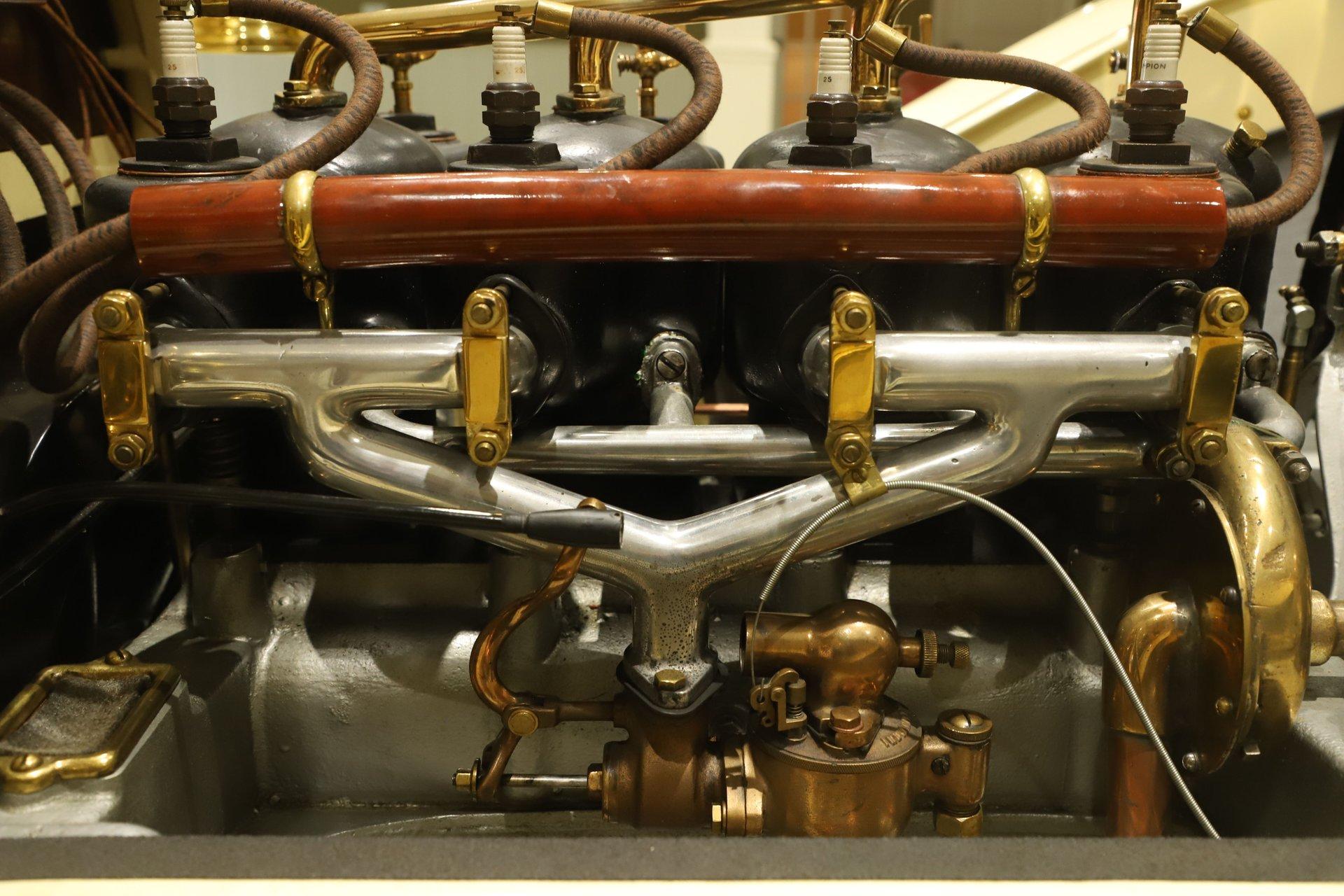
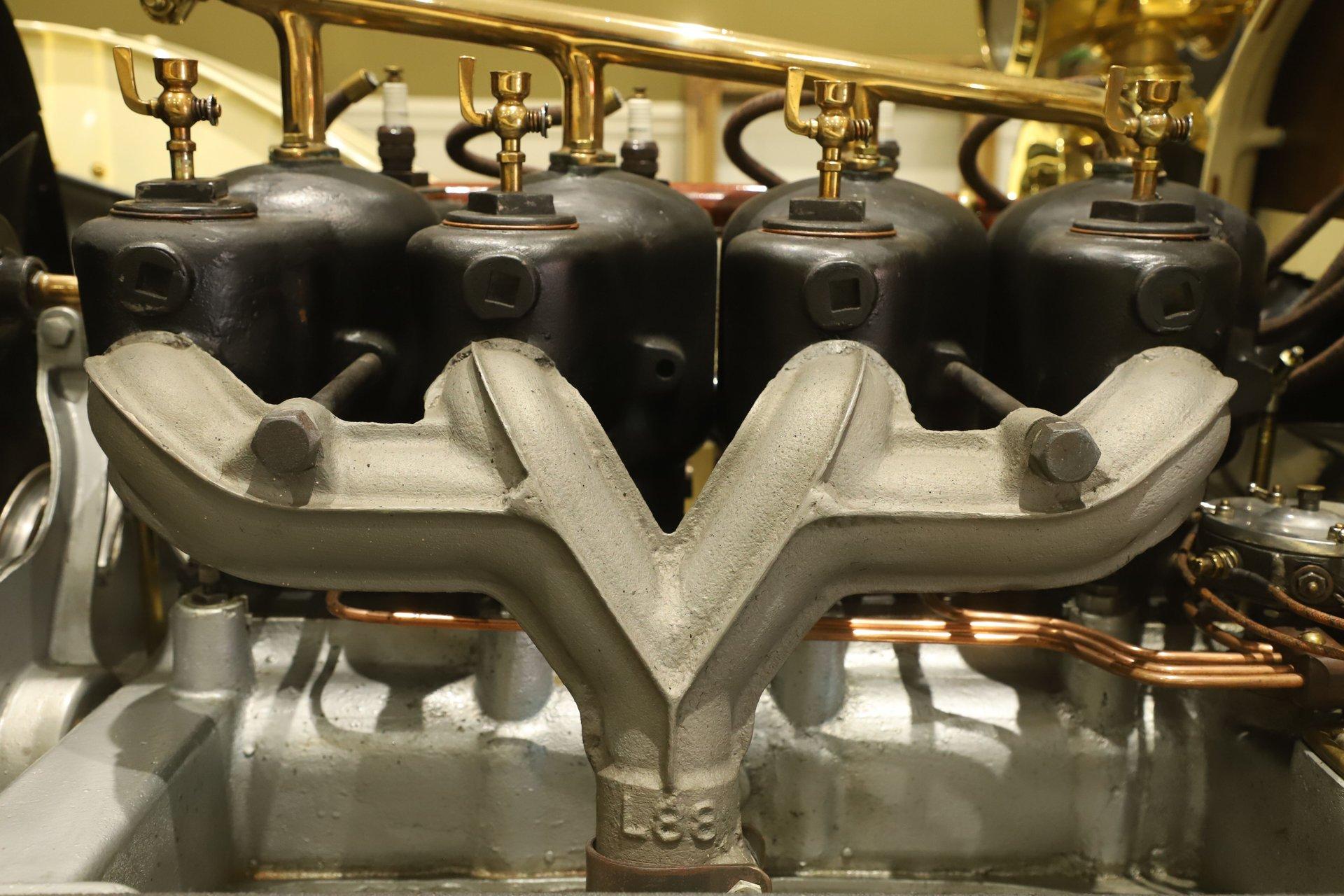
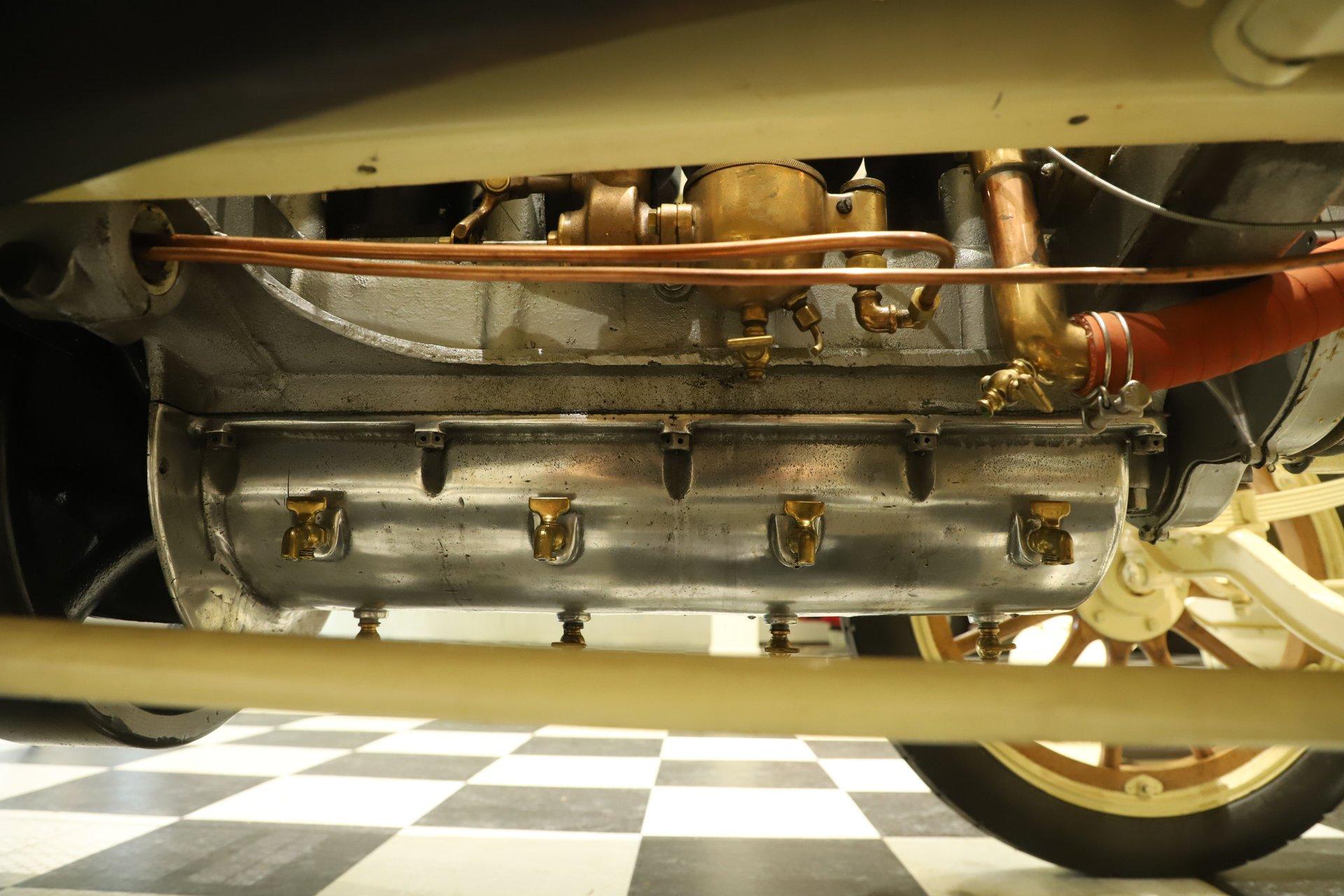
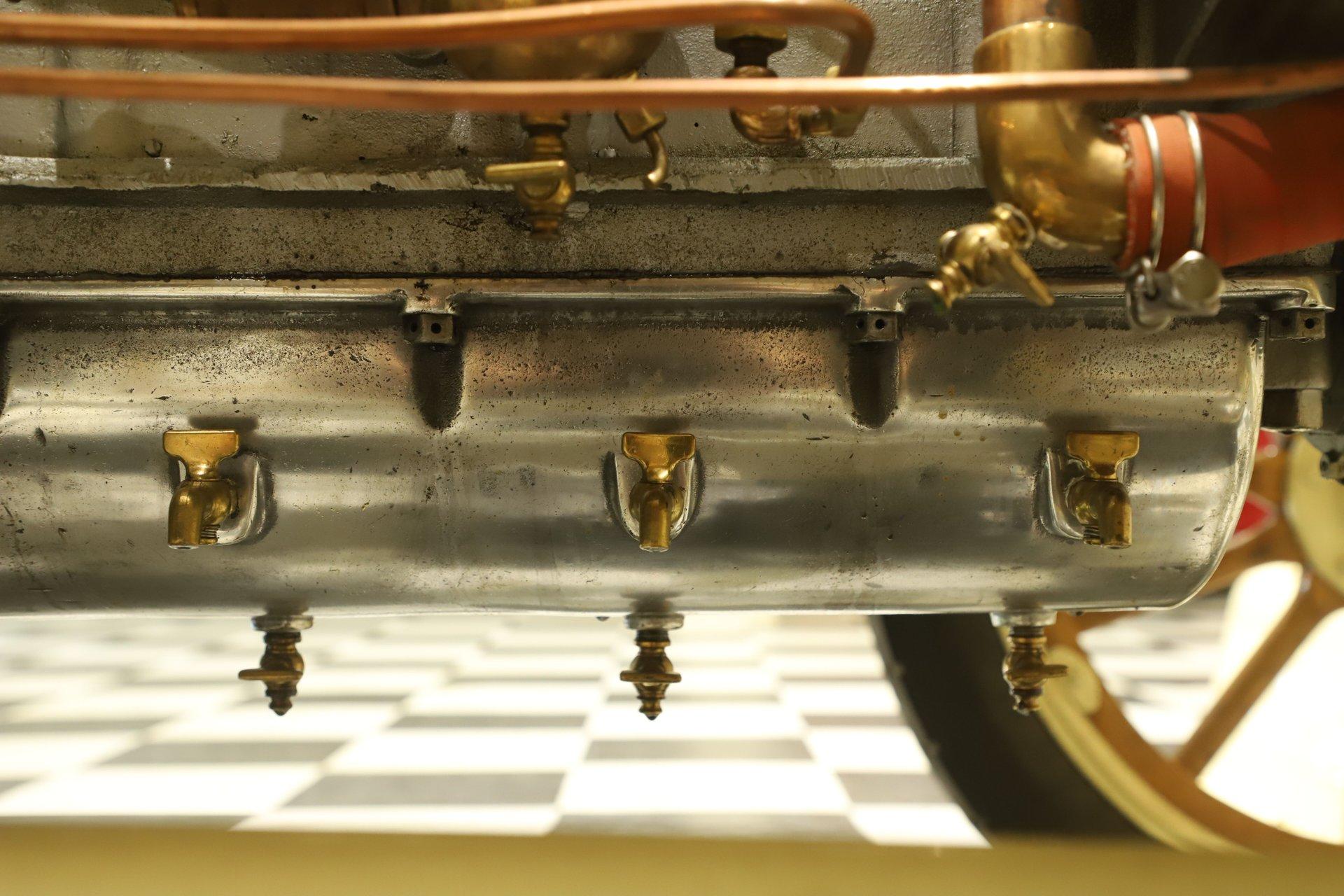
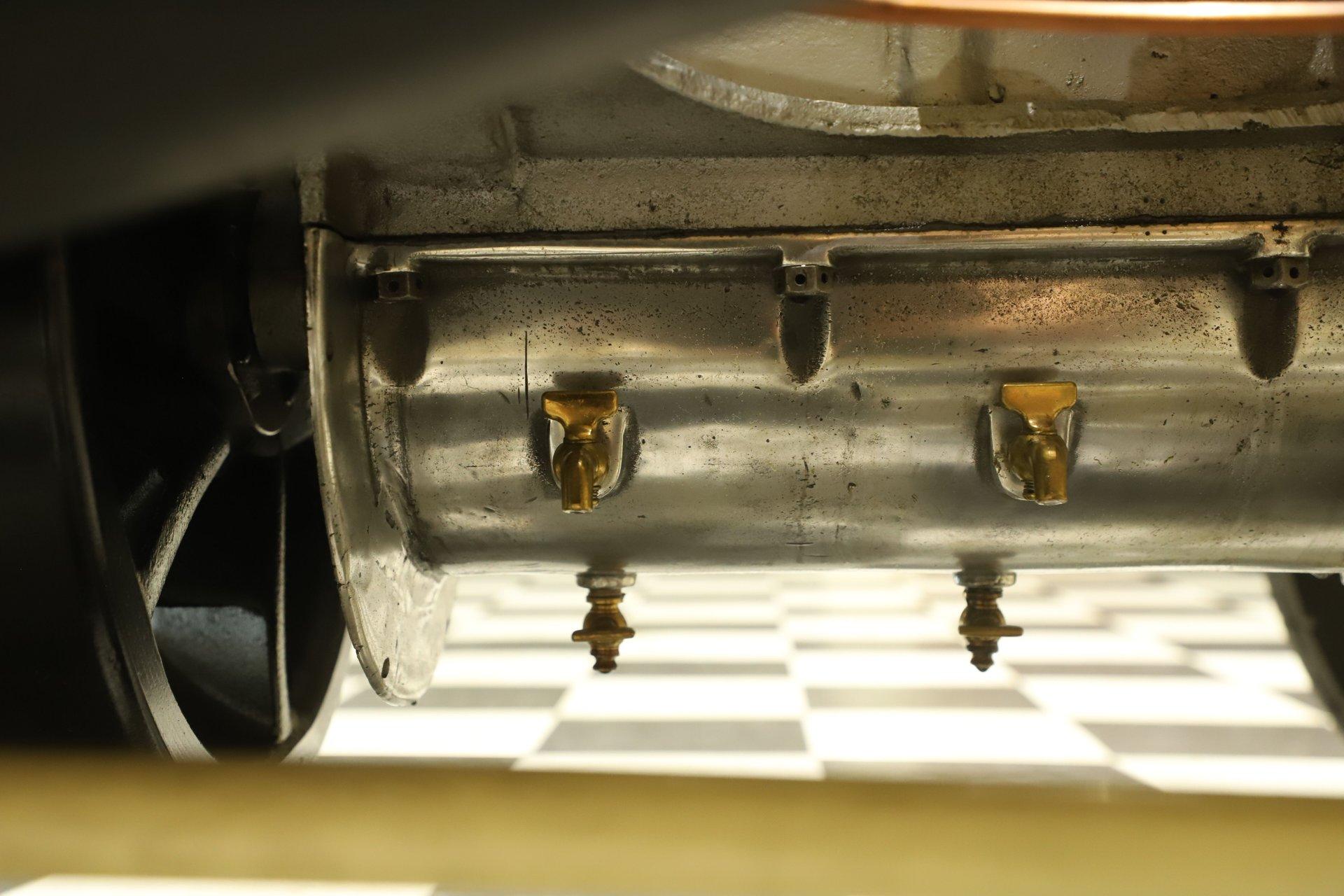
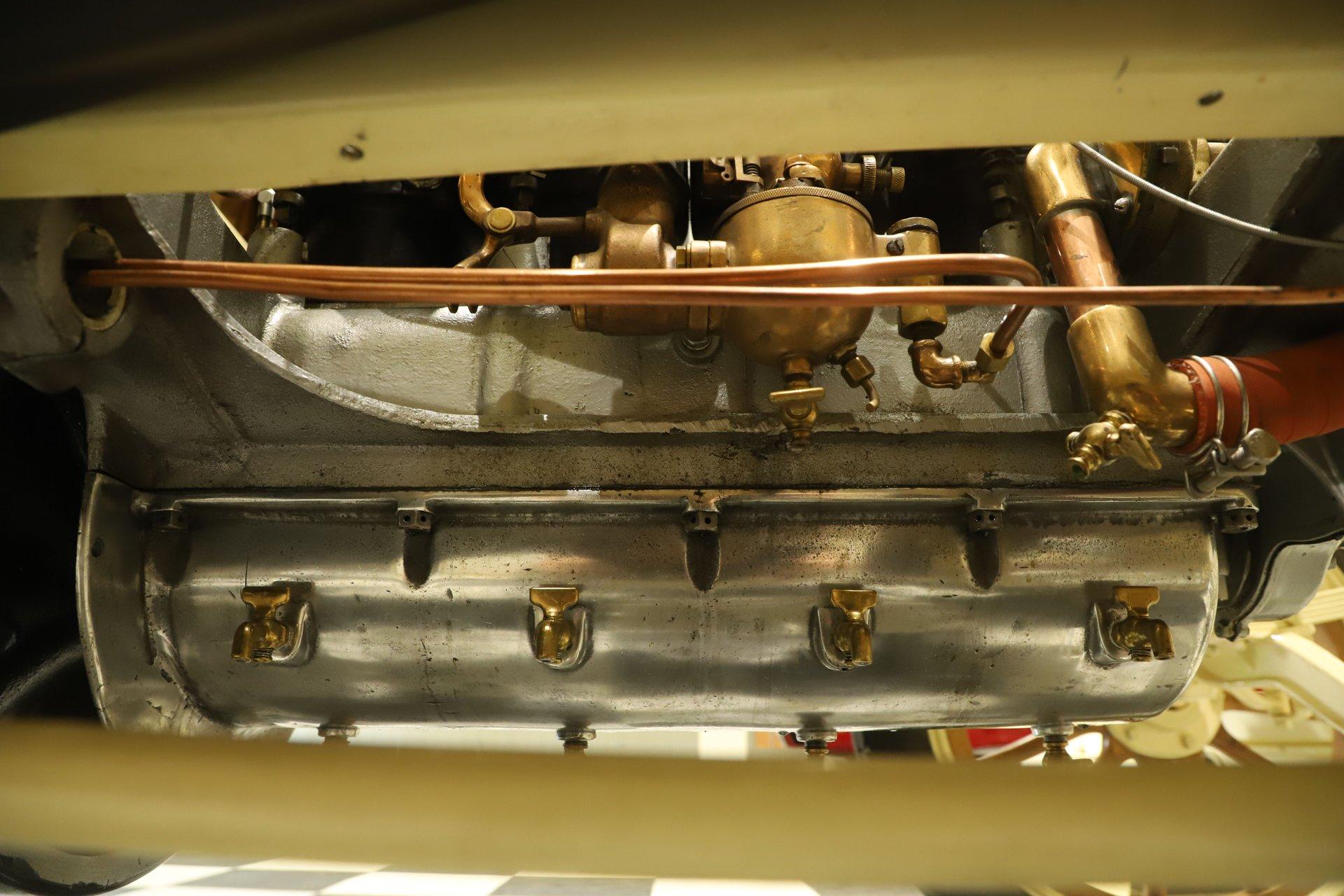
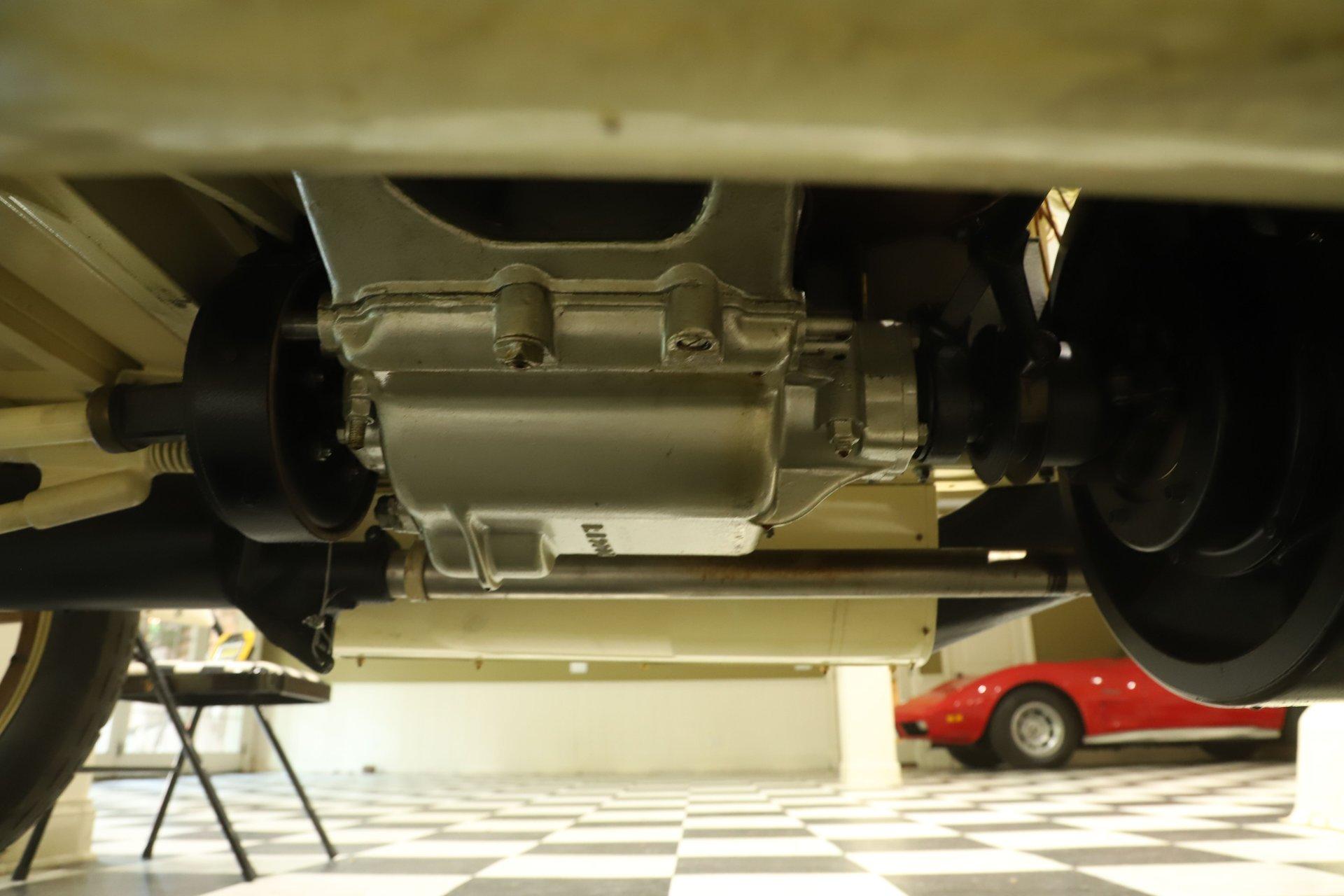
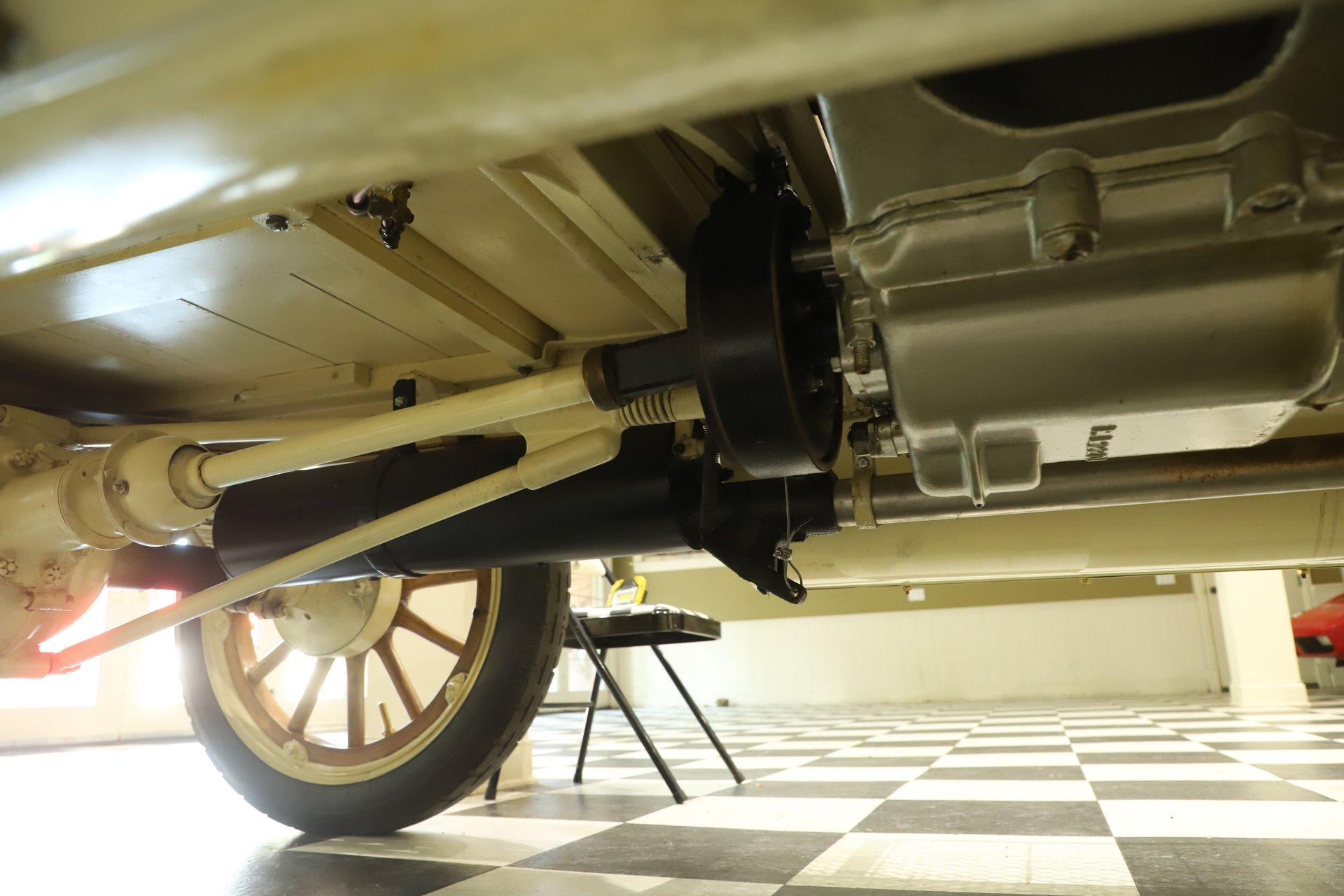
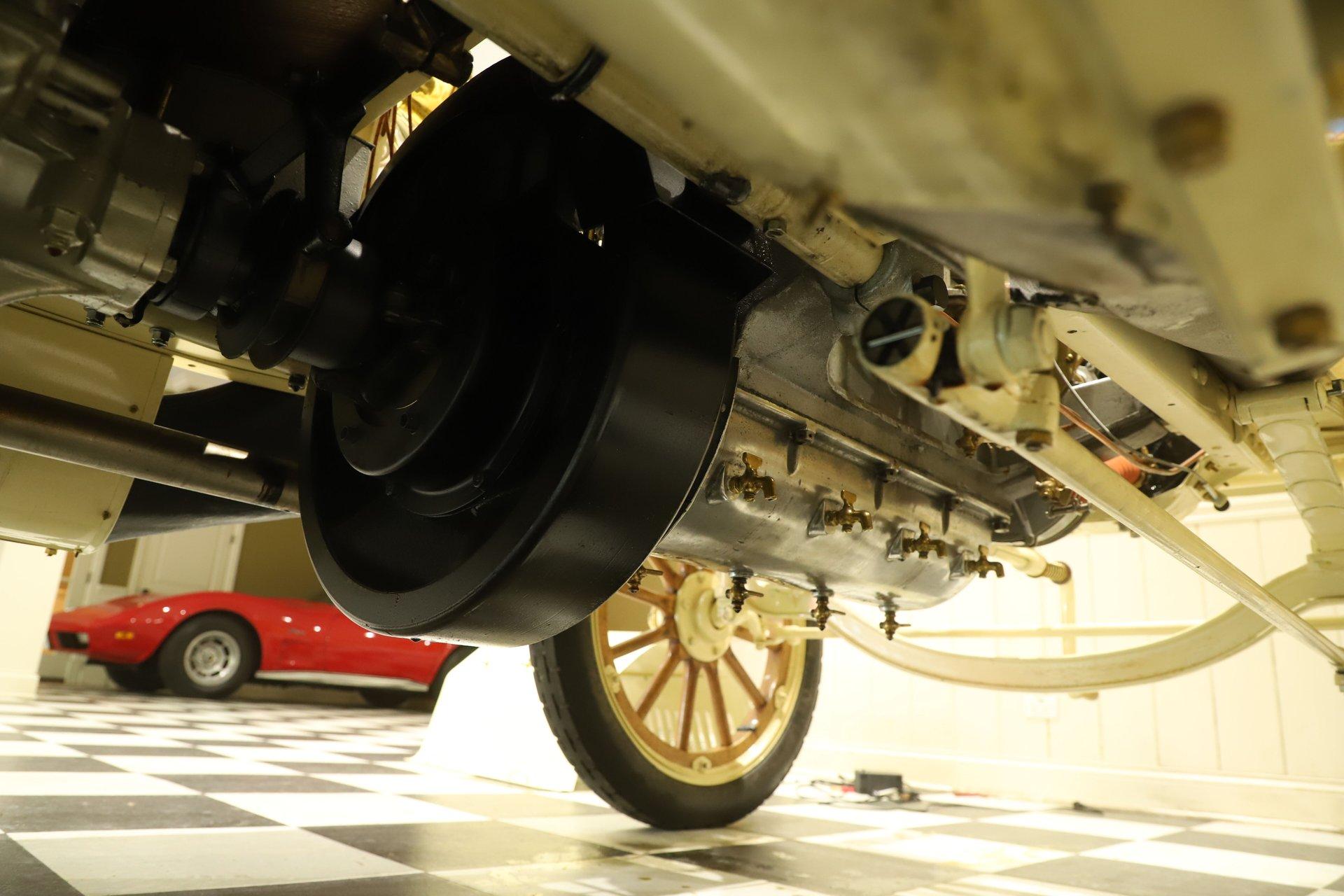
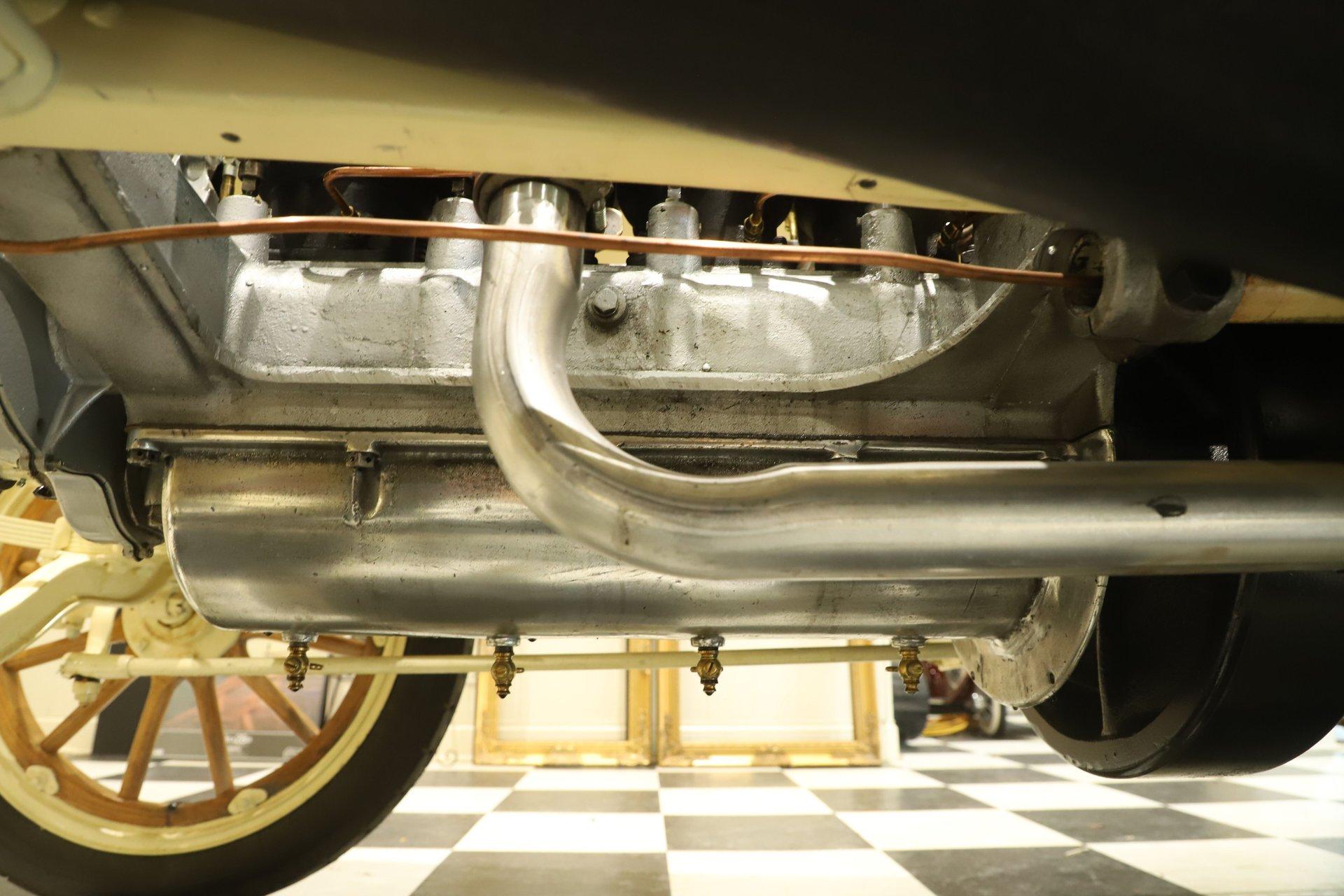
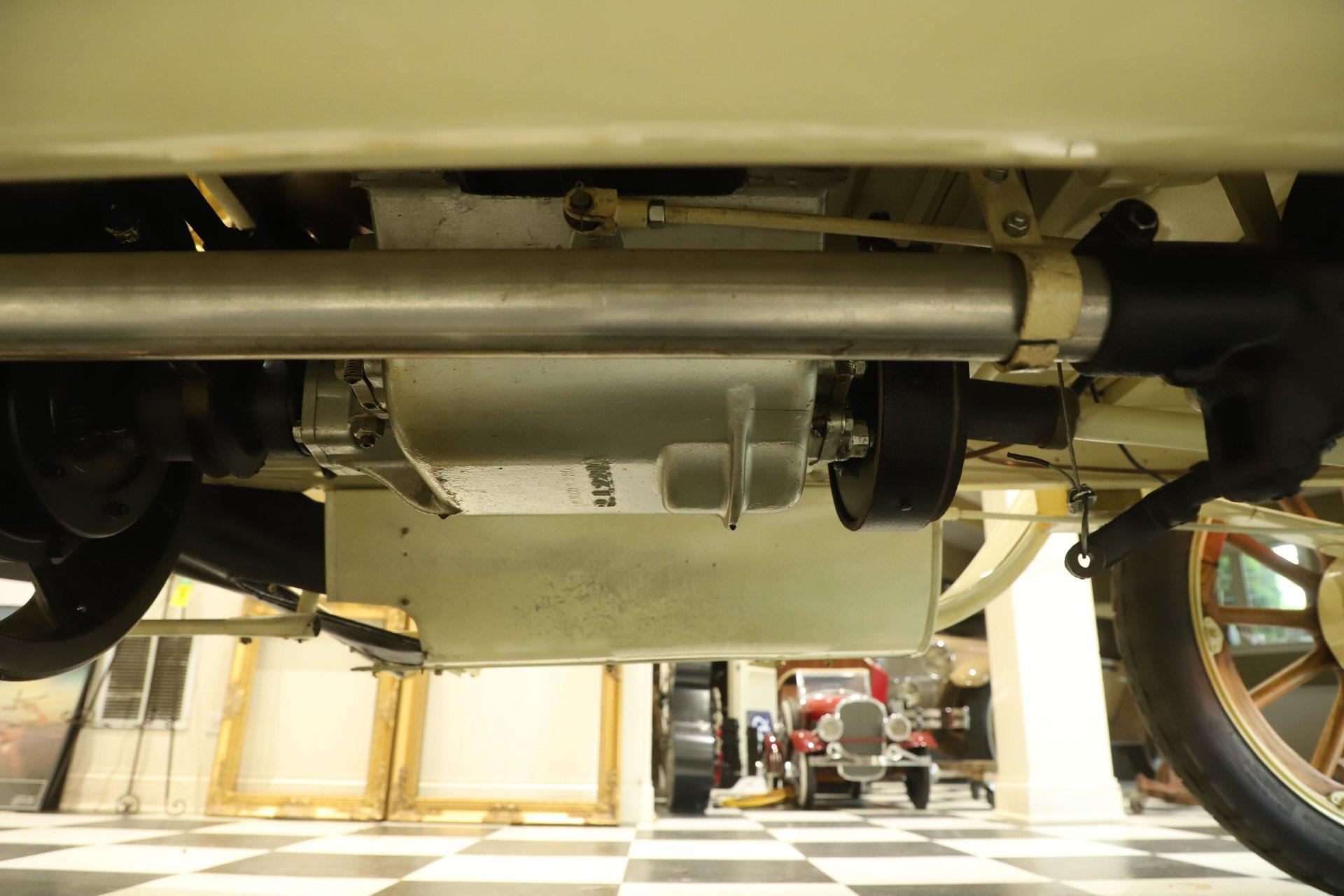
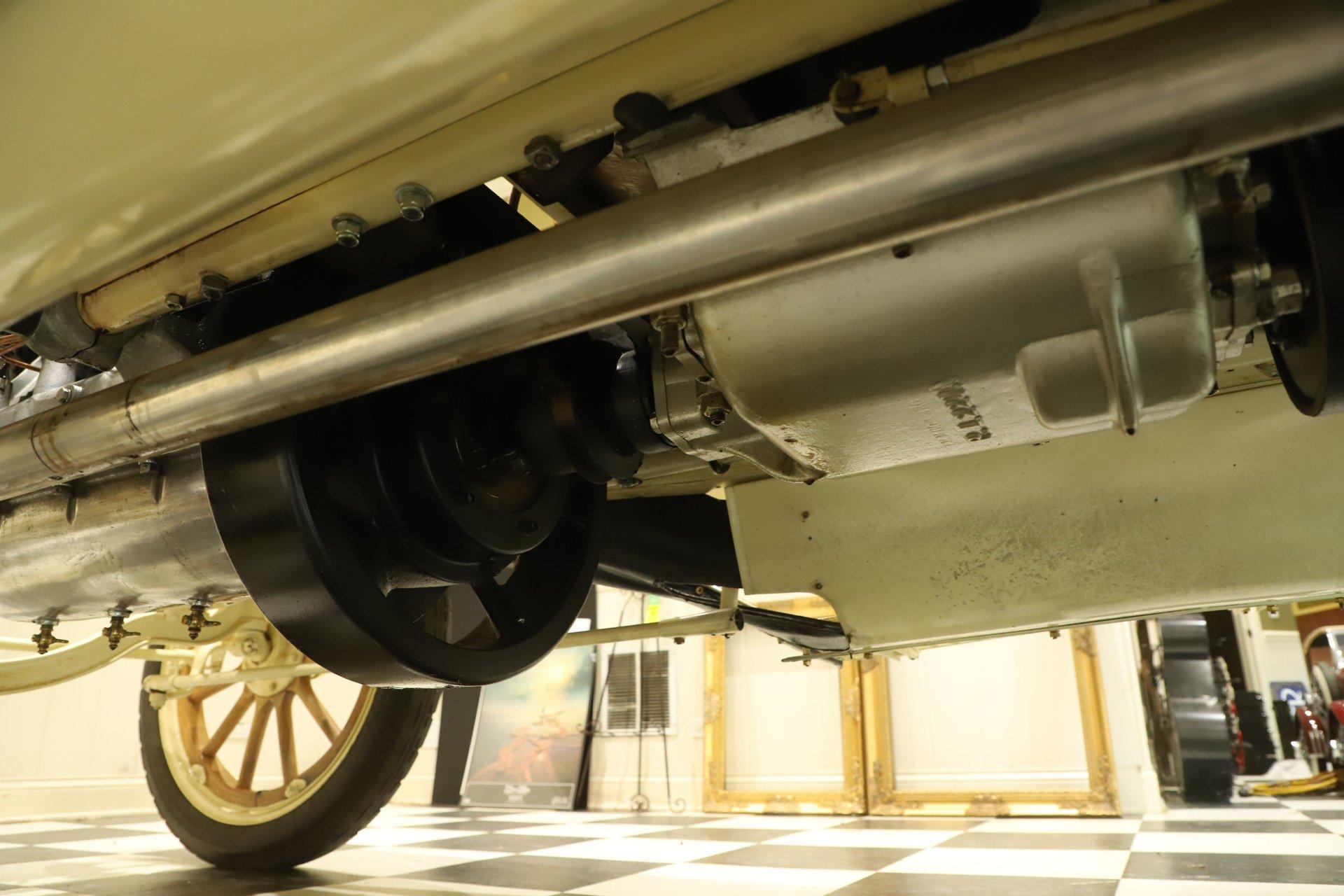
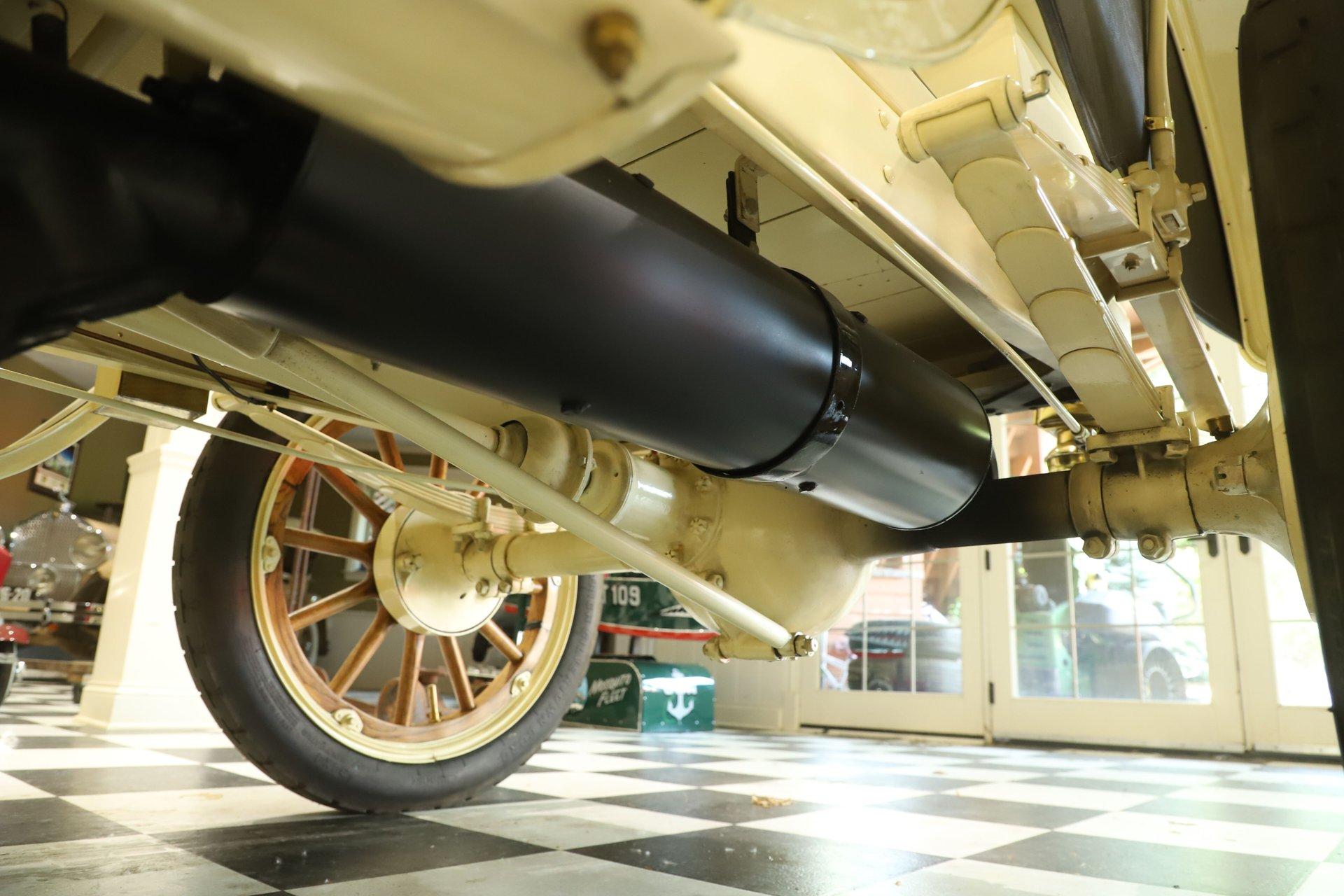
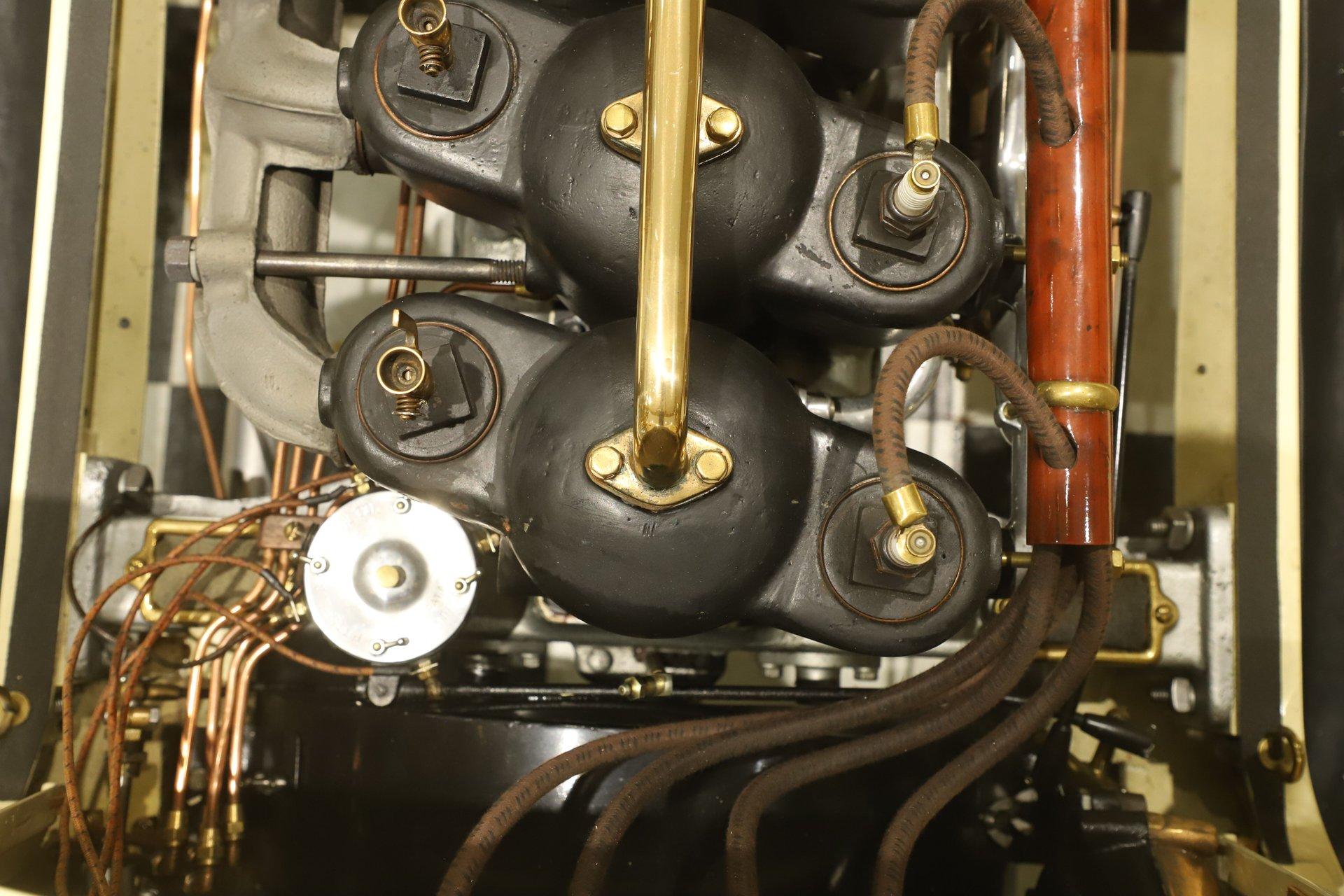
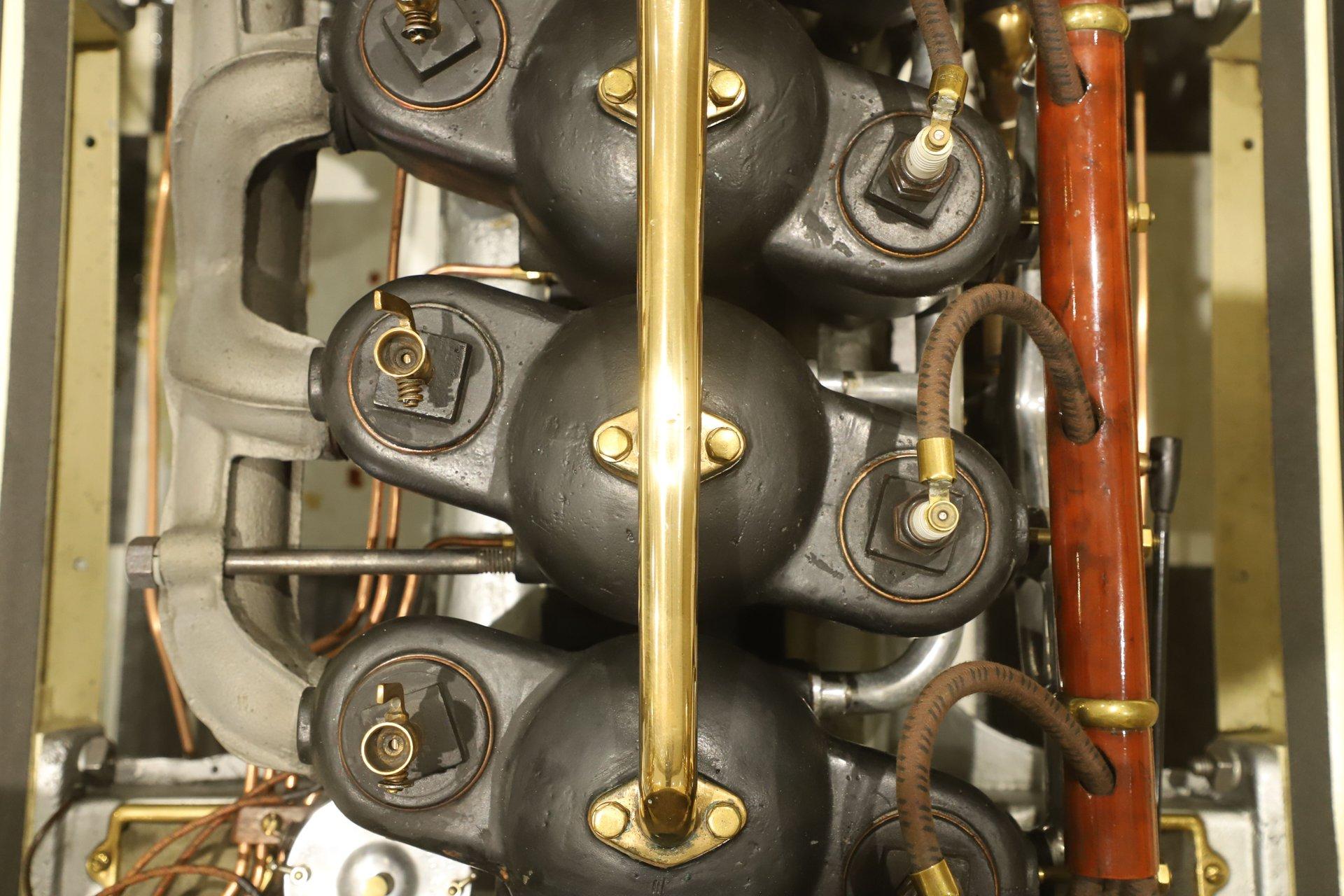
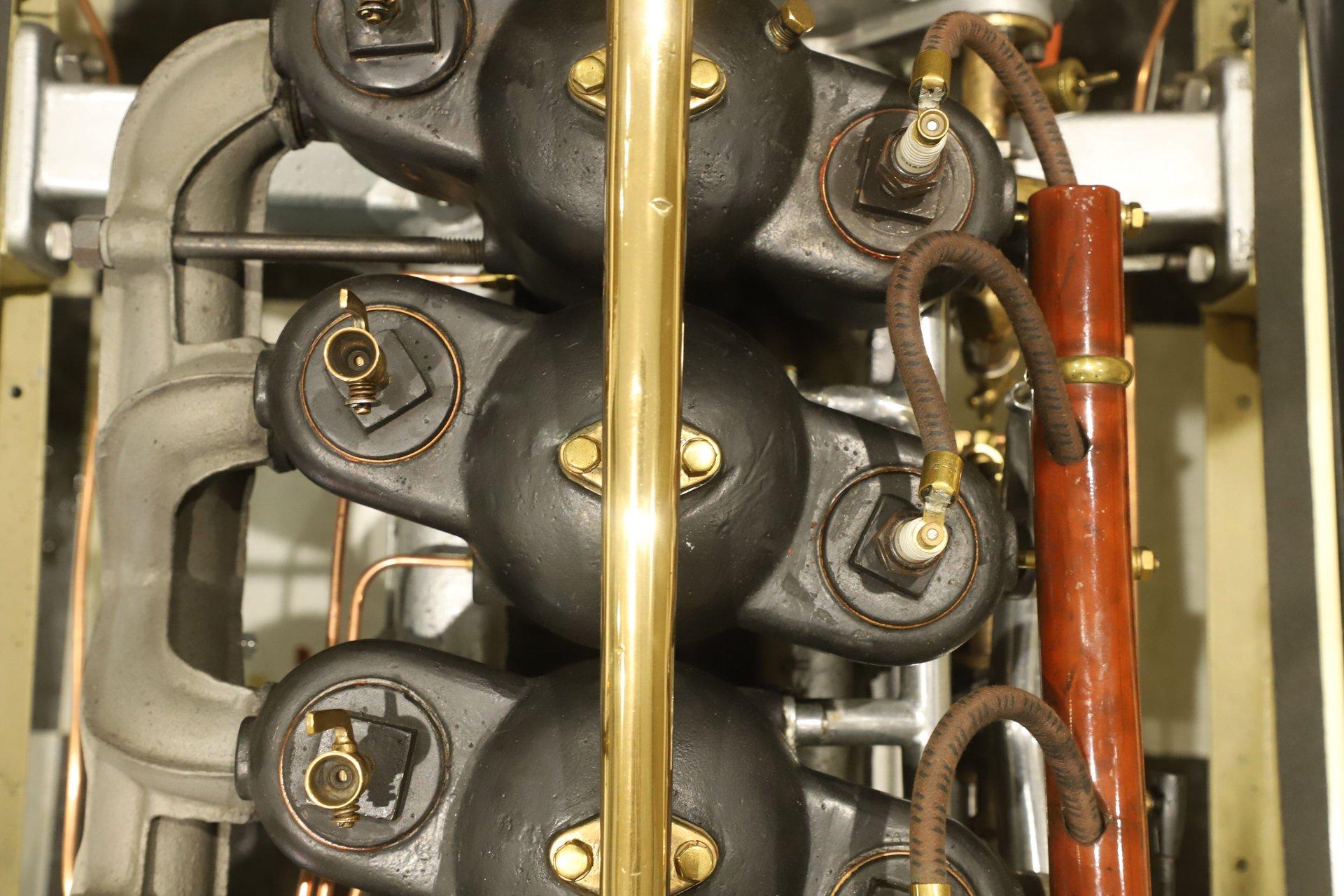
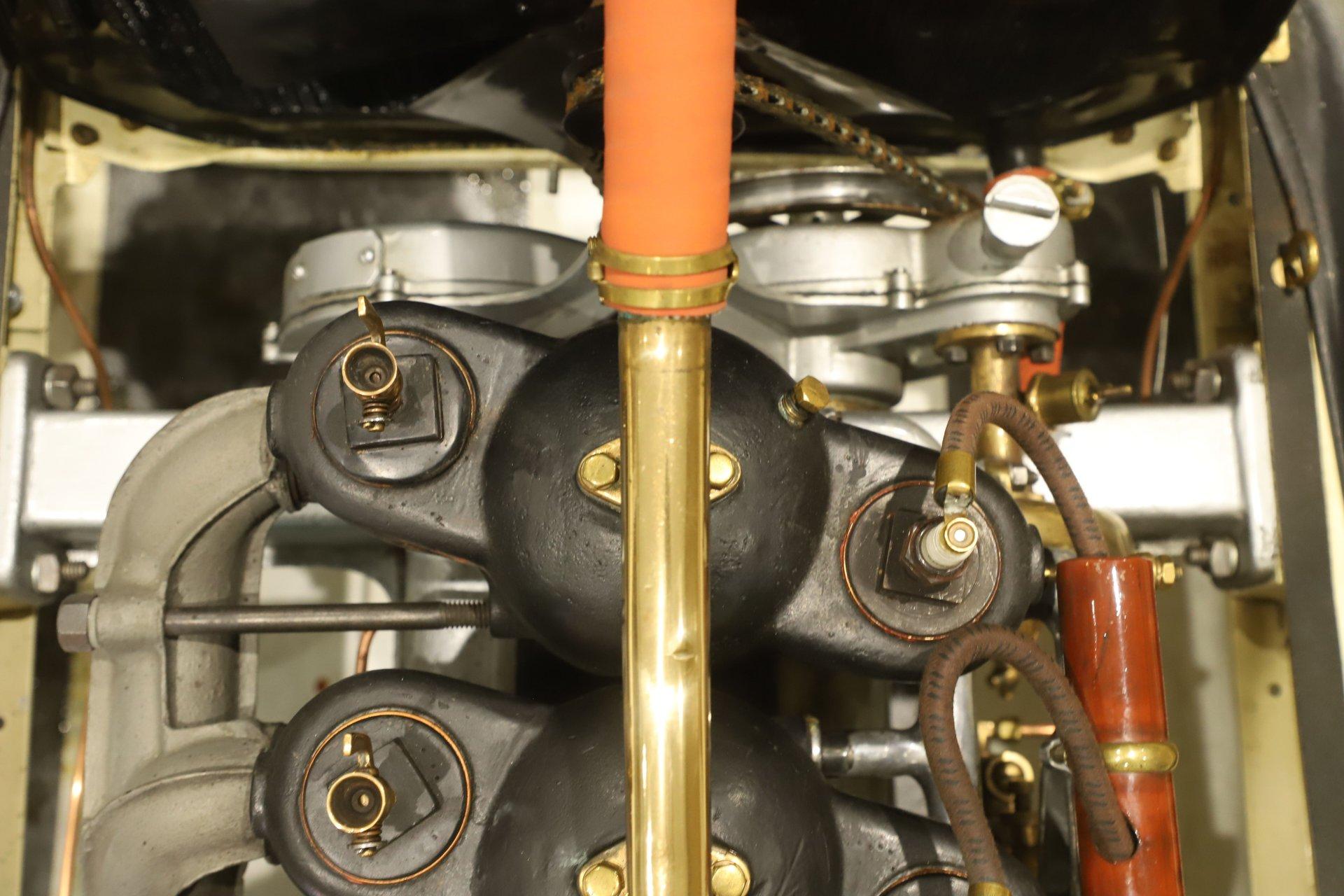
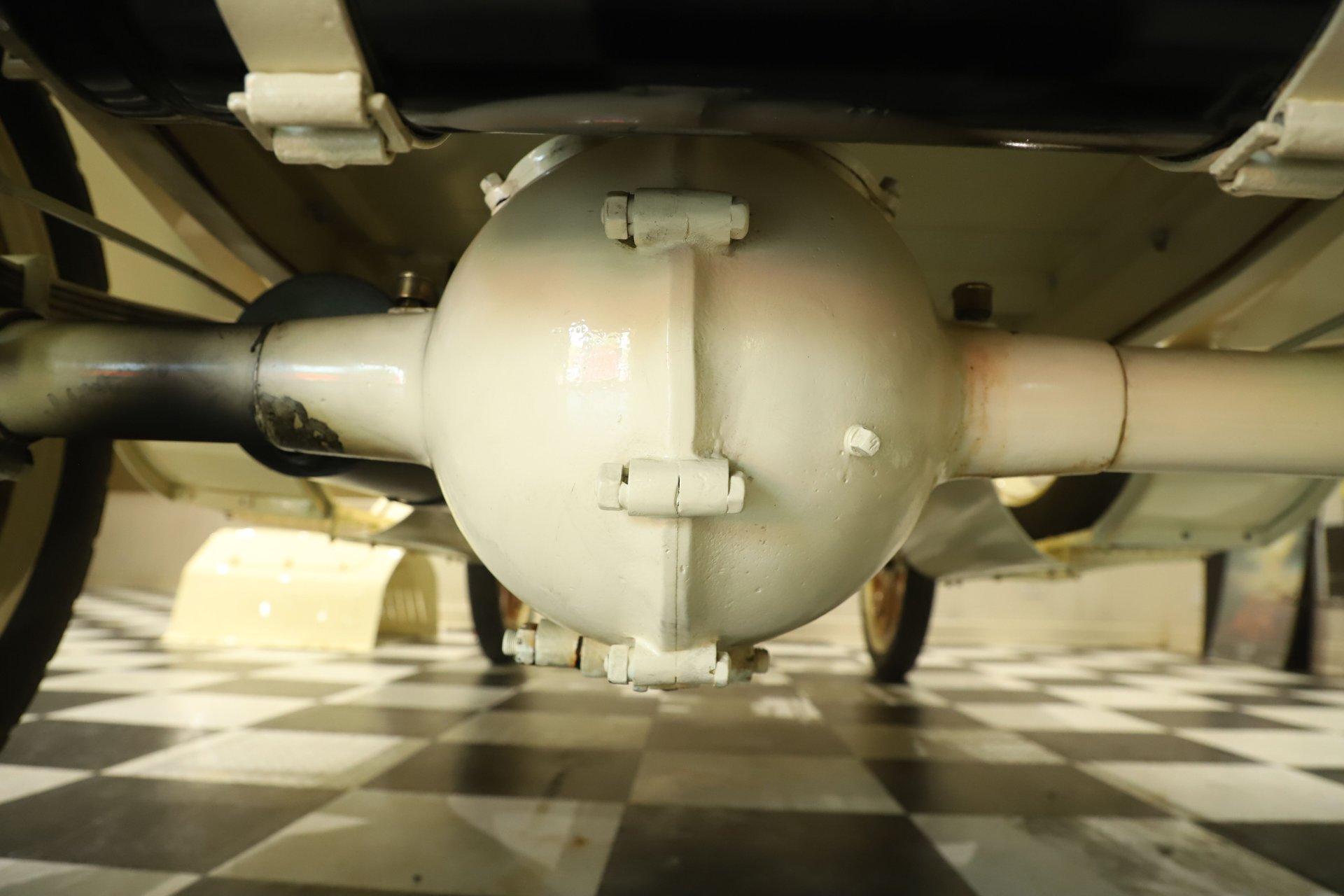
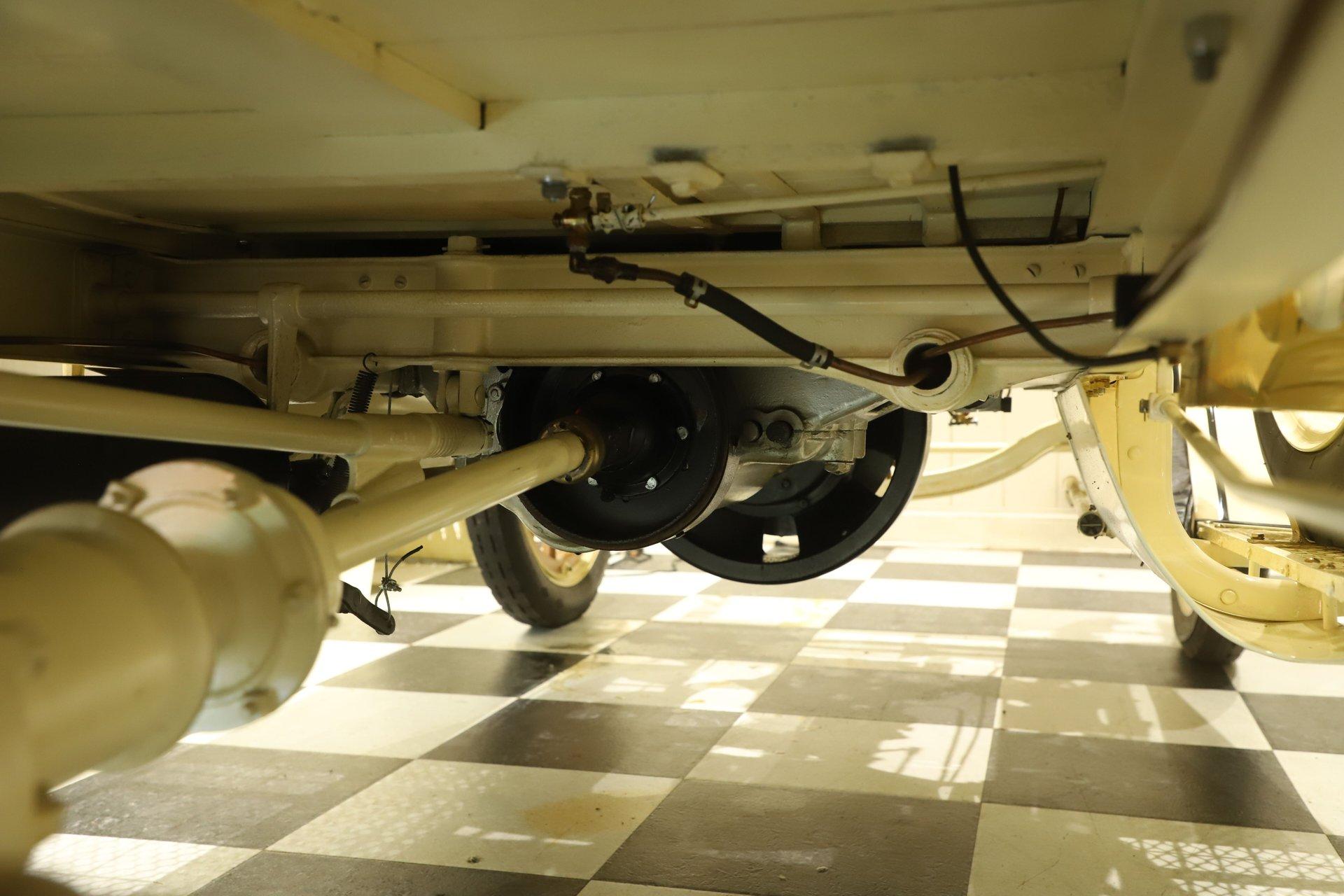
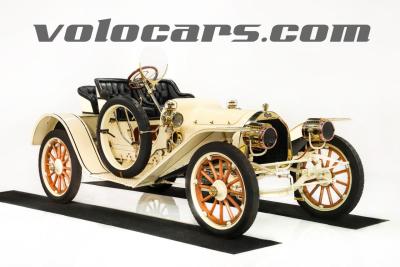
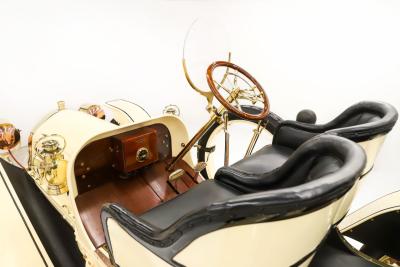
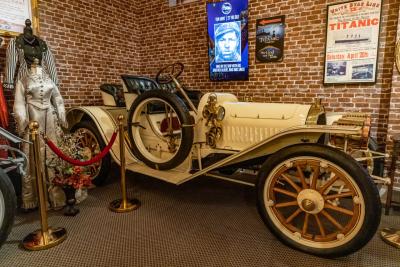
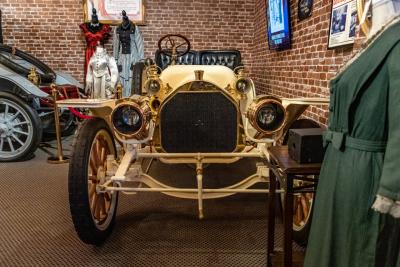
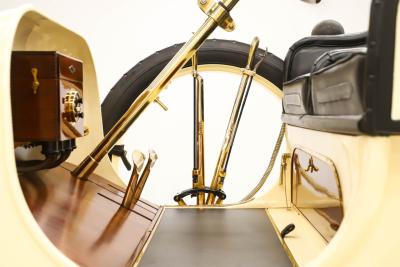
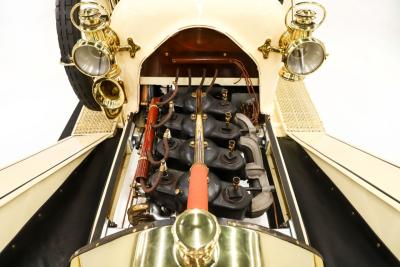
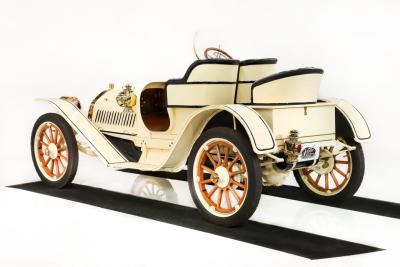
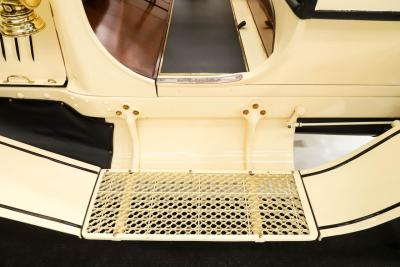
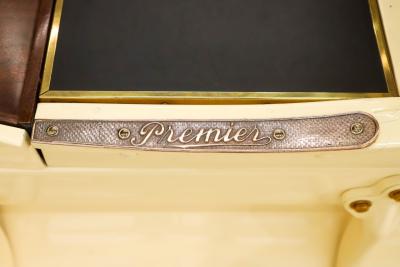
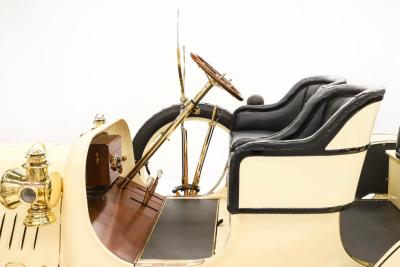
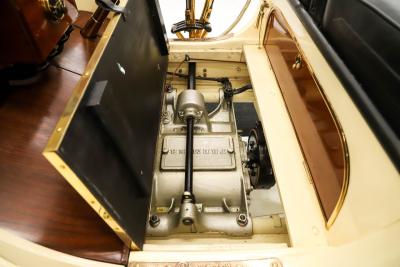
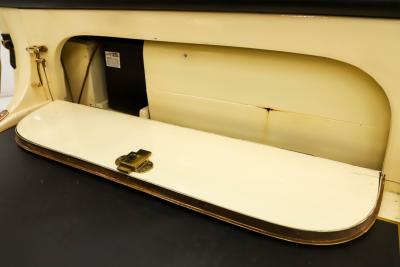
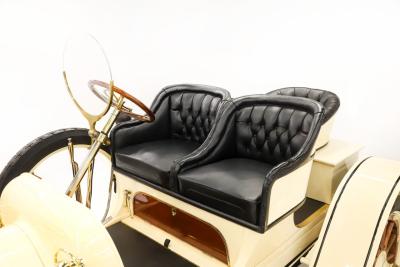
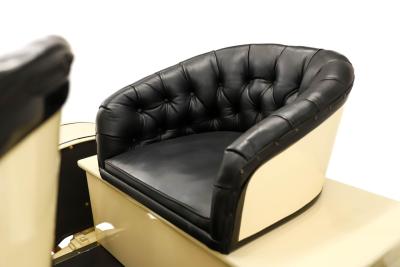
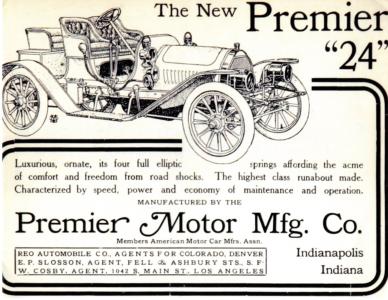
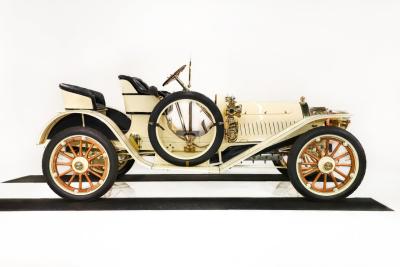
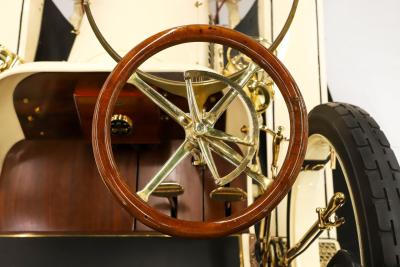
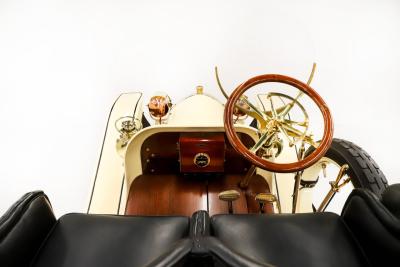
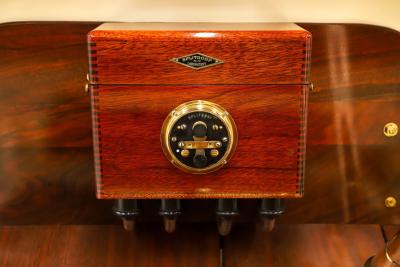
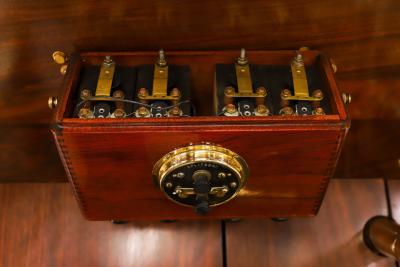
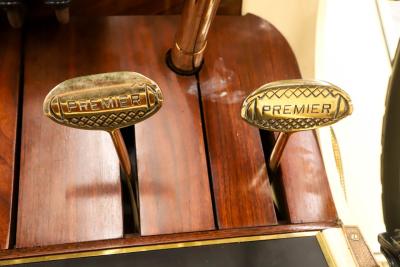
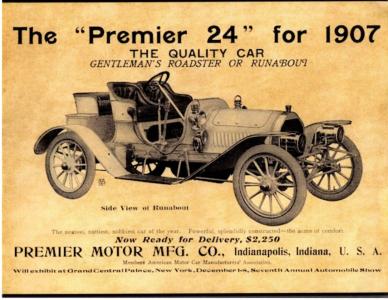
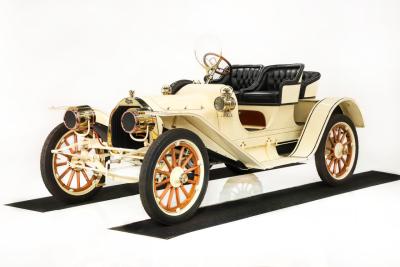
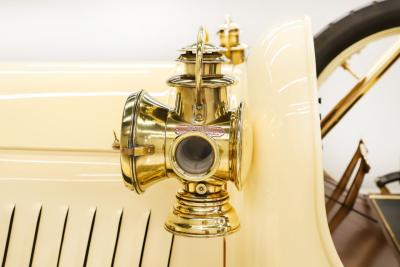
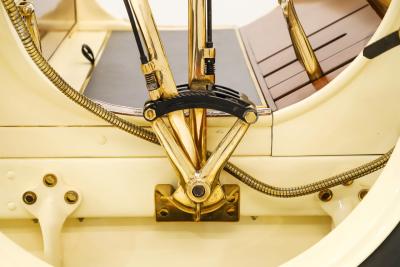
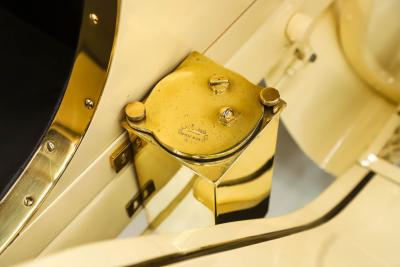
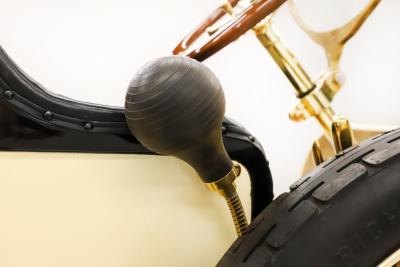
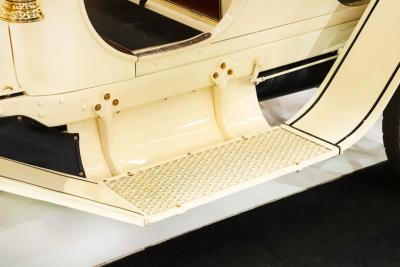
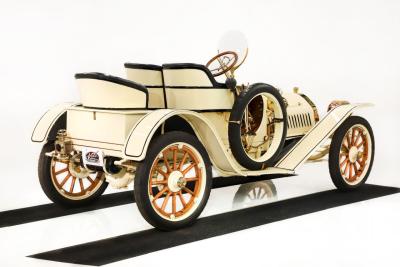
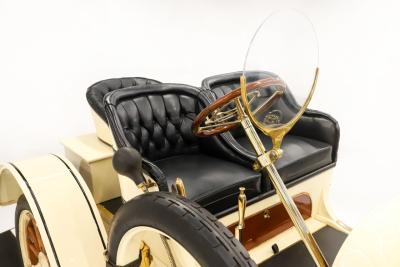
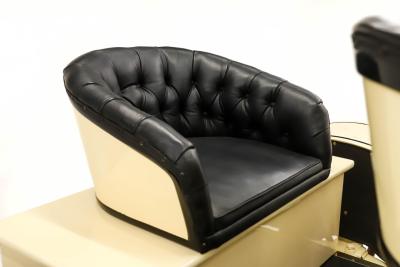
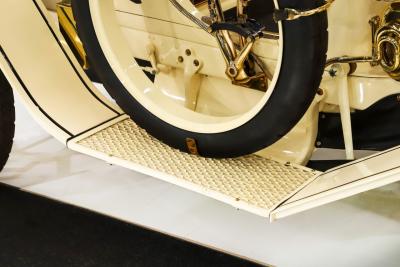
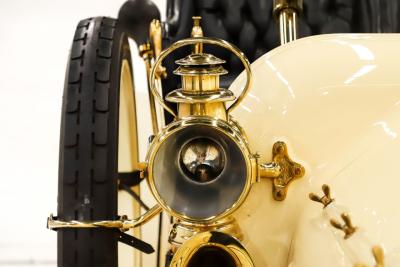
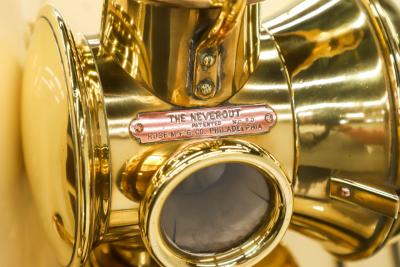
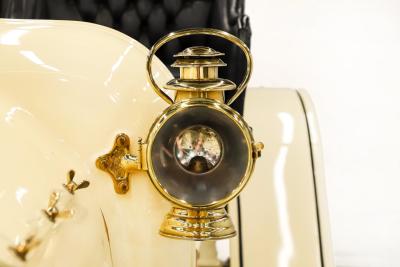
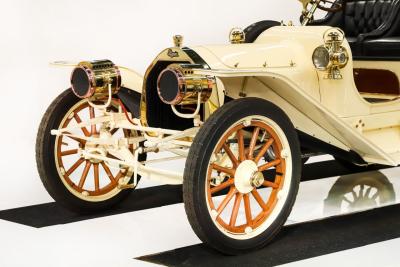
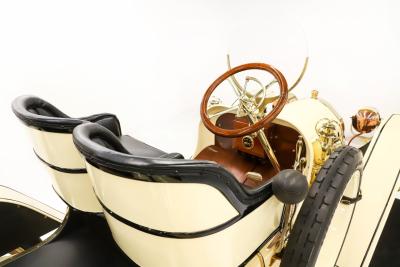
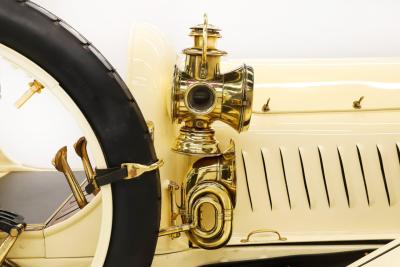
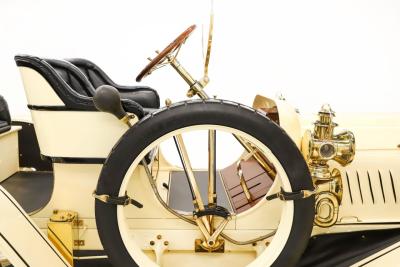
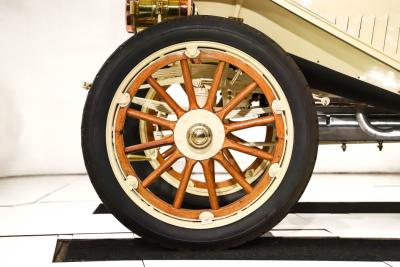
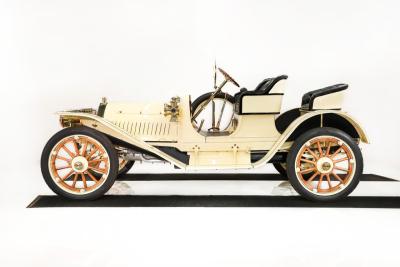
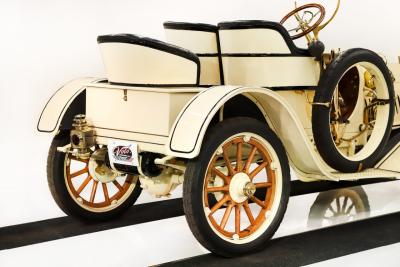
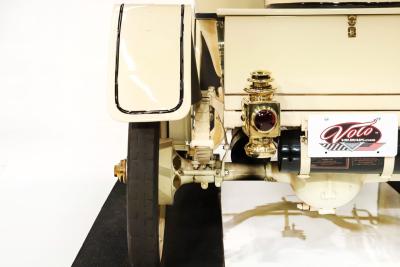
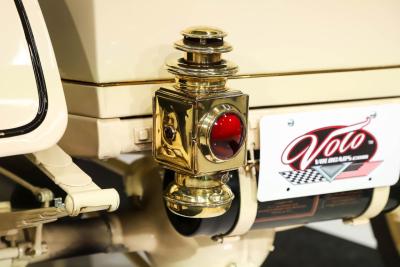
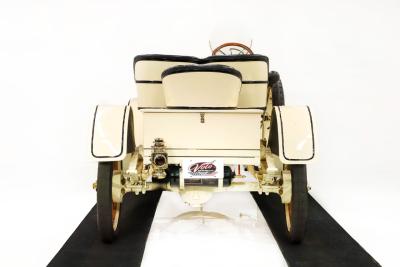
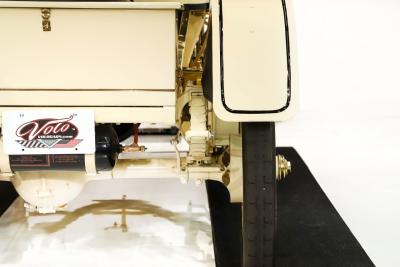
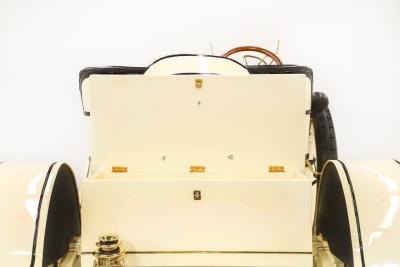
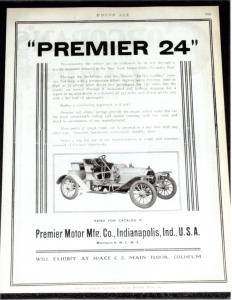
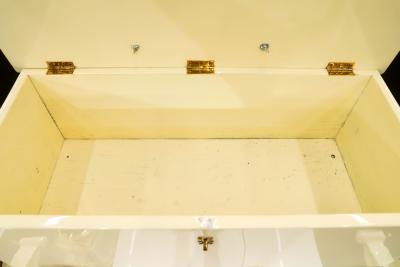
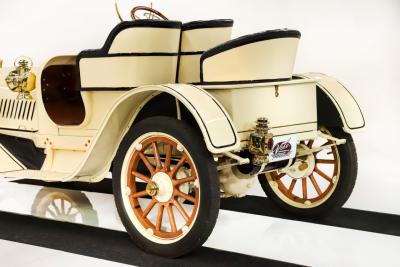
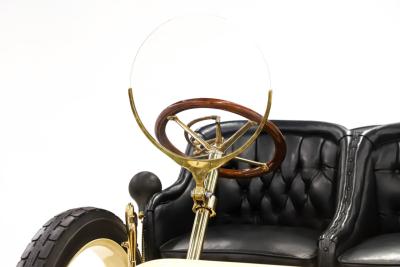
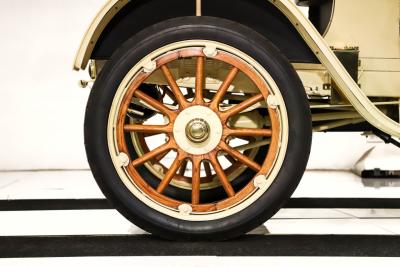
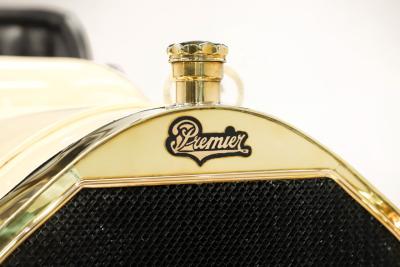
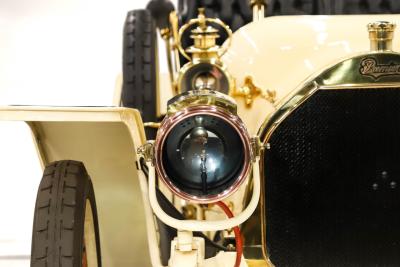
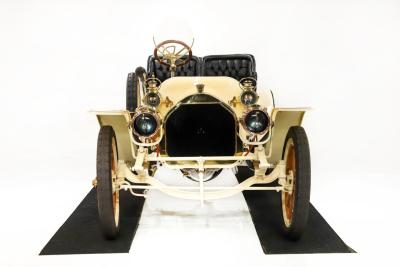
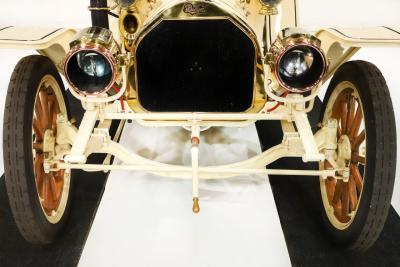
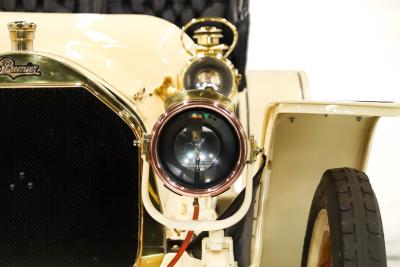
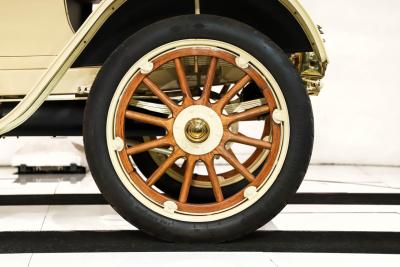
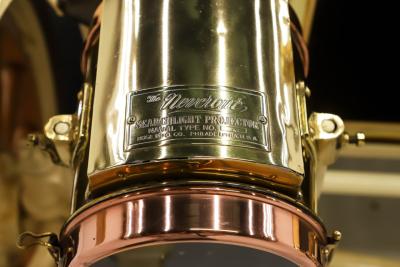
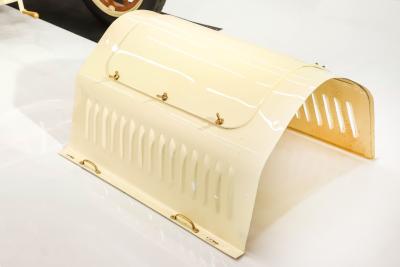
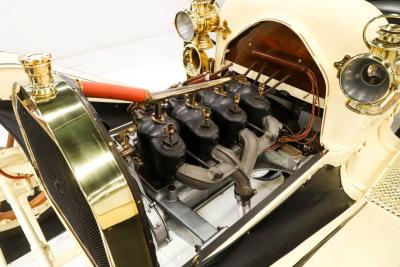
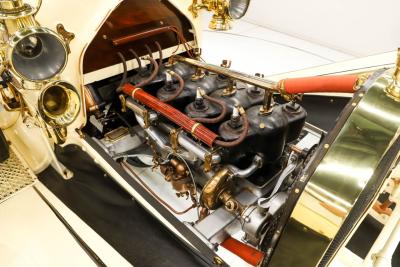
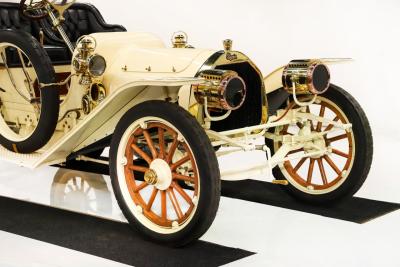
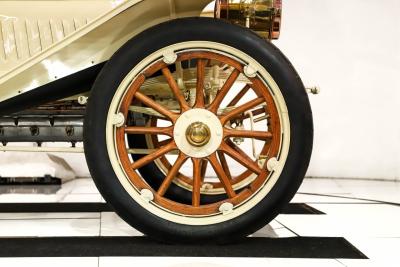
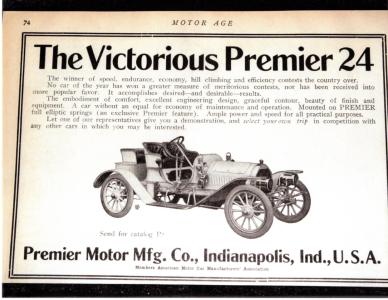
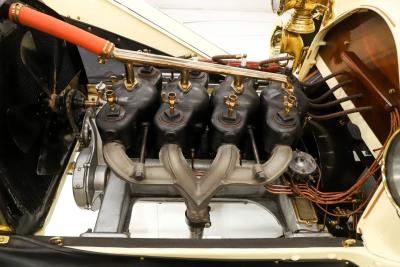
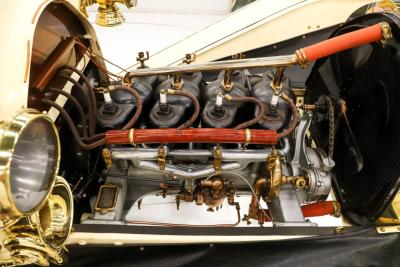
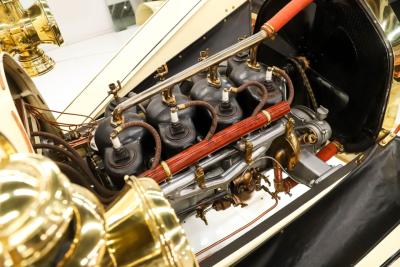
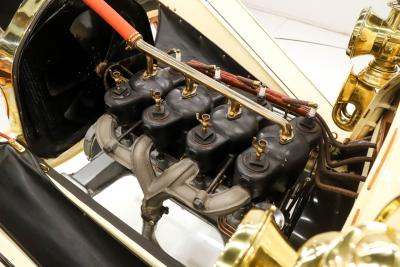
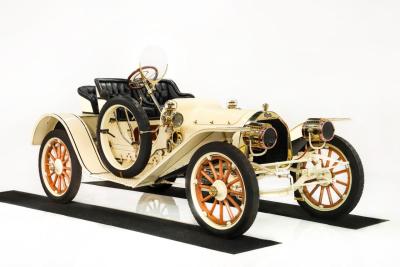
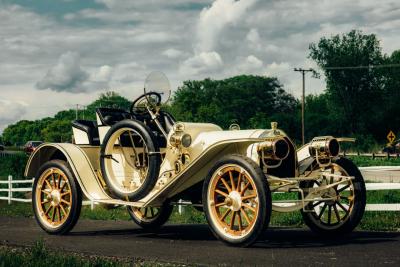
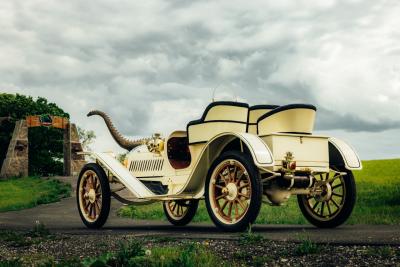
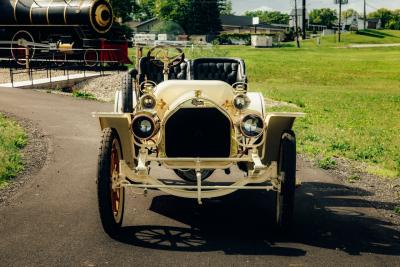
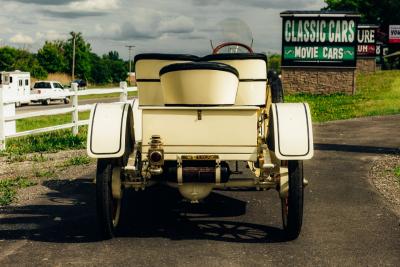
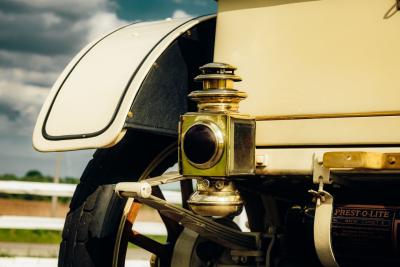
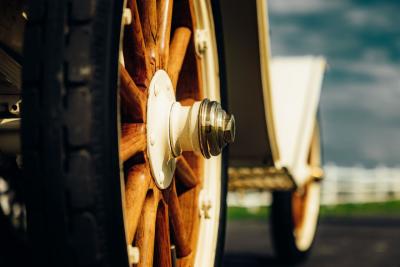
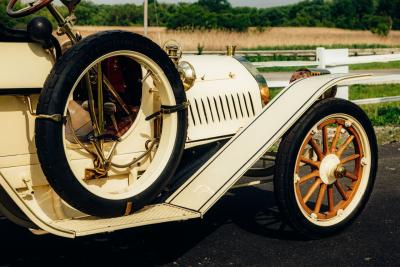
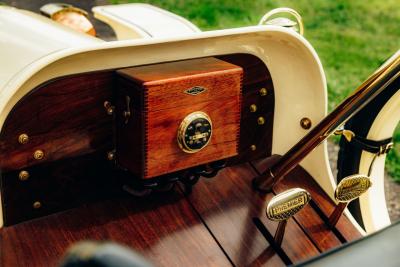
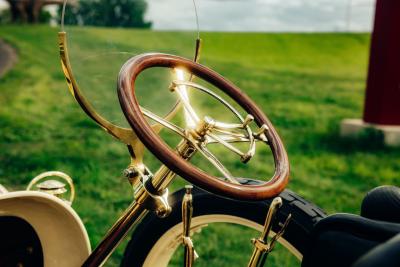
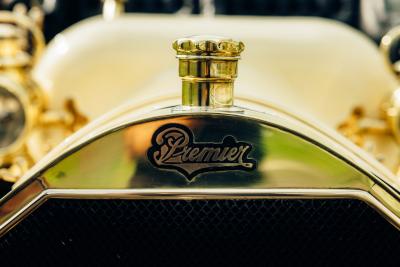
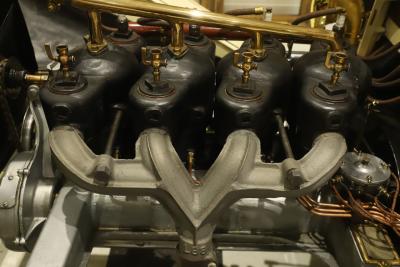
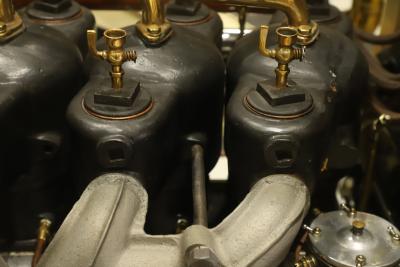
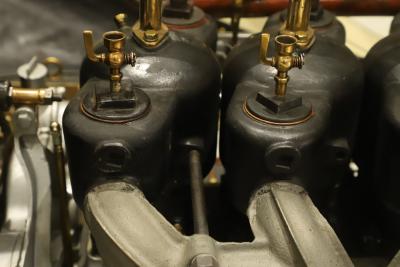
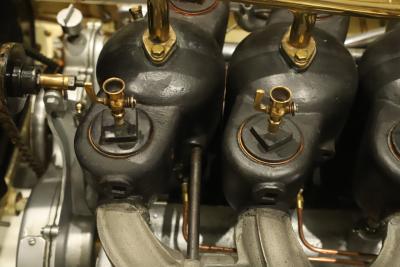
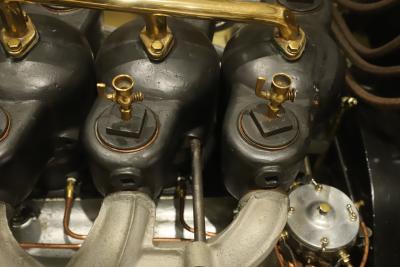
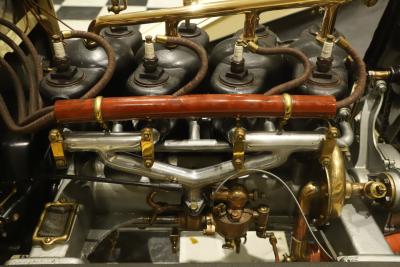
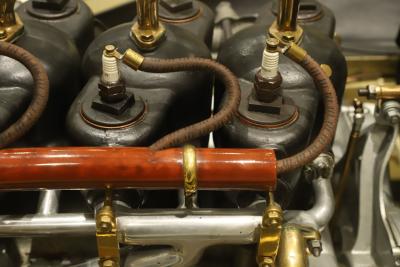
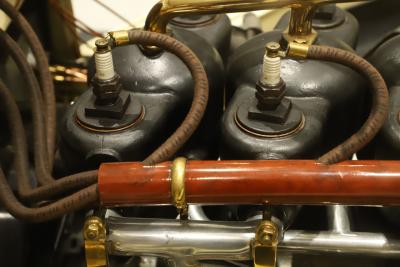
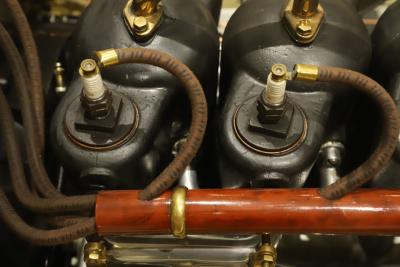
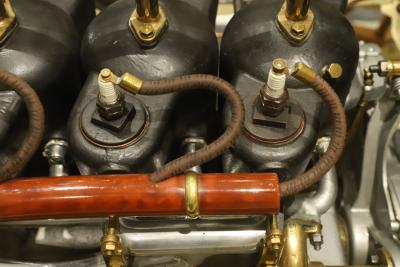
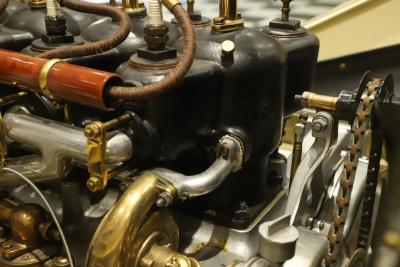
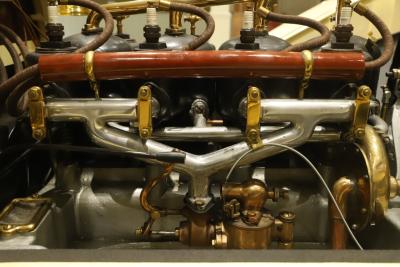
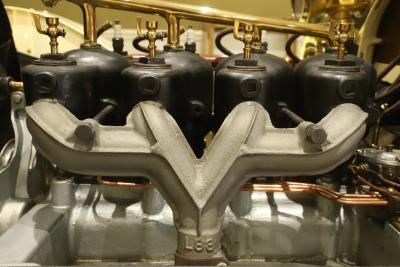
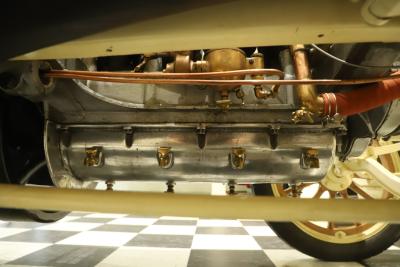
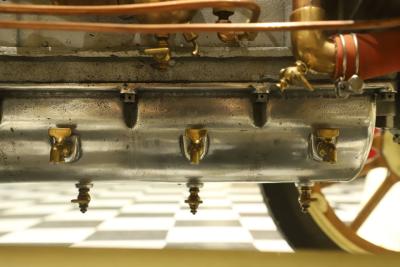
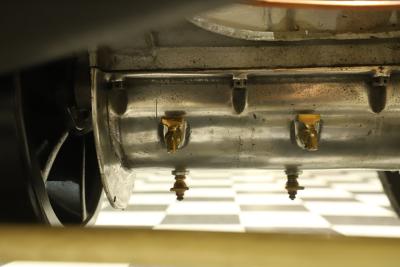
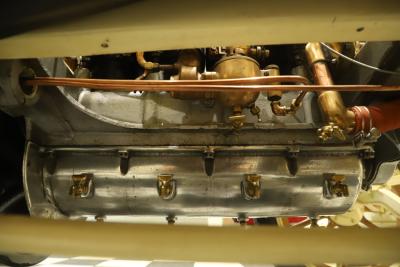
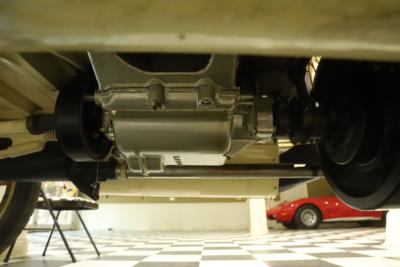
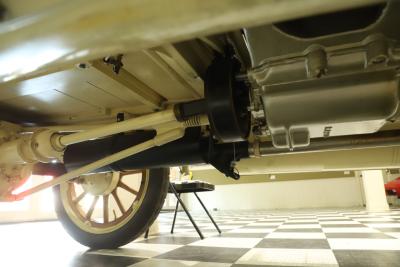
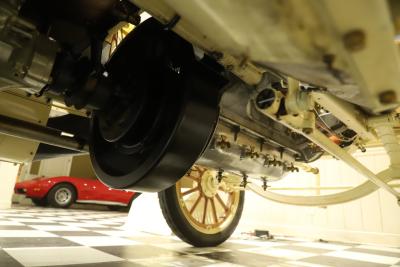
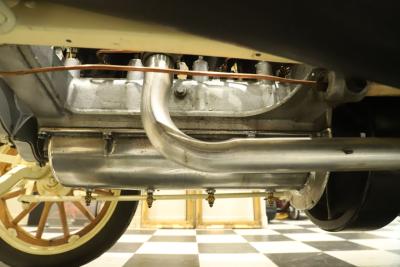
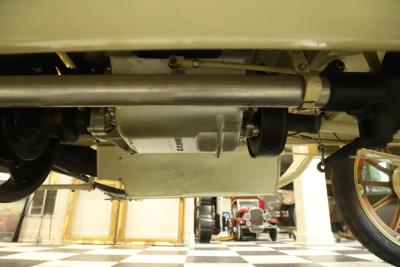
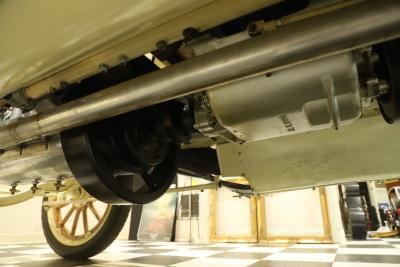
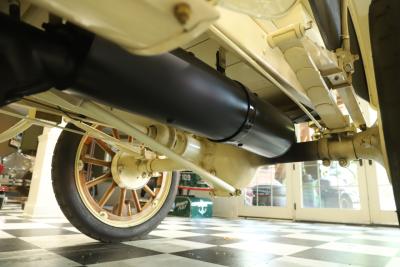
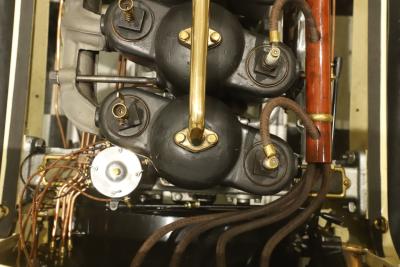
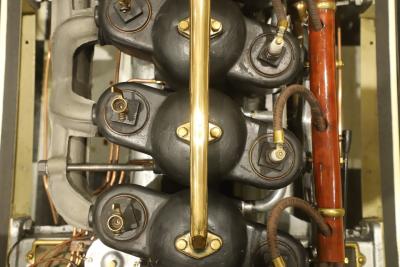
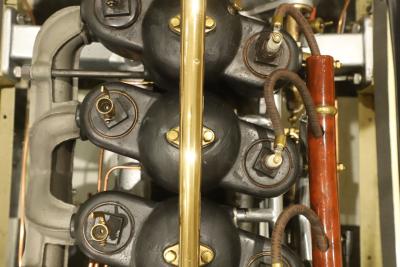
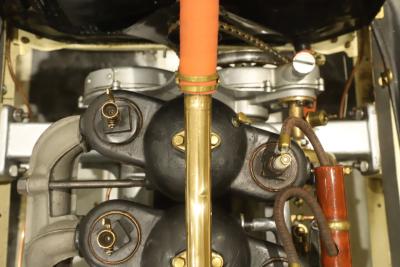
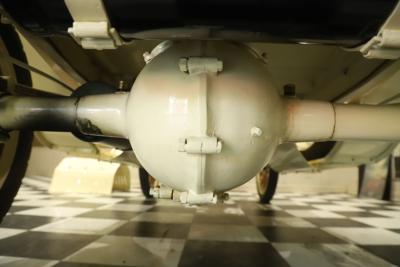
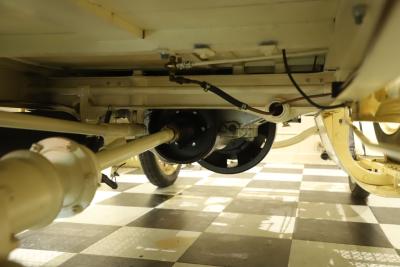
Right out of our Titanic Museum display, representing the cars from that era. We chose this car because of it's quality and beauty, it is the type of car that is a pleasure to look at. This 1907 Premier Model 24 Runabout is a prime example from this rarely seen marque that continues to benefit from an older, high-quality concours-level restoration. Through the years, it has enjoyed occasional use while under the care of a noted Brass Era automobile collector and enthusiast. Presented in captivating livery including a Cream body finish with Black highlights, this 2/3-Passenger Runabout is an evocative early sporting car, powered by a handsomely detailed liquid-cooled, 24-horsepower ‘T-Head’ 4-cylinder engine. Beautiful, period-correct brass accessories include a pair of serialized Neverout brass and copper headlamps with a Prest-O-Lite acetylene generator mounted at the rear of the Premier. Seating for three includes two individual seats up front and a solitary “Mother-in-Law” seat at the rear. Other wonderful features include a furniture-quality dash and coil box, leather splash aprons, a bulb horn, and evocative monacle windscreen. Following some light recommissioning, the Premier has proven itself a formidable machine, with performance that belies its modest 24-hp factory rating. On the road, it punches above its weight, with 50+ mph easily attainable with plenty more on tap provided the space and gumption. The recipient of the HVA (Historic Vehicle Association) Award at the 2014 French Lick Concours d’Elegance, this 1907 Premier Model 24 Runabout remains exceptionally well-preserved and suitable for continued show appearances. A decidedly sporting early American automobile this marvelous Premier will provide an ideal entry for many touring and concours events as desired. This model gained notariaty when it was driven over the famous Jacobs Ladder in 2 feet of snow and temps in the teens. The total trip was 453 miles which was completed with a full load of passengers and zero repairs or adjustments! This model won contests of speed, endurance, economy, efficiency and hill climbing across the country. Advertised as "The embodiment of comfort, excellent engineering design, graceful contour, beauty of finishand equipment." Cost new was $2,250 and was it manufactured in Indianapolis IN. The Premier Motorcar Story: While Detroit has long been known as the “Motor City” for its dominance in automobile manufacture, Indianapolis was a strong rival through the 1920s with many innovative marques located there. Among them was Premier, with origins rooted in a liquid-cooled motor buggy built by George Weidely. His vehicle found a buyer soon after completion and this remarkable early success encouraged Weidely to join forces with Harold O. Smith to establish the Premier Motor Manufacturing Company that December. Entering the automobile business with a significant capital stock of $50,000, Weidely and Smith’s new firm focused on development and production of motorcars with air-cooled engines. Interestingly, Premier laid claim to being the first marque ever to use an emblem as an automotive trademark – an oak leaf on the radiator badge. Premier engineering was consistent with the company’s name and thoroughly up-to-date, if not quite advanced for the early 1900s, with mechanical features of Premier automobiles including overhead-valve engines, sliding-gear transmissions, and shaft-type final drive. The motoring press praised Premier’s products, including Cycle and Automotive Trade Journal reporter Hugh Dolmar, who tested a 1906 Premier Model L. As he wrote, “This car can hold a 50-mile clip steadily and take everything on high gear where it has a free road, while the springs are perfection, and show that full elliptic properly proportioned need no help of any kind to make easy riding.” By 1907, Premier automobiles were available with both air- and liquid-cooled engines; however, from 1908, only liquid-cooled powerplants were utilized, including a new six-cylinder model. While racing success eluded Premier when a special air-cooled racer built for the world-famous Vanderbilt Cup race was disqualified for being 65 pounds overweight in 1905, the company was very successful in the original Glidden Reliability Tours held from 1904-1913. Sanctioned by the AAA starting in 1905 and best-known simply as the Glidden Tour, these grueling long-distance events were an ideal arena for Premier to promote its capable and highly regarded automobiles. Earning perfect scores on the Glidden Tour from 1907 through 1909, Premier was the winner in 1910, completing the journey from Cincinnati to Louisville, Fort Worth, Omaha, and Chicago – a total distance of 2,851 miles over 16 days. In October 1914, Weidely left the company to manufacture engines and the next month, Premier was in receivership, and by December 1915 was reorganized as the Premier Motor Car Company. A seventh-place finish at the 1916 Indianapolis 500 was a remarkable achievement for such a small automaker, but it was too little too late for Premier. A purpose-built taxicab was the last Premier model offered through 1926, when the doors closed on a proud chapter in Indiana-based automobile manufacture. This information was provided from the previous owner and is beleived to be accurate. Feel free to come see this car in person for your own inspection, it is beautiful! Elliptic Springs Mother in law seat Bulb Horn Prest-O-Lite acetylene generator Monacle windscreen Leather aprons Varnished spokes Side mount tire Leather upholstery
Contact Us
