

























































































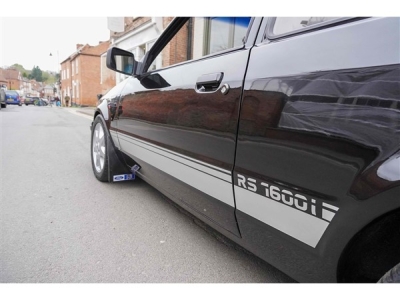
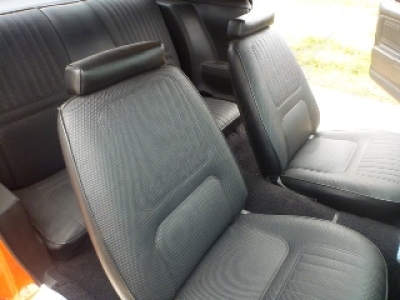
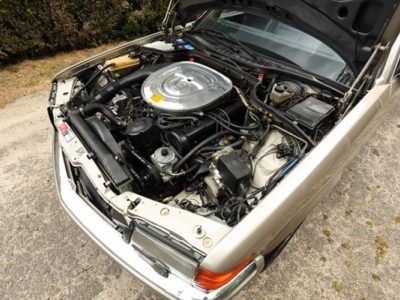
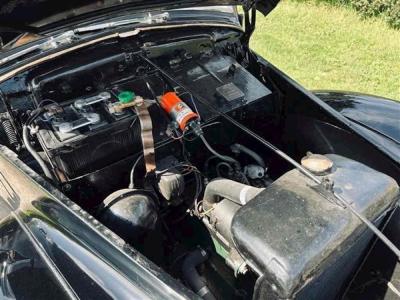
“ From Japan, with a full re-spray, four new tyres and a fresh service. ”
These are increasingly sought-after cars. And so they should be.
Background
The W201, or the 190 as we have all come to know it, was born in 1982.
Eager to put the 190E (the ‘E’ after 190 signifies ‘Einspritzung’, or fuel injection) into motorsport, Mercedes turned to legendary engine sorcerers Cosworth to develop a power unit for rallying.
But, once they’d seen what the turbocharged, four-wheel drive Audi Quattro was doing, they sensibly switched their focus to DTM, the German Touring Car Championship.
The detuned 2.3-litre 16-valve Cosworth engine developed 185bhp and 174lb.ft of torque, enough to take the car to 62mph in under eight seconds on its way to a top speed of 143mph.
Of course, the Cosworth cars didn’t just have a different engine to the standard 190E, they also had a long list of upgrades including an aerodynamic body kit, quicker steering, a dog-leg manual 5-speed gearbox from Getrag, a limited slip diff, lower and stiffer suspension (self-levelling at the rear), and a sportier interior.
Just 19,487 were built between 1984 and 1988.
In 1984, in a marketing masterstroke designed to focus attention on their splendid new car, Mercedes-Benz staged the ‘Race of Champions’ at the Nürburgring, with 20 identical 190E 2.3 16Vs on the starting grid.
Among the drivers competing were - wait for it - Sir Jack Brabham, Phil Hill, John Surtees, Carlos Reutemann, Denny Hulme, Niki Lauda, Alan Jones, Alain Prost, Elio de Angelis, Keke Rosberg, Jacques Laffite, James Hunt, Jody Scheckter and Stirling Moss.
The race was won by a then little-known driver just starting out in F1 – his name was Ayrton Senna.
Overview
These seminal cars hail from an era when the Meister Technikers of Stuttgart were building cars up to a standard, not down to a price, and everything that rolled off the production line was splendidly over-engineered and vault-like in the solidity of its construction.
This car is no exception.
But it has another very attractive element to bring to the party.
It was exported new to Japan, where it remained until 10th October 2022, at which point it set sail for the UK.
We mention its Japanese provenance because, well, it really matters.
It may be something of a cliché to talk about the roll of ‘honour’ in Japanese society and culture, but it’s no exaggeration to say that this tradition is alive and well in the Japanese motor trade, where there is no place for Trotter-san or Daley-san.
People really look after their cars properly in Japan, and all the more so if the cars in question are expensive, prestigious and foreign.
This is a world in which mechanics are assiduously diligent in their work, dealers are scrupulously honest in their valuations, and owners take OCD levels of pride in the care and attention they lavish upon their cars.
Japan is also a country where salt is thrown over the shoulders of sumo wrestlers, not chucked all over the roads in industrial quantities like it is in the UK.
Consequently, Japanese imports almost always have panels and undersides with less corrosion than their British counterparts, and that’s very much the case with this fabulous example.
And it’s got even better since taking up residence in the UK, the owner having spent a great deal of money on a professional respray, full mechanical fettling, a recent service and four new tyres – among plenty of other work.
We have driven the car and can attest to the fact that it feels tight, taut, rattle-free and possessed of all the engineering integrity with which it left the production line.
It starts on the button and handles and performs with the considerable flair and competence for which the model was rightly lauded.
Exterior
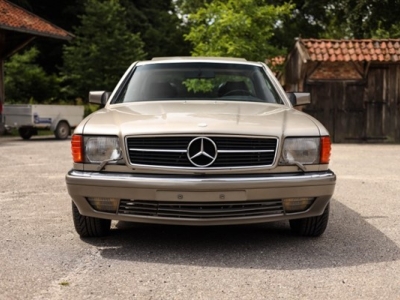
The car’s standard, three-box saloon design and proportions belie its sporting pretensions and prowess – but that’s precisely the point.
This car is Bruce Wayne on the outside and Batman underneath.
You’ll be relieved to hear that the Bruce Wayne exterior is in very good, straight order.
There are no dinks, dimples or dents anywhere that we can find.
The panel gaps and shut-lines are as Teutonically crisp and exact as you’d want.
The only slight exception to all this exactitude is the driver’s door, which is a bit stiff and notchy when closing from the fully-open position.
We were pleased to note that the rear spoiler is still firmly attached to the rest of the car.
The car has been resprayed and, as such, the paintwork is largely devoid of any scratches, scuffs, splits or other aberrations of note.
There are a couple of ‘burn’ spots to the lacquer above the rear window, probably the result of some over-zealous machine polishing, and we noticed another small, flat spot on the n/s/r door.
Aside from those very minor deviations, there is an entirely standard number and distribution of small, driving-acquired stone chips in the usual places – around the front valance and the bonnet.
There is some barely perceptible overspray on the windscreen and driver’s window, plus a chip to the driver’s side windscreen trim.
The car’s wheels are in broadly irreproachable condition and seem to have successfully avoided any unwanted encounters with kerbs or other roadside obstacles.
All four of the rather prosaically named Goodyear Efficient Grip tyres are in good order and look to have many miles of life left in them.
The car’s lights, lenses, badging and other exterior fixtures and fittings appear to be in fine fettle.
The arial goes up and down upon request, and makes some charmingly old-school squeaks and grunts while doing so.
Contact Us
