























































































Registration: 180 CNV
Chassis: SAB8872
Odometer: 410
Transmission: Manual
MOT: Exempt
Few vehicles capture the optimism and ingenuity of post-war European motoring quite like the bubble car. Created at a time when economical personal transport was in enormous demand, these tiny machines offered weather protection and car-like practicality while remaining extraordinarily economical to operate. Among the most distinctive was the Heinkel Kabine, developed by the German aircraft manufacturer Heinkel and launched during the 1950s.
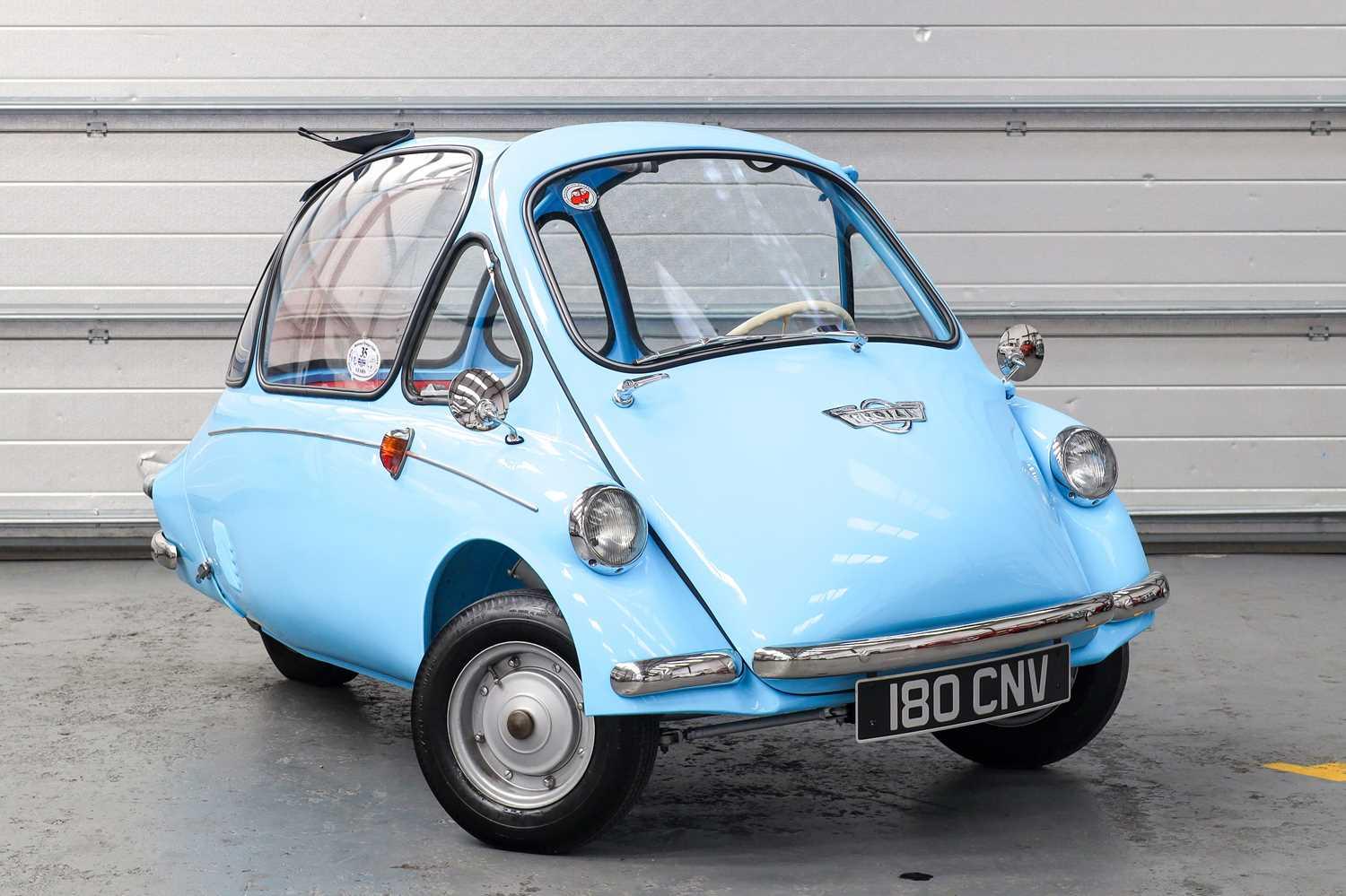
Offered here is a charming 1962 Heinkel Trojan, which has clearly been the subject of a considerable restoration.
Finished in a wonderfully period shade of light blue with a contrasting bright red interior, the Trojan is every bit the archetypal bubble car. Its enormous curved glasshouse, tiny wheels and wonderfully simple bodywork give it enormous character, while entry through the front of the car remains one of the design's most memorable features.
The mechanical specification is equally fascinating. Power comes from the 198cc Heinkel single-cylinder four-stroke engine, producing around 10bhp and driving through a four-speed manual gearbox with reverse. The gear selector sits alongside the driver, while the engine is positioned towards the rear of the car. Contemporary specification gave these tiny machines a top speed in the region of 50-55mph, quite an achievement from less than 200cc.
The photographs supplied with the car provide an excellent record of its restoration and are arguably one of the strongest parts of its history. They show the Trojan stripped back extensively, including the interior and floor structure, before being rebuilt in its current light-blue finish. Rather than simply being presented with a claim that the car has been restored, the next owner will have the benefit of photographic evidence showing the work as it progressed.
The resulting car is extremely attractive. Inside, the simplicity is wonderful: a red bench seat dominates the tiny cabin, ahead of which sits the ivory-coloured steering wheel and wonderfully minimalist instrument panel. The central speedometer is marked to just 80mph, perhaps optimistically and the odometer currently displays only 410 miles, which may well represent mileage accumulated following restoration rather than the car's total lifetime mileage. We therefore make no claim regarding the total distance covered.
The accompanying paperwork adds considerably to the car's appeal. Alongside the restoration photographs is a collection of historic documentation and invoices extending back many years. Of particular note is the older registration documentation accompanying the vehicle, an increasingly desirable piece of provenance with a car of this age.
The invoices also demonstrate that this has not simply been a cosmetic restoration. Paperwork from a Heinkel/Trojan specialist records the supply of numerous mechanical components over the years, including accelerator cables, carburettor components, steering-rack parts, cylinder-head gasket and various engine components.
More significantly, a handwritten record accompanying the invoices details considerable engine work. This records attention to the cylinder head, valves, valve springs and guides, together with an inlet-seat repair, replacement head gasket and associated fittings. The carburettor was also attended to, while further work included starter/dynastart-related wiring and electrical repairs. Taken together with the supporting parts invoices, there is useful evidence of considerable mechanical attention during the car's restoration and subsequent upkeep.
It is particularly encouraging that an active Heinkel Trojan Owners Club continues to support these cars with technical information and a dedicated spares service.
A spare wheel is also present with the car, together with additional parts, while the folding fabric roof adds another particularly charming feature. Opened up on a sunny day, with that huge glass area surrounding the occupants, there can be few more entertaining ways of travelling at modest speed.
The Heinkel Trojan is also rather more sophisticated than its diminutive dimensions initially suggest. Unlike some of the more rudimentary microcars of the period, it employed a monocoque body, hydraulic brakes and rack-and-pinion steering, while the four-speed gearbox gave it a degree of usability unusual amongst the smallest cars of its era.
Presented today in its wonderfully cheerful light-blue and red colour combination, this is an immensely characterful little machine and a fascinating survivor from one of the most inventive periods in motoring history. Whether destined for shows, microcar gatherings or simply as an extraordinarily entertaining addition to a collection, it is difficult to imagine this little Trojan arriving anywhere without raising a smile.
Contact Us
